5 keys on your agreement for payments with USDT in Venezuela
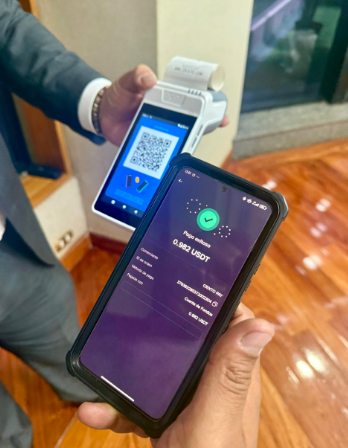
In a context where cryptocurrencies have gained ground in Venezuela due to inflation and the shortage of dollars, the Venezuelan Fintech Crixto announced an integration with Binance Pay that allows users to pay with the USDT stablecoin in local businesses, receiving bolivar businesses instantly.
Before the stir, which has generated so much controversy enthusiasm, cryptootics requested answers from both companies about the doubts manifested by the community, Verify the documents, and break down the fundamental points To understand the controversy and value proposition.
Next, we break down five essential keys to understand this initiative, its implications and the challenges it faces.
1. Alliance or API? An agreement under the magnifying glass, but with a contract in hand
The main criticism of the community focused on the term “alliance.” Some users argued that Crixto simply connected a Binance Pay API, a public tool, and did not formalize an association.
Binance’s silence in his official channels fueled this theory. However, cryptootics could verify the existence of a “Master Agregator” contract signed in April 2025, Between Crito and Binance, validated by the legal departments of both firms.
In this way, the doubt was clear, and although operationally it can work via API, there is legally a business association framework for Venezuelan jurisdiction.
2. For trade: zero USDT, 100% bolivars in seconds
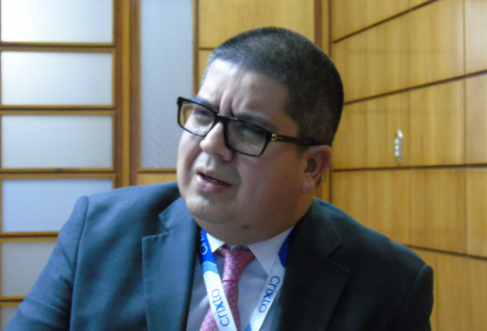
The proposal for the merchant is the pillar of the model launched by the Venezuelan Fintech, a company that seeks to eliminate any friction, as mentioned by the CEO of Cryxto, Adrián Ruiz, in exclusive conversation with cryptootics.
Crixto, registered with the National Superintendence of Cryptactive (Sunacrip), acts as an intermediary that automatically converts cryptocurrencies into local currency, eliminating the need for businesses to handle digital assets.
The business sets its price in bolivars and, when a customer pays with USDT, it receives the exact amount in its bank account in seconds, without managing Stablecoins or cryptocurrencies transferred by its customers.
“It’s like the Visa or Mastercard model,” Ruiz explained. During the operation, “Crixto takes care of conversion and assumes volatility, making the process completely transparent and safe for those who sell,” he added.
3. The user’s dilemma: convenience or a cost of 7%?
Here lies the greatest friction point for the end user. An analysis of Crixto’s own demonstration transaction revealed that the applied exchange rate was approximately 7% less favorable than the Binance P2P Nerrked Rate for that same day. That is, using the service is more expensive. So where is the convenience?
Adrián Ruiz lists it as follows: eliminates cash problems (broken tickets, lack of returning), the tax on large transactions (IGTF) and the need to go through the P2P market for Binance cryptocurrencies. It is a solution of immediacy, especially useful for those who do not have an account in bolivars, but with an associated cost that each user must weigh.
The integration of Crixto with Binance Pay stands out for its focus on establishing a fair market value for cryptoactive transactions, such as USDT, in compliance with Venezuelan regulations.
According to Ruiz, representative of Crixto, the platform uses a rate, agreed and consulted with the National Superintendence of cryptoactive (Sunacrip), which avoids speculative exchange operations. This value, aligned with regulations, guarantees transparency and legality, allowing businesses to receive bolivars at a reliable rate while users pay with cryptocurrencies safely and regulated.
4. The commitment to formality: invoices and legal traceability
Faced with the opacity of the informal P2P, Crixto shields with legality. Each operation generates a legal invoice, offering complete traceability to the Seniat and protecting the parts of fundamental origin.
“You can justify operations because there is a legal route of the transaction,” said Ruiz. Being registered with Sunacrip, they seek to position themselves as a formal and auditable channel, an argument of weight for businesses and users seeking legal certainty.
5. The background vision: to massify the use of Stablecoins in Venezuela
Crixto’s mission, according to his managers, transcends the transaction. The objective is to “make cryptocurrencies usable” in all areas of daily life. Paradoxically, by facilitating payments in USDT that are settled in bolivars, they seek to achieve a triple effect: massify the adoption of cryptocurrencies, strengthen the use of local currency In the shops, being this they receive, and finally, lower the pressure on the scarce and problematic cash that circulates in the country.
By December 2025 the company promises to have installed about 100,000 points of sale with Your already operating system.
In short, the integration of Crixto with Binance Pay allows users in Venezuela to make payments with USDT, with shops receiving bolivars instantly, in a country that seeks alternatives to stabilize its economy. This initiative, backed by a legal agreement, faces criticism for its less favorable change rates and the lack of clarity in its association with Binance.
The success of this model will depend on its ability to implement widely and on education to the public, in a context of informal dollarization and persistent economic challenges.
This text was supported by the cryptootic editor Jesús Herrera,