700 thousand Mexicans gave their iris to Worldcoin for a handful of cryptocurrencies
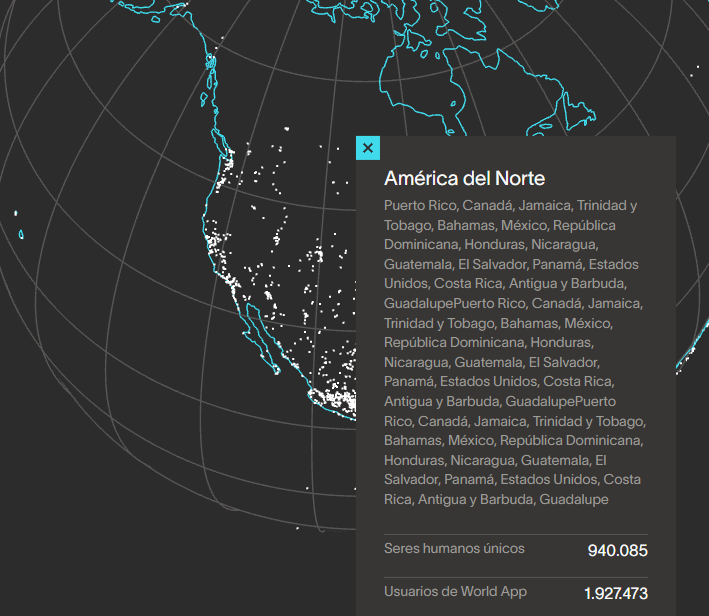
More than 700,000 Mexicans have scanned their Iris with the Orb of WorldCoin (now World), a project led by Sam Altman, CEO of OpenAI, creators of ChatgPT, according to a political animal report on August 18, 2025. This figure represents 74.47% of the 940,000 verifications reported in North America Worldcoin, although cryptootics still expects the company’s response to confirm this data.
The initiative, which promises cryptocurrencies WLD in exchange for biometric data, is unleashing a new wave of alerts of digital rights organizations for the risks of giving unique and irreplaceable information to a private company with little transparency.
Worldcoin ensures that the ORB generates an anonymous numerical code, eliminating the original image of the IRIS to create a digital identity, which the company ensures that it is safe. However, researchers such as Santiago Narváez, a network lawyer in defense of digital rights (R3D) in Mexico, warn that derived “templates” are almost as sensitive as the original data, comparing their elimination with “erase a pavement footprint”.
Narváez said that he did not find public information about investigations of the National Institute of Transparency (INAI) after consulting files, despite a point of agreement presented in April 2024 by Deputy María Eugenia Hernández (Morena) to evaluate the impact of the project.
The dissolution of INAI in March 2025 has left Mexico without an autonomous body to supervise these practices, increasing citizen vulnerability. In places like Iztapalapa, people like Rebeca and Samantha went to WorldCoin modules attracted by promises up to 1,000 pesosbut the process was confusing, since they discharged an app, accepted terms without understanding them and received 800 pesos initial payments that fell to 50 due to the price fluctuation of Token Wld.
“They assured us that the data would be protected, but they did not explain their purpose,” said Samantha, motivated by urgent debt.
The controversy transcends Mexican borders. In Brazil, the authorities suspended the delivery of financial incentives because it is considered a practice that compromises consent. In Chile, an NGO documented the scan to minors. In total, the Worldcoin project has been investigated in at least 8 countries.
On the other hand, research from the Chilean NGO Amaranta revealed that people in vulnerable situation, with low digital literacy, delivered data for economic necessity without clear information about the risks. “The consent is vitiated; they act by urgency, not freely,” said Cecilia Ananías, a researcher of that organization.
While Worldcoin expands its global digital identities network, The lack of robust regulation in Mexico and the opacity in the management of biometric data They raise an ethical and legal dilemma. In a context of inequality and low digital literacy, the promise of immediate economic benefits eclipses long -term risks, leaving thousands of Mexicans in an uncertain field where the protection of their privacy hangs from a thread.
In this scenario, some members of the cryptocurrency ecosystem are going to social networks warning that WorldCoin should not be confused with Bitcoin, highlighting that Token Wld is not a traditional cryptocurrency, but a digital asset linked to a project for unclear purposes.
A solid legal framework and effective supervision are urgent to ensure that technology does not become an exploitation tool for the most vulnerable, they point out.