
A CBDC would threaten freedoms in Bolivia, warns deputy: “It would be state control”
-
The decree that regulates Bitcoin in Bolivia “leaves too many gray areas,” says Baldivieso.
-
The parliamentarian has not been convened to participate in the regulation of the sector.
Bolivian deputy Mariela Baldivieso has raised her voice against the possible implementation of a Central Bank digital currency (CBDC) in Bolivia, warning about the risks that it could represent for the privacy and economic autonomy of the citizens of that country.
In a political context marked by tensions and a government that the parliamentarian qualifies as an authoritarian, Baldivieso warns that a CBDC, without due guarantees, It could become a state surveillance and control toolmore than an instrument of financial inclusion.
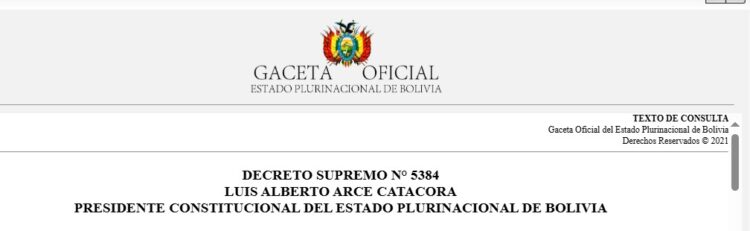
Their statements occur at a time when the country debates the regulation of digital assets, after the approval of Supreme Decree 5384, which recognizes cryptocurrencies as means of payment, but generates uncertainty due to its lack of clarity.
In an interview with Cryptonoticias, Baldivieso, Secretary of the Committee of Sciences and Technology of the Chamber of Deputies, not only criticized the opacity in the regulation of cryptocurrencies, but also pointed out the exclusion of legislators and experts in the design of these regulations.
The parliamentarian recalled that she has requested the creation of a technical table that integrates the Government, legislators, users and specialists, but has not received an answer. In addition, he highlighted the opportunity that represents the tokenization of strategic resources such as lithium, proposing digital governance models that promote transparency and participation Citizen
Social and state control tool
The debate on cryptocurrencies and the possible adoption of a CBDC in Bolivia is part of a complex economic scenario, where inflation, the shortage of dollars and the need for financial modernization are urgent issues.
A few days ago, the president of the Central Bank of Bolivia, Edwin Rojas, informed that they already had the preliminary design of their own CBDC, called Bolivian Virtual, as reported cryptootics.
“The Central Bank of Bolivia has made significant advances in the preliminary design of a CBDC digital currency. Providing a coordinated approach between the technical, legal and systems area. In this context, internal workshops and work tables were developed to make a diagnosis for the implementation of a digital currency in Bolivia,” said Rojas during the XVIII Monetary Day of the BCB.
Now, Deputy Baldivieso argues that the CBDC in Bolivia It could become a state surveillance toolrestricting the privacy and economic autonomy of citizens. As you see, if there are no clear guarantees, a CBDC in Bolivia “can become a mechanism of censorship and social control rather than a financial inclusion tool.”
She argues that, for a CBDC to be beneficial in that country, its design must be transparent, with citizen participation, public audits and legislation that protects personal data and prohibits its use for political purposes.
However, it emphasizes that “the current government has all the characteristics of an authoritarian government, on regulator and non -transparent.”
Regulation with many gray areas
On the other hand, the parliamentarian also criticized Supreme Decree 5384, which regulates virtual assets in Bolivia. Although recognizing cryptocurrencies as means of payment, The decree presents “too many gray areas” that generate uncertainty for users, merchants and investors, in their opinion.
A few days ago, the Bolivian government approved this decree, which establishes the recognition of virtual assets, marking a milestone in regulating financial technologies on Bolivian soil.
Now, the lack of clarity in the regulations, according to Baldivieso, could lead to discretionary interpretations by the authoritiesaffecting the legal certainty of the cryptocurrency ecosystem.
“It is very likely that, due to over -regulation, exchanges as Binance decide not to offer services in the country,” said the legislator. This situation, he says, “discourages investment and limits opportunities” of financial innovation in Bolivia.
The vision of the legislator dissent from that of the Bolivian lawyer and financial analyst, Franklin Inkaya Vela, who states that, with that measure, “the country takes a firm step towards technological innovation in the financial sphere, the stock market and insurance market, creating safe, regulated and conducive conditions for the development of new digital services.”
“With this new regulation, Bolivia is positioned as one of the countries in the region with a public policy determined to lead the digital transformation of the financial system, providing legal certainty, promoting innovation and taking care of the interests of users,” said Ink.
But Baldivieso is more critical. In fact, she requested the creation of a technical table that brings together the government, legislators, users and experts to work in a consensual and truly inclusive regulation for the cryptocurrency ecosystem in Bolivia. Although it has not yet been summoned.
“I have publicly requested and in writing that a technical work table was given, but it has not been called,” he explained
Since its role in the Science and Technology Committee of the Chamber of Deputies, the parliamentarian organizes work tables to propose regulations to the Financial Supervisor Agency (ASFI), although it faces resistance. “We keep playing doors,” he adds.
A historical opportunity
For its part, Baldivieso spoke of the tokenization of lithium, which for her is a “historical opportunity” for Bolivia. The leader proposes to explore models that promote transparencycitizen participation and decentralized financing for this kind of projects.
However, the legislator regrets that the Executive controlled by Luis Arce has not shown opening to these initiatives. “I have presented preliminary proposals, but the progress has been limited by the lack of interest in innovative models of digital governance,” he says.
On the possible collaboration with companies such as Atomic 3 for the tokenization of lithium, Baldivieso indicates that her advisors have met with representatives of the company, although she has not participated directly due to her parliamentary agenda.
Pablo Rutigliano, CEO of atomic 3, states that Bolivia already has a model of lithium nationalization, but what does not have nationalized is the product or production of lithium carbonate. According to him, they could be a “strategic ally” for Bolivia and, like the deputy Baldivieso, believes that the tokenization of the lithium carbonate can be a key opportunity for the South American country.
Baldivieso says he has known many interesting tokenization projects in events where he has been a lecturer. However, it emphasizes that decisions on this subject They will fall on the elected authorities in 2025who will determine which companies to work with.
A major challenge
The regulatory panorama in Bolivia reflects a major challenge: to balance technological innovation with the protection of citizen rights. Baldivieso’s warning on a CBDC as a control tool resonates in a country with a history of political tensions and institutional distrust. The parliamentarian insists that any progress in cryptocurrencies or digital currencies must prioritize the transparency and participation of all sectors.
The exclusion of legislators such as Baldivieso in the design of regulations for the cryptocurrency sector evidence, according to her, The lack of will of the government to build consensus. This, added to the ambiguity of Supreme Decree 5384, generates a climate of uncertainty that could move key actors from the ecosystem away
While Bolivia navigates these discussions, The Baldivieso position stands out for its emphasis on transparency and inclusion. His call to participatory regulation and his warning about the risks of a poorly designed CBDC seek to protect the rights of citizens in a context where financial technology advances rapidly. However, the lack of response from the Executive to his proposals raises questions about the future of cryptocurrencies and economic digitalization in the country.
The debate remains open, and the implementation of a CBDC or the regulation of cryptoactive will depend on the government’s ability to generate trust and consensus. For now, Baldivieso continues to advocate for a regulatory framework that fosters innovation without compromising individual freedoms, a balance that considers essential economic and technological development from Bolivia.