
Adam Back takes sides in Bitcoin’s “customer war”
-
Back said that customer filters will not stop the use of registrations with op_return.
-
Bitcoin Mechanic challenged Back: inscriptions “overload the network without benefiting users.”
On August 17, Adam Back, Blockstream co -founder, said “probably” The next version of the Bitcoin Core client will runV.30, whose launch is scheduled for October.
He said it in response to a publication in the social network X where a user emphasized the migration of Core to Knots, a core bifurcation that maintains Most restrictive policies in transactions management.
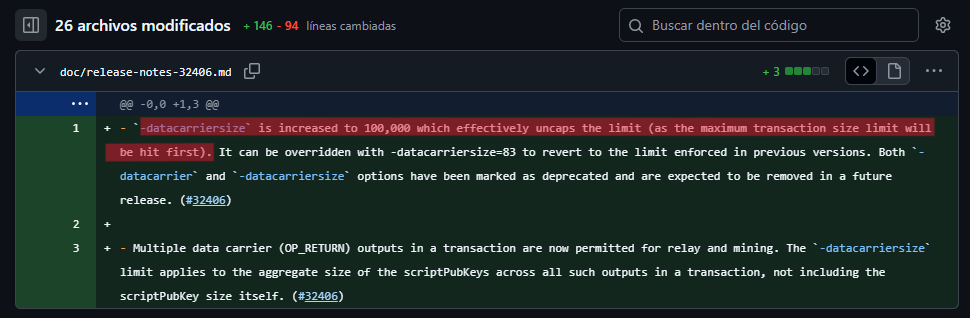
Bitcoin Core is the reference software for Bitcoin nodes. Version 30 introduces incremental changes, the most discussed being the increase in the data limit in Op_return.
Previously limited to 83 bytes, the new threshold expands the capacity of OPCODE Op_return up to 100,000 bytes in V.30 of Core, which Facilitate data registration (Sometimes called “JPEG–spam”For including text, images or non -essential files) and, according to deserters, move away the network of their merely monetary purposes.
This modification has divided opinions and have led to the fact that in recent months the Bitcoiner community immerses itself into a “customer war.”
In his recent message in X, Back said:
“I will probably run Core 30 and, optionally, a patch for ‘preferential peering’ if someone writes it. There are solid arguments, perhaps stronger, that the risk of mining centralization is greater than JPEG’s spam, which can not really stop.”
Adam Back, founder of blockstream.
The term “Peering preferential” mentioned by Back refers to a configuration for Bitcoin nodes that allows to connect preferentially with other nodes that share specific policies for acceptance or rejection of transactions.
This allows nodes operators to customize their interaction with the network, prioritizing connections with nodes aligned with their preferences, such as filtering transactions with extensive op_return data.
However, this practice can fragment the network If the nodes are divided into groups with opposite policies.
On the other hand, the “risk of mining centralization” that Adam Back highlights is a fundamental concern in Bitcoin. Mining, a process by which transactions are validated and new blocks are created, is dominated by large pools and industrial miners.
If the nodes impose strict filters against transactions with op_return, the miners that include these transactions could be excluded by certain nodes, reducing their access to the network.
This could further concentrate miner power In the hands of those who accept all transactionsincluding the data considered “spam”
Back argues that this risk exceeds Op_return’s abuse, since “spam cannot really stop.”
Answers to Adam Back’s sayings
Bitcoin Mechanic, a bitcoiner and enthusiast of Bitcoin Knots, challenged Back’s position and answered the director of Blockstream:
“Spam filters do not centralize mining. It is a theoretical point that must stop being used as justification to force nodes to act as a public spam retransmission service.”
Bitcoin Mechanic, participant in the Bitcoin community.
Mechanic argues that nodes should not be forced to broadcast transactions with non -essential data, since this Overload the network without benefiting users.
Instead, it suggests that the miners, who decide which transactions to include in the blocks, They should assume responsibility for filtering the spam.
Back replied: «Nodes can execute what they want; Policies are customer’s side, they are not rules of consensus, they are inapplicable ».
Here, Back emphasizes that filtering policies are individual decisions of nodes operators, No mandates imposed by the Bitcoin protocol.
However, for Mechanic, filters are a valid tool to protect the network, and described the argument of centralization as an exaggeration.
The exchange continued with Back defending his position: «I hate the spam as much as anyone, But the filtering will not worksince there are operators of worried nodes that they will probably use ‘preferential peering‘If necessary, and miners that will include spam jpeg ».
In essence, Back suggests that filters such as 42 bytes from Knots They will not stop the use of op_return For larger data, since the decentralized nature of Bitcoin allows nodes and miners to act according to their own incentives.
According to Back’s analysis, nodes that strictly filter could be isolated from the network if miners and other nodes prioritize transactions with more extensive data, which could affect connectivity and decentralization of the network.
Back also compared the debate with the controversy of the “Big blockers” (Larger block support in Bitcoin), who minimized the risks of centralization.
For him, mining already faces centralization challenges, and restricting transactions could worsen this situation.
Mechanic, on the other hand, argued that forcing nodes to broadcast unwanted data is equivalent to a “call to altruism” that contradicts Bitcoin incentives.
Finally, Bitcoin Mechanic proposed that the miners, not the nodes, They should avoid including transactions with irrelevant datasince “they work for us, not vice versa.”
This point highlights a philosophical difference: while Back prioritizes the resilience of the network against possible divisions, Mechanic defends the autonomy of the nodes to protect against the abuse of the chain.


