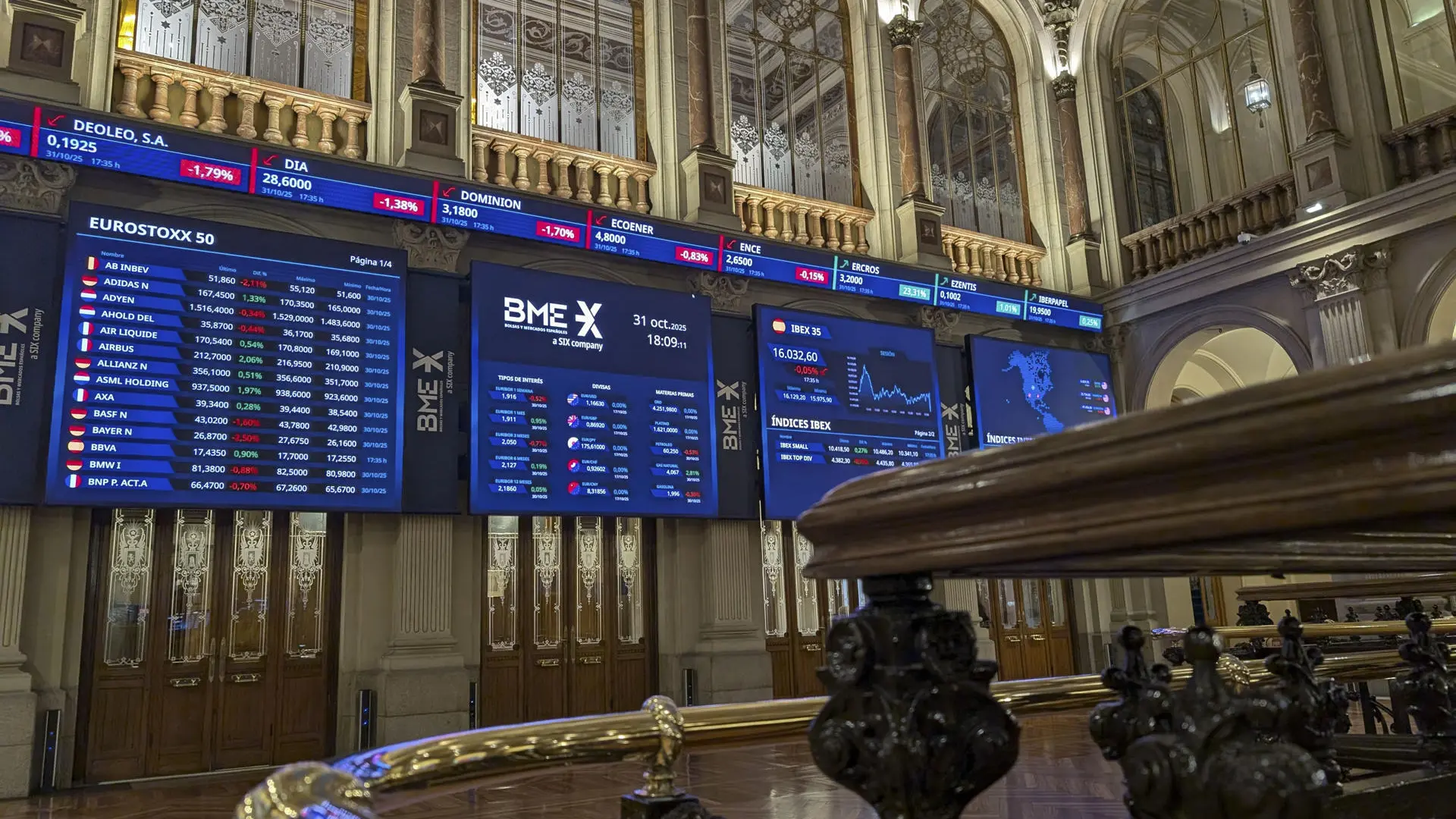
Are Spaniards missing the Ibex 35 rally? The selective soars 38% in the year

The Ibex 35 up more than 100% since January 2023 and 38% so far this year. These are figures that evoke the golden years of the Spanish stock market when the Ibex went from 5,500 points in 2003 to over 16,000 in 2007, tripling its value in just four years. A period in which the increases seemed endless and investors enthusiastically attended each capital increase. However, this time the story is told in reverse. The stock market rises, corporate profits break records and dividends are consolidated as the most attractive in Europe, but national money does not accompany.
Inverco reports confirm that the assets of national equity funds were around €3.2 billion at the end of June, well below the more than €10 billion reached in 2006, when the market was at its peak.
In September 2025, the figure has increased by 3.8% in this category of fundsan improvement that suggests a timid change in trend, but more linked to the pull of the market than to a determined return of the national investor. In simple terms, funds are worth more because stocks go up, not because there are more investors.
The comparison with other investment products is obvious. Fixed income funds concentrate close to 300,000 million euros and mixed funds exceed 90,000 million. Since 2022, fixed income has captured more than 80,000 million in new flows, a flow of money that contrasts with the drought suffered by the Spanish stock market.
But it hasn’t been anything strange either. The rise in rates by the European Central Bank brought back prominence to bonds and Treasury bills, which offered returns of 3% to 4% with minimal risk. Savers preferred to take refuge in the certainty of fixed interest and leave aside the volatility of the stock market.
More global portfolios, more passive funds and talent that doesn’t give up
But the change in preferences also has a structural explanation. The portfolios of Spaniards are increasingly global and less local. In 2025, more than 60% of total fund assets will be concentrated in international products. The Spanish stock market weighs little in the major world indices and lacks presence in sectors that lead growth, such as technology or biotechnology. The consequence is a natural diversification towards markets with greater sectoral representation.
The president of the CNMV, Carlos San Basilio, recognized last spring at the Medcap forum that recovering interest in the Spanish stock market will require more than good business results. At the same time, Brussels is working on the creation of a pan-European savings account that encourages long-term investment and the Spanish regulator raises the need for fiscal stimuli to attract retail investors.
Meanwhile, index funds gain ground. Products such as Santander Index Spain, which replicates the evolution of the Ibex 35 with minimal costs, bring together nearly 911 million euros, according to data from Finect. A third of the assets invested in the Spanish stock market are already in passive funds. The trend reflects the search for simplicity and low cost compared to traditional active management.
Even so, some active managers keep up the pace and achieve outstanding returns. Funds such as CaixaBank Bolsa España 150, Santander Small Caps España, Cobas Iberia, Bestinver Bolsa and Okavango Delta have far surpassed the Ibex, with returns that range between 45% and 60% so far this year. The figures confirm that there is talent within Spanish management and that the national market continues to offer opportunities for those who know how to select them, especially among the small and medium-sized listed companies that this year concentrate much of the upward momentum.
The market, however, is unable to recover the “call effect” present in other times. In 2007, the stock market was the preferred destination for small Spanish savers. Today its weight in portfolios barely reaches 2% of world capitalization. The stock market patriotism that characterized investors at the beginning of the century has given way to a more international approach.
This change in perspective makes the contrast even more striking with the evolution of the Ibex, which lives one of his best moments in two decades. Financial institutions have recovered margins, tourism is experiencing an exceptional cycle and energy companies are stabilizing their profits. Together, the companies in the index have increased their results by 12% compared to the previous year and maintain generous dividend policies. However, individual investors continue to opt for conservative products and global funds, a trend that seems to be consolidating even in the midst of the stock market boom.
The managers have also contributed to this displacement. In recent years they have hardly been launched new funds focused on Spanish securities. The preference for global or thematic products prevails and leaves the national stock market with less visibility. The circle feeds itself: less supply means fewer investors and, in turn, fewer incentives to create new products.
Regulators are confident that stabilizing rates and moderating inflation will restore some attractiveness to equities. If the Ibex maintains its pace and the economy avoids shocks, retail investment could be reactivated. For now, the Spanish seem to have missed the rally in their own market. It is a contrast that reveals to what extent the money and sentiment of national investors have distanced themselves from the national stock market.