Be careful with RWA, the new “crypto-mode” of the moment
In the cryptocurrency market there is always a new flag to wave.
The last decade brought us the ICO, the NFT, the games Play-to-Earnand the metavers (those virtual worlds that came to change the way of interacting humanity and that today are forgotten).
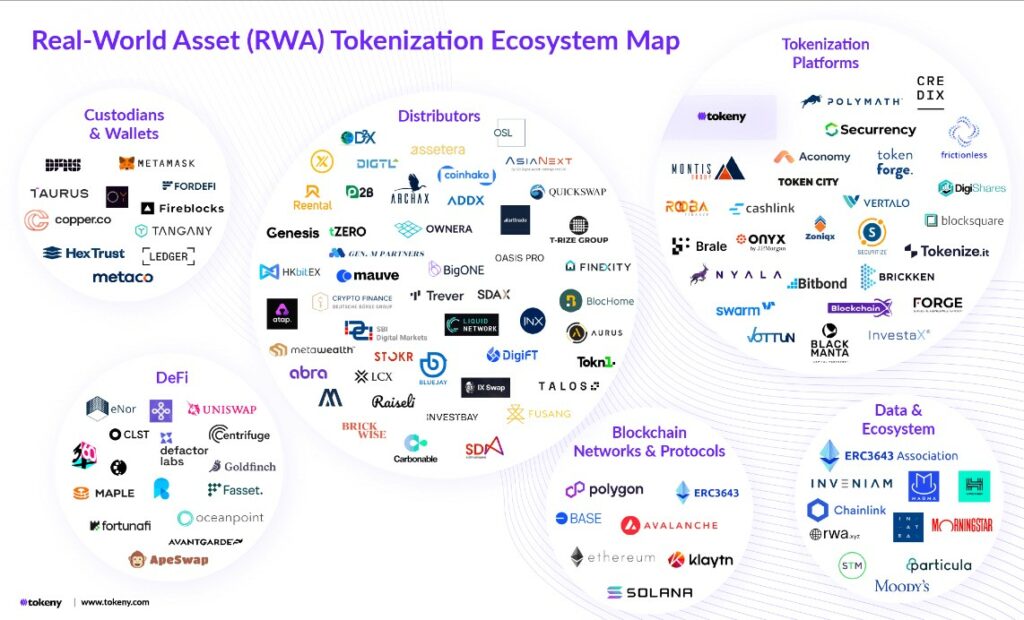
And now, The “crypto-fet” on duty is RWAacronym in English to refer to the assets of the real world tokenized. These are presented as the next “great blockchain revolution.”
The promise is seductive: take anything tangible, like a picture, a bottle of wine, a ship or a house and turn it into a digital token that anyone can buy, sell or exchange in a decentralized network.
Cryptootics in its cryptopedia, defines the RWA as follows:
The assets of the real world or RWA (Real World Assets) are cryptographic tokens that represent tangible assets that exist outside the digital field such as works of art, real estate properties, raw materials or merchandise. They also represent intangible assets such as bonds, patents, copyright, credits and concessions.
Cryptopedia, cryptootic educational section.
But, as usually happens in this market, not everything that shines is gold, and The RWA are beginning to seem more an inflated fashion than a real solution to real problems.
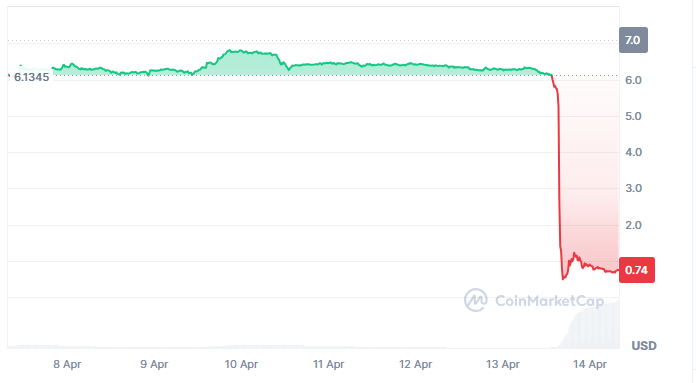
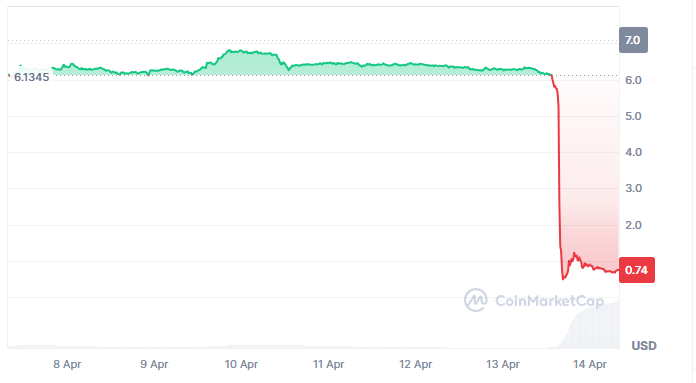
The recent case of Mantra (OM), cryptocurrency specialized in RWA that collapsed in a few hours causing millionaire losses, showed that it is not a risk -free industry.
Yes, there are interesting use cases within the RWA niche, but also There is an alarming amount of smoke, empty projects and promises that do not resist a serious analysis.
Let’s start with the positive, because not everything is bad. Tokenization of certain assets has potential to democratize investments otherwise, they would be inaccessible (or, at least, difficult) for many.
Let’s take, for example, the stablecoins backed by precious metals, such as gold. These digital currencies offer a simple way to invest in a historically bullish asset without storing ingots in a vault or dealing with expensive intermediaries.
Companies such as Paxos or Tether have explored this land with products such as Pax Gold (Paxg), or Tether Gold (Xaut) that link each token to an ounce of physical gold stored in security cameras.
It is a practical case: gold is a liquid, global market with a constant demand, and tokenization eliminates friction for small investors who want exposure without complications.
Another promising example is the United States Treasury Bonds token. These financial instruments, considered among the safest in the world, are usually out of the reach of the average investor due to regulatory barriers or minimum entry amounts.
Companies such as Ondo Finance or Franklin Templeton have ventured into this area, creating tokens backed by treasure bonds that allow users of almost any part of the world to invest small amounts in these assets.
The cryptocurrency network, in these cases, acts as a bridge that simplifies access and reduces operating costs. It is an idea that, if it is executed with transparency, can open doors to millions of people who did not have access to this type of instruments before.
But the cases of tokenization that make sense, in the opinion of who writes this text, do not go much further than those mentioned here.
The world of the RWA is being filled with proposals without the rigor necessary to support them. The real world asset tokenization is not magical: it does not automatically convert anything into an attractive investment or can be a successful industry if it resolves pseudoproblems that the market does not have.
And yet, we are seeing projects that try to convince ourselves otherwise, offering tokens that represent from real estate (with questionable legal support) to collection objects, all wrapped in a grandiloquent language about “the decentralization of the future.”
Come on, for example, to the case of the supposed real estate tokenization, What legal guarantees exist that these tokens represent a real property right? The answer, in many cases, is that They truly do not represent such a thingbut, for example, a participatory loan per property or shares in a company that owns the property.
However, without a clear regulatory framework that ensures that tokens equals an inalienable and perpetual right about the supposedly tokenized asset, what you buy can be something as empty as an NFT of a pixelated monkey.
Speaking of NFT, The RWA are falling into the same error we saw in the rise of those non -fungible tokens. In 2021, we sold the idea that having a NFT of a work of art was like having a piece of the future of digital art. But it was soon clear that, as cryptootics explained it, Those tokens did not grant copyright or real property on the work. That is to say, according to the laws of the “fiat world” in which we move (you like it or not), the NFTs were not a legal contract.
With the RWA something similar happens: many projects promise investment in a physical asset, but When you read the “small print”, you discover that your Token does not give you any binding right. If the bankruptcy or the underlying asset disappears, you keep a piece of useless code.
Mónica Elizabeth Pagano, a specialist in this niche market, says:
«In the case of real estate tokenization, fraud can adopt various forms. A tokens issuer could promise excessive returns, use funds for other purposes or sell tokens without legal support or property. It could even be speculating with the capital of investors to acquire a property that it still does not possess ».
Mónica Elizabeth Pagano, author of ‘Blockchain, Tokenomics & Real Estate’.
Real world asset token not operates in a vacuum: it involves property laws, contracts, taxes and international jurisdictions. Razing tokenized assets without a good regulatory support will imply dire consequences for investors. Note that this also includes treasure bonds and gold stablcoins that I mentioned as good use cases. If those underlying assets are not true, auditable and redeemable, then, a token will be used to represent them. The same does not happen, or at least not so much, with the tokenization of shares, because they are already digital, and it is only a way of getting the investment of specific platforms.
The problem is not just the lack of legal clarity. There is also the question of utility. Do we really need to tokenize everything that crosses us through the mind? Doesn’t this look like the idea that existed years that everything had to have its cryptocurrency? For example, Dentacoin (DCN), the currency of dentists (no, is not a joke).
There are projects that have tried to tokenize from wine bottles to luxury yachts, as if the world were crying out for digital fractions of these goods. Be careful … let’s not fall into errors from the past: solutions to problems that the market is not asking (And probably never ask) They do not have a good future.
So what do we do with the RWA? It is not about discarding them completely. As I said at the beginning, there are use cases that are worth exploring, especially in liquid assets and demanded by the market such as gold or treasure bonds.
But the excessive enthusiasm and the mentality of “Tokenican everything” are leading to the market along a dangerous path.
Investors must be more skeptical than ever: It is not enough for a project to use words like “blockchain” or “decentralization” to be worthy of. You have to ask who is behind, what laws support the Token and if the tokenized asset has a real demand in the world.
The cryptocurrency market has a unique ability to generate bubbles, and the RWA are beginning to smell one. If we do not want to repeat the mistakes of the past, it is time to have realistic expectations and start separating the wheat from the straw.
Tokenization can be a powerful tool, but only if used with common sense and not as a trick to sell digital dreams that do not resist the test of time. Be careful, because in this market, What seems like a revolution today, tomorrow can be just an expensive memory.
Discharge of responsibility: The views and opinions expressed in this article belong to its author and do not necessarily reflect those of cryptootics. The author’s opinion is informatively and under no circumstances constitutes an investment recommendation or financial advice.