Bitcoin entered the era of state power and the market knows
In a world where technological innovation redefines finance, Bitcoin (BTC) has captured the attention of governments, investors and global markets.
The digital currency has evolved from being considered a cypherpunk experiment and a marginal asset to be a strategic pillar in the world powers economyespecially in the United States.
This paradigm change, promoted by state adoption and growing institutional interest, is transforming market perception and unlocking a huge growth potential for Bitcoin.
Frank Holmes, investor and CEO of the US Global Investors firm points out: “Bitcoin will not disappear, and will only be strengthened with the United States leading the way.”
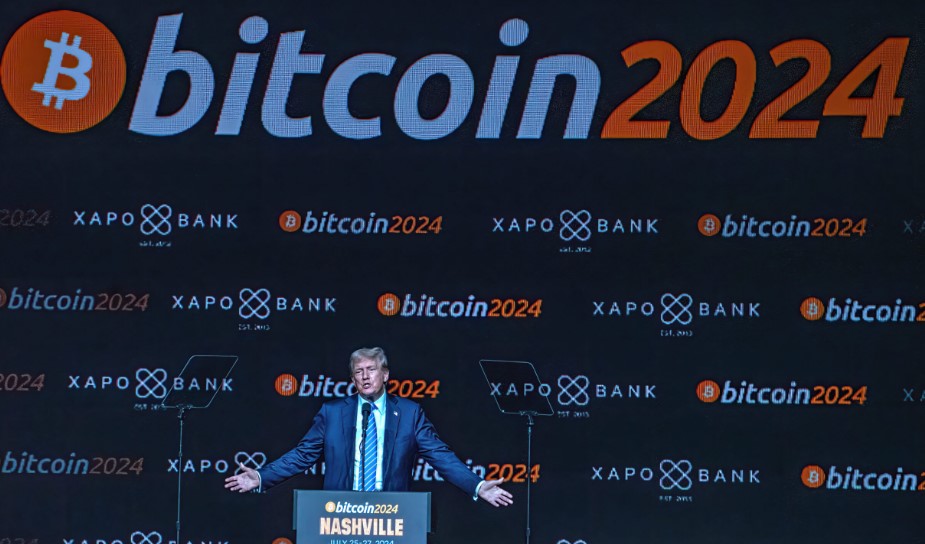
This support is not accidental. The vision of positioning the United States as a leader in the Bitcoin industry began to take force in 2024, when the then candidate Donald Trump spoke at the Bitcoin Conference, promising to reduce the regulatory barriers of the previous administration.
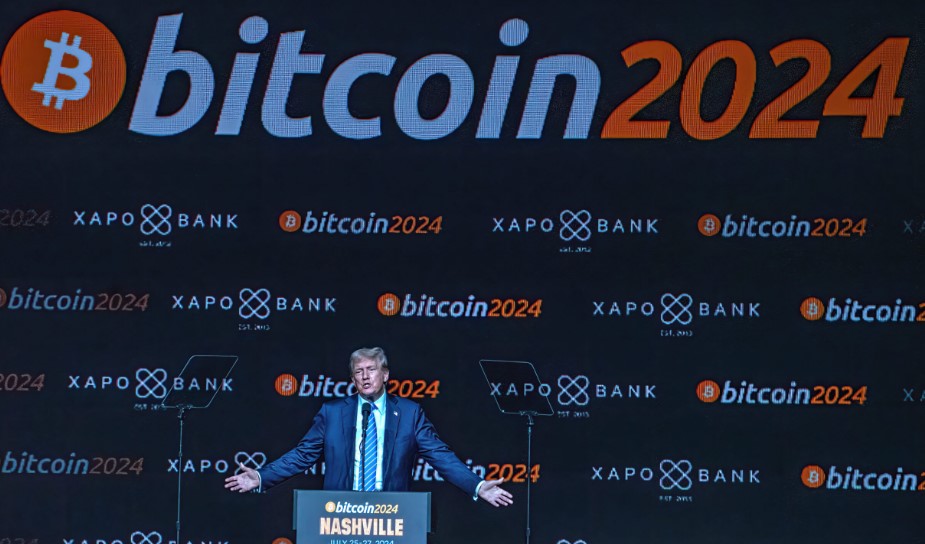
Less than a year later, in Trump’s second mandate, That promise materializes with concrete steps.
A key milestone is the proposal of the Bitcoin Law of 2025, which requires the US government to acquire 1 million BTC in five years to create a strategic Bitcoin reserve.
Senator Cynthia Lummis, promoter of the initiative, stressed that maintaining the country should aspire to have at least 5% of Bitcoin’s total supply, which could contribute to reducing national debt, which amounts to 36 billion dollars. This approach marks a radical change: Just a few years ago, Bitcoin was criticized as a vehicle for illegal activities.
American domain and institutional adoption
Today, however, its potential to stabilize national economies is discussed. The United States not only leads in rhetoric, but also in fact.
The country dominates in all relevant metrics of the bitcoin ecosystem. Approximately 40% of Bitcoin minted globally is in the hands of Americans, while American companies that are traded in the stock market concentrate 95% of Bitcoin’s corporate holdings worldwide.
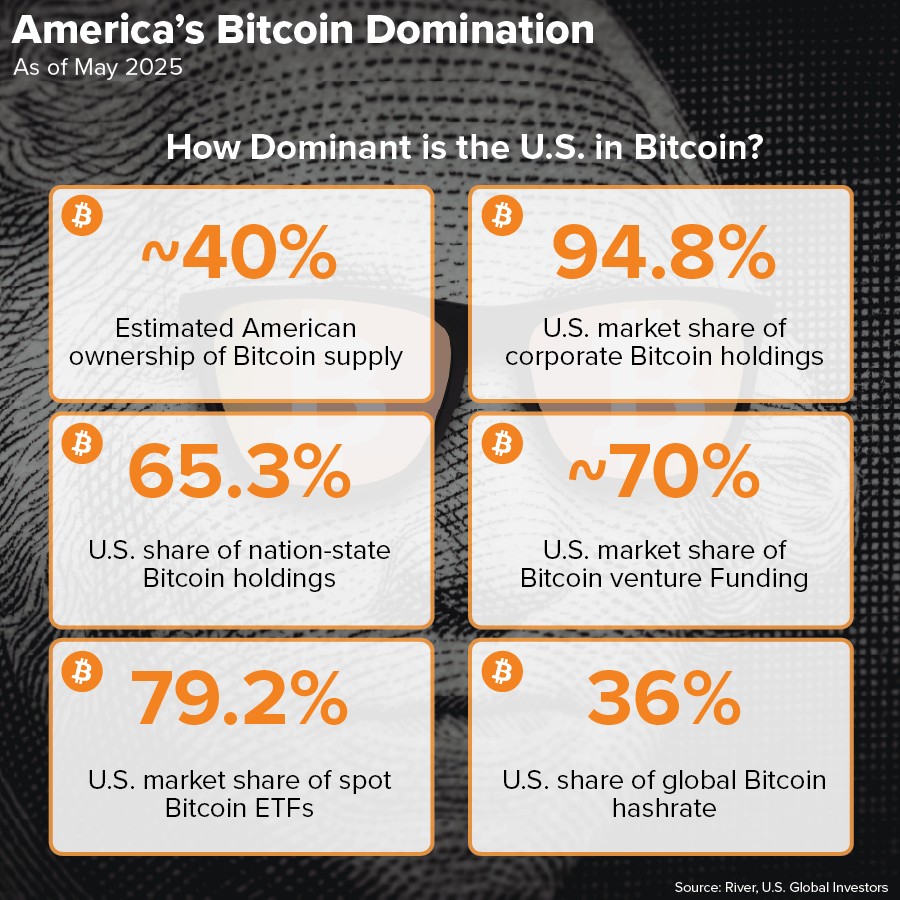
In addition, the United States Lead in Bitcoin holdings in traded funds (ETF)Risk Financing and National Reserves, even exceeding its participation in the gold market.
Holmes summarizes it: “I don’t think that this happened by accident. It happened because entrepreneurs, technology experts, futurists and legislators saw a chance and took advantage of it.”
As Bitcoin gains ground, his rivalry with gold intensifies. Traditionally, gold has been the refuge par excellence in times of uncertainty. However, capital flows show a clear change. The Bitcoin ETFs in the United States until the end of May registered mass tickets, while the ETFs backed by gold experienced exits, as Cryptonoticia reported.
This movement reflects a growing preference for digital currency as coverage assetsespecially in a context of concern about economic stability and debt crisis in the United States
Bitcoin vs. gold
Holmes underlines the differences between both assets: “I still think deeply in gold as a value reserve. It is tangible, used in jewelry and electronics. But Bitcoin is about growth. It is programmable, it operates 24 hours a day and does not recognize borders.”
Bitcoin’s shortage, limited to 21 million units, Contrast with gold, whose offer grows by miningrecycling (25-30% of the annual supply) and advances such as nuclear transmutation, still experimental. These factors could saturate the gold market, questioning their sustainability as a value reserve.
On the contrary, Bitcoin’s broadcast is reduced every four years in the event known as halvingreinforcing its appeal as protection against the devaluation of Fíat currencies.
According to JP Morgan analysts, this dynamic converts competition between Gold and Bitcoin into a zero sum game, where Bitcoin takes the lead. “We foresee that the specific catalysts of the digital asset will generate greater bullish potential for Bitcoin against gold in the second half of the year,” they say.
Impact on markets and a bull rally underway
The state support and institutional adoption are promoting the price of Bitcoin. Currently, the digital currency is quoted at $ 105,000, after reaching a new historical maximum of $ 111,000 in May 2025.
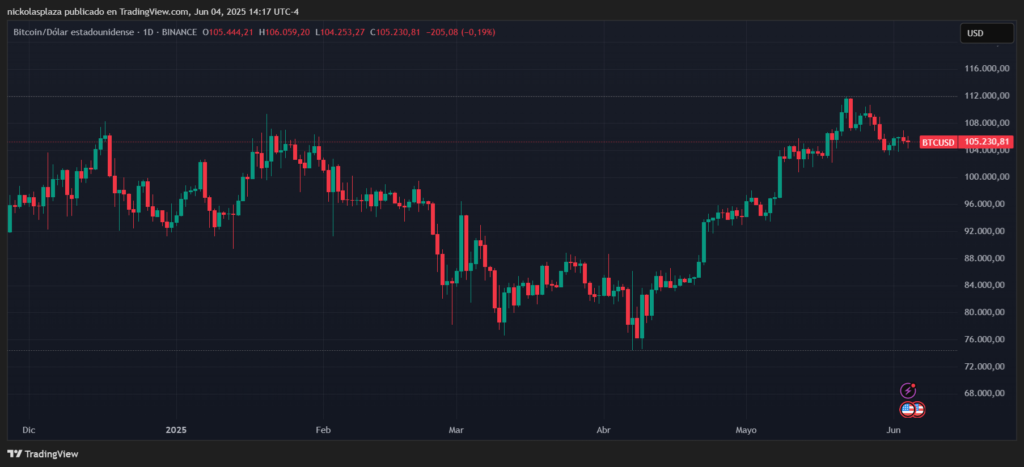
Analysts like Willy Woo see a breakthrough for $ 118,000 in the short term, while for the coming months, Joe Albano projects the price at $ 176,000 and David Zanoni points to $ 150,000 for October. This optimism is based on the combination of structural factors, such as the programmed shortage of Bitcoin, and regulatory, such as the support of the United States to the ecosystem.
Bitcoin, a symbol of economic independence
As the United States approaches its 250 anniversary in 2026, Bitcoin emerges as an emblem of innovation and financial autonomy. “It represents the values that Americans appreciate: individual responsibility, innovation and freedom of centralized control,” says Holmes. Unlike Fíat currencies, which can be printed without limit, Bitcoin requires work and energy to produce, reinforcing its unique value proposal.
In this context, the perception of Bitcoin as an alternative refuge grows, especially among institutional investors that acquire it massively. While gold continues to attract those who seek stability, Bitcoin captures those who bet on the growth in the digital age.
With state support and an increasingly convinced market of its potential, Bitcoin is not only here to stay, but is redefining the future of finance.