The leading payments company took the leap with an improvement in cryptocurrency transactions
Incorporated the Bit2Me, FoxBit and Lulubit platforms as partners
In a bid to definitively enter the world of cryptocurrencies, Mastercard added volume and new partners to “Crypto Credential”, its platform aimed at offering services with digital assets.
The company, known globally for its leadership in traditional financial payments, decided to make the leap into the bitcoin business. With an official announcement, it began its first peer-to-peer (P2P) pilot transactions, following the incorporation of the Spanish Bit2Methe Brazilian FoxBit and the Panamanian Lulubit as partners from service.
The multinational enabled users to now send and receive cryptocurrencies using a Mastercard Crypto Credential alias, instead of the long addresses of bitcoin and other cryptocurrencies made up of 40 alphanumeric characters.
This complexity is a barrier to entry for potential new users of cryptoassets. Entering codes can involve a high cost due to possible typing errors.
The improvement, similar to the service provided by Ethereum Name Service on the Ethereum network, aims to facilitate digital asset operations. And allows transactions to work in real time through Bit2Me, Lirium and Bitcoin Marketwhich amplifies the reach of investors and savers in Latin America and Europe.
With the new alliances, users from Argentina, Brazil, Chile, Spain, France, Guatemala, Mexico, Panama, Paraguay, Peru, Portugal, Switzerland and Uruguay will be able to send cross-border and national transfers through multiple currencies, the company indicated.
Although for the moment this innovation will be a pilot test, The decision has important significance for the industry. Mastercard, which managed to position its brand from the traditional banking and financial system, is officially moving forward with the adoption of decentralized finance.
In fact, this is the first “real world” application of the multinational’s vision with its cryptocurrency project, which was unveiled last year.
In the official statement, Mastercard acknowledged that real-time P2P transactions “represent the potential to further expand and support the domestic and cross-border remittance market.” The expectation is to extend it to NFT, ticketing and other payment solutions.
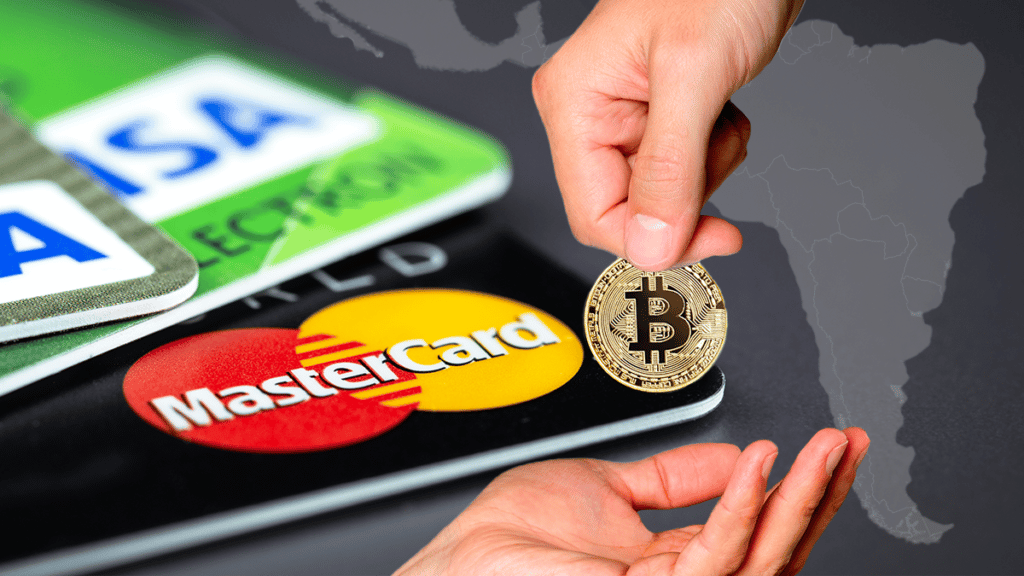
Mastercard once again ventures into cryptocurrencies Composition by CriptoNoticias. Source: BillionPhotos.com; cousin91 ; negoworks/stock.adobe.com.
«As interest in blockchain and digital assets continues to grow in Latin America and around the world, it is essential to continue offering trusted and verifiable interactions through public blockchain networks. “We are delighted to work with this dynamic set of partners to bring Mastercard Crypto Credential closer to realizing its full potential,” he said. Walter Pimentaexecutive vice president of Product and Engineering for Latin America and the Caribbean at Mastercard.
Among the highlights, the company reported that the service “offers the guarantee that the user has met a set of verification standards and confirms that the recipient’s wallet supports the transferred asset.” And that “eliminates the complexity of a consumer knowing what assets or chains the person they want to send funds to supports.”
According to the statement, the Crypto Credential platform operates with the regulations Travel Rule or travel rules for cross-border transactions that are required by the Financial Action Task Force (FATF), which aims to prevent money laundering.
This standard requires virtual asset service providers (PSAV) and financial institutions to “share relevant information” about who is the issuer and beneficiary of virtual asset transactions.
Now, the massive implementation of this adaptation commitment will have to wait. The company will first begin a testing phase with a select group of interested crypto wallet users, who will be selected by arrival order.
Once this test has been passed, availability will be expanded in the coming months to the more than 7 million users who operate with Bit2Me, Lirium and Bitcoin Market.
In 2021 Mastercard gave details about its decision to incorporate cryptocurrencies and in this regard said: “we are here to allow customers, merchants and companies Move digital value — traditional or crypto — however you want. “It should be your choice, it’s your money.” In general terms, they recognized, since then, that cryptocurrencies like bitcoin are popular for an increasingly influential sector of the population.
How will Mastercard’s cryptocurrency service operate?
1. The exchange will first verify a user against the Mastercard Crypto Credential set of standards. At that point, the user gets a alias to send and receive funds on all supported exchange platforms.
2. When a user makes a transfer, the service checks the validity of the recipient’s alias and that their wallet supports the digital asset and blockchain
3. If the exchange receiver does not support the asset or blockchain, the sender is notified and the transaction does not take place, in order to protect the parties from the possible loss of funds.
This is how the Mastercard system will work
The experience with Binance
The foray of large credit cards into the field of crypto assets is not new. Both Mastercard and Visa were associated with Binancebut that alliance had difficulty prospering.
As CriptoNoticias reported, the exchange It stopped operating with the cards issued by both companies on September 21 of last year in Latin America.
The discontinuation of those operations occurred in a context of lawsuits and regulatory pressure against Binance from the United States Securities and Exchange Commission (SEC), which accused the firm of violating federal securities regulations.
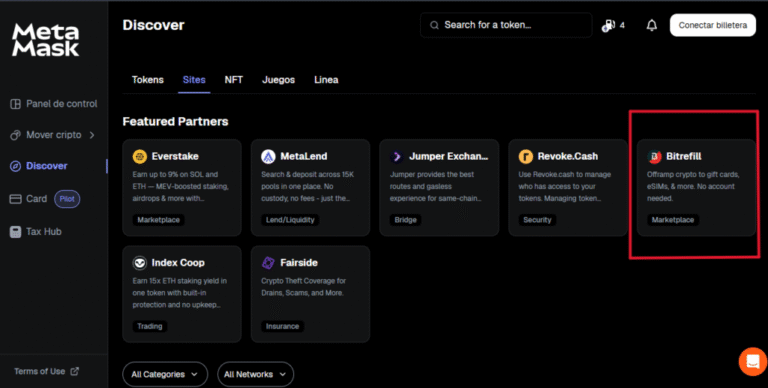
In Bitrefill users can acquire cards using BTC, ETH, Sun, USDC and USDT. Metamask connects directly to Bitrefill, using the wallet funds. On July 8, from Metamask they announced the integration with Bitrefill, a platform that allows paying cards (Giftcards) with cryptocurrencies. This alliance allows users to acquire cards provided by Bitrefill de Stores such…
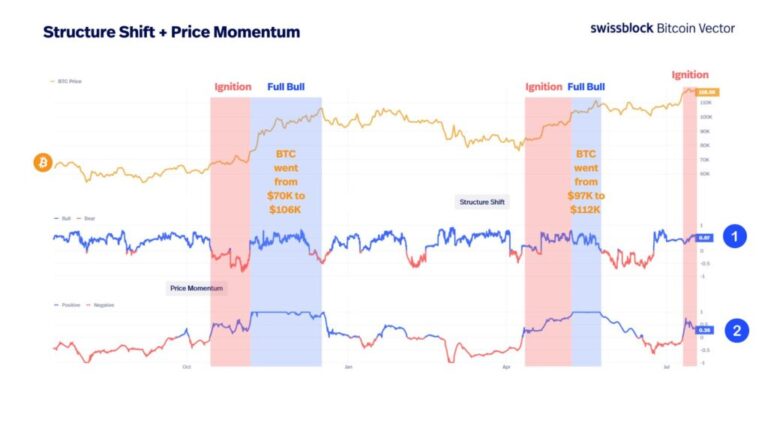
Bitcoin (BTC) continues in a phase of technical strength, with clear signs that the upward configuration is still in an initial stage. This is stated by the Bitcoin Vector analysis equipment, based on its market monitoring tool. According to this firm, the price structure remains solid and impulse indicators are gaining traction. The combination of…
The largest illegal installation of Bitcoin miners in the country’s history was discovered in Paraguay. Through a mega judicial operation, the Public Ministry and the National Electricity Administration (ANDE) detected around 3,000 machines that were operating with unauthorized energy consumption. The discovery of this farm, in the midst of the official offensive against illegal Bitcoin…
Key facts: The Monero community prefers anonymous methods to buy or sell XMR. “Monero doesn’t need Binance to shine,” says one X user. The cryptocurrency Monero (XMR) has already overcome the “trauma” after the departure of the exchange with the highest trading volume, Binance, and is on the rise. The privacy-focused asset has shown higher…
Both Mini Asic have key differences in performance, design and philosophy. The Bitaxe Gamma uses a more modern chip for Bitcoin mining. Kristian CSEPCSAR, an executive of the Brai -Pool Pool, shared an X post on April 15 in which he claims to have had an encounter with the person behind the Mini Asic Lucky…
By Angel di Matteo @Shadowargel The magistrate of the Southern District of New York considers inadmissible to include these sanctions that have already been withdrawn, although it will allow references to North Korea and Lazarus Group for the current case. *** Soon the trial begins against Roman Storm, which could mark a legal precedent for…