
Bitcoin’s largest mining pool binds to
-
With Foundry, 85% of hashrate contributed by Pools adds to this trend.
-
Most of these operations with low SAT/VB rates include OP_RETURN inscriptions.
Foundry USA, the largest Bitcoin mining pool in the world in terms of hashrate, has joined an emerging trend between mining pools that includes processing transactions with transactions with rates less than 1 satoshi per virtual byte (SAT/VB).
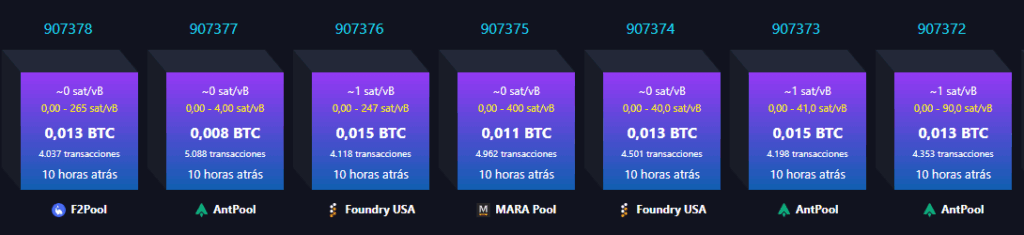
This practice, known in social networks as “Sum summer SAT/VB”, has also been adopted by other prominent pools Like Mara Pool, F2pool, Luxor and Antpoolas Cryptonoticia explained.
An example of this behavior can be observed in the following image extracted from Mempool.space, where they were recorded Seven consecutive mined blocks with rates ranging between 0 and a maximum of 400 SAT/VB. Two of those blocks were prosecuted by Foundry USA:
Mononaut, a Mempool developer. a rate of 0.49 sat/vb, paying 95 Satoshis ($ 0.11) for an amount of 0.00011230 BTC and a virtual size of 194 VB.
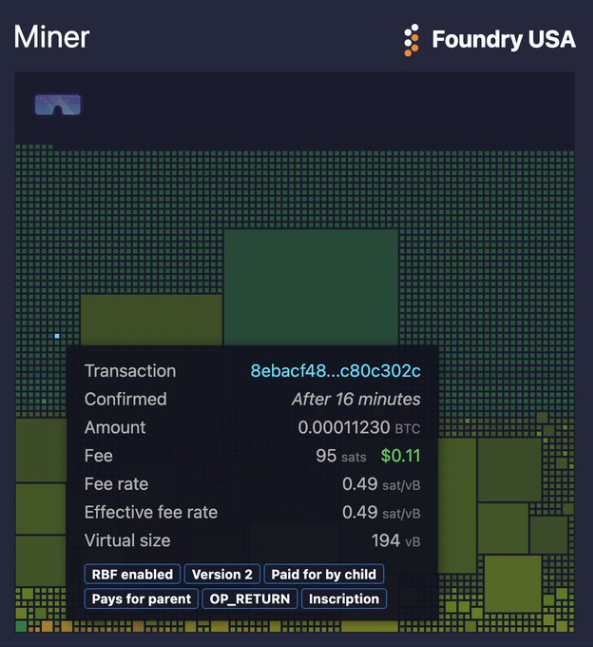
Mononaut pointed out that, after Foundry joined that practice, “85% of hashrate (contributed by the pools to the network) now accept rates below 1 SAT/VB”.
A transaction less than 1 SAT/VB implies that users pay less than one Satoshi for each virtual byte (0.00000001 BTC, approximately 0.0012 USD) that occupies in a block, a unit of measure that reflects the size of the transaction in the network.
That indicates that miners have begun to Accept transactions with almost null ratesmoving away from the practice of prioritizing operations that pay more for the block space.
Most of those operations that pay extremely low commissions are linked to op_return inscriptions generated by the miners themselves, or by projects that maintain direct agreements with them. Thus, they may not be available to common users.
Historically, Bitcoin miners prioritized high rates transactions due to the limited space of the blocks, seeking to maximize income.
However, Pools’ new behavior could reflect An experimental strategywhere miners explore the inclusion of data or tokens, renouncing revenue for rates and challenging the traditional economic practices of Bitcoin.


