Black hairy tongue, why does it appear?
Black hairy tongue is a benign condition that causes dark coloration and elongated papillae. Learn its causes and how to treat it effectively.

Collegiate number 08/34.34- Graduate in Medicine and Surgery from the University of Valladolid 1995. Graduate in Dentistry from the International University of Catalonia. Medical consultant for Blog Salud MAPFRE
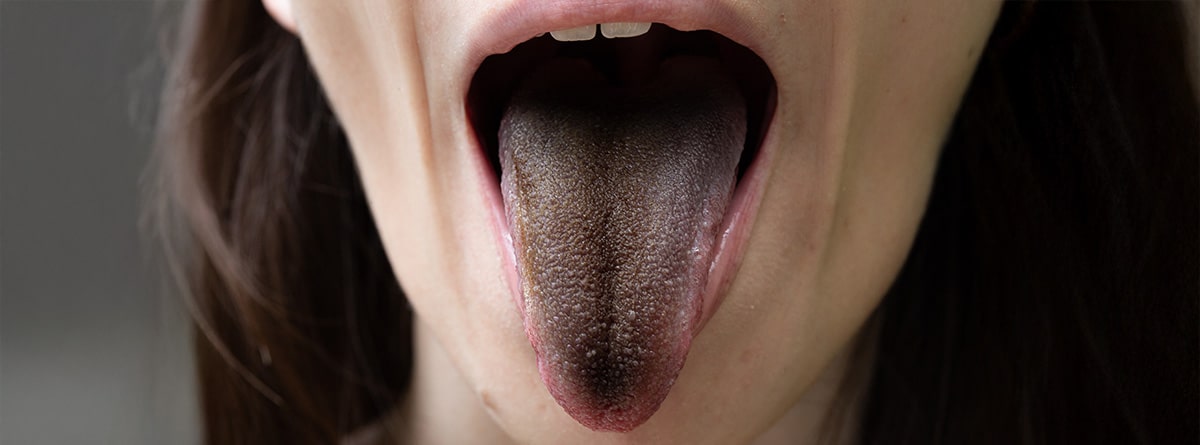
Black hairy tongue, as the name suggests, is a condition in which the dorsal surface of the tongue has a dark color (black, brown, yellow or green) and a downy or velvety appearance. It is a benign and temporary pathology, as long as the underlying causes are identified and treated.
What is it due to?
The velvety or hairy appearance responds to the excessive growth of filiform papillaewhich normally exfoliate naturally. In this condition, they can measure from 1 mm to 15 mm. The coloring is due to the retention of food remains, bacteria, fungi and pigments from drinks or foods.
Despite its unpleasant appearance,It does not represent a serious health problem and is usually painless.
Symptoms
The associated symptoms (in order of frequency) are:
- tongue discoloration: black, brown, yellow, green or white.
- Downy or velvety appearance on the dorsal surface.
- bad breath (halitosis), due to the accumulation of bacteria and food debris.
- Taste alterations (dysgeusia) or metallic taste.
- Feeling nauseousgagging or tickling if the papillae are very elongated.
- In rare cases,burning sensation (glossitis) if there is a bacterial or fungal infection.
- In many cases it is asymptomaticand the reason for consultation is usually aesthetic.
If you have identified some of these symptoms, it is important that you consult with your trusted dentist, such as those you will find in MAPFRE Dental Insurance.
CALCULATE YOUR PRICE
Causes
- Accumulation of dead cells: The filiform papillae do not shed properly, allowing them to overgrow.
- Pigments: tobacco, coffee, tea, alcohol, foods with dyes.
- Drug use: antibiotics (tetracyclines, penicillin), corticosteroids, antipsychotics, which alter the oral flora.
- dry mouth (xerostomia): caused by dehydration, mouth breathing, Sjögren’s syndrome, radiation therapy to the head/neck, or medications such as antihistamines and antipsychotics.
- Poor oral hygiene: especially the lack of tongue brushing.
Additional risk factors
- Hospitalized patients with immunosuppression or undergoing radiotherapy.
- Life habits: smoking, excessive consumption of alcohol, coffee or tea.
- soft dietin people with edentulism (absence of teeth), which prevents natural exfoliation through abrasive foods.
- Medical conditions: immunosuppression (HIV, cancer), poorly controlled diabetes, trigeminal neuralgia, Addison or Peutz-Jeghers syndrome.
How prevalent is it?
Global incidence estimated between 0.6% and 11.3%increasing to higher percentages in people hospitalized with immunosuppression or patients undergoing radiotherapy, according to various studies published by the Mayo Clinic and the Cleveland Clinic, among others.
Presents ahigher prevalence in men over 60 years of age.
General measures
Black hairy tongue usually resolves spontaneously with hygiene measures and elimination of predisposing factors:
- Improve oral hygiene: Gentle brushing of the tongue with a soft-bristle brush or tongue scraper, twice a day.
- Mouthwashes: antiseptic mouthwashes to reduce the bacterial load.
- Adequate hydration: drink water to keep saliva fluid and its bacteriostatic effect.
- Diet rich in raw fruits and vegetables (apples, carrots), which promote the mechanical exfoliation of the papillae.
- Avoid or reduce the consumption of tobacco, alcohol, coffee and tea.
- Medical treatment(if previous measures fail)
- Topical master formulas: with urea (40%), clotrimazole (1%) and retinoic acid (0.05–0.1%).
- Topical antifungals or antibacterials: such as nystatin or antibiotics, if there is a candida or bacterial infection.
- Medication adjustment: Consult your doctor if the cause is related to any drug.
What you should know…
- Hairy tongue is a benign condition in which the tongue has excessively elongated filiform papillae and dark color due to the accumulation of pigments, bacteria and food debris.
- It is usually painless and is related to factors such as smoking, poor oral hygiene, use of certain medications and oral dryness.
- Treatment includes improving tongue hygiene, avoiding predisposing factors and, if necessary, using topical antimicrobials or adjusting medication.