El Salvador’s bitcoin model has a new laboratory in Peru
-
A “Bitcoin” Surf Cup seeks to replicate in Huanchaco the successful model of El Salvador.
-
Specialists insist: Without a legal framework, education and private support, massification will be a challenge.
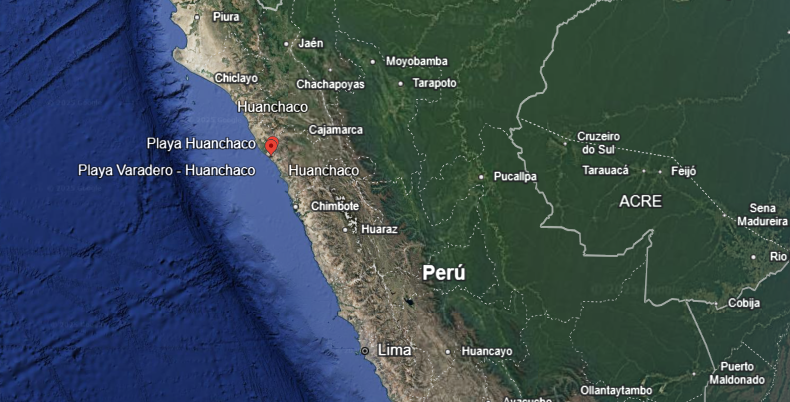
The parallel between patience, risk and anti -othishment culture have joined Bitcoin (BTC) and surf in recent years, a relationship that could star in a new chapter on September 13 in the famous Huanchaco spa, north of Peru.
That day, the sound of the waves to the vicinity of the city of Trujillo will mix with the murmur will talk about Wallets, Satoshis and Mempool. This under the excuse of celebrating The “Surf Bitcoin Cup”, when what will really be at stake will not be a trophy, but the economic future of the spa.
The goal is ambitious, since as a starting point it is expected that, from the largest hotel to the smallest position of Ceviche, everyone accepts Bitcoin as a form of payment.
Behind this movement is Valentín Popescu, director of Motiv, a non -governmental organization (NGO) whose personal crusade against poverty led him to discover in the pioneer digital currency, an unexpected tool of financial freedom.
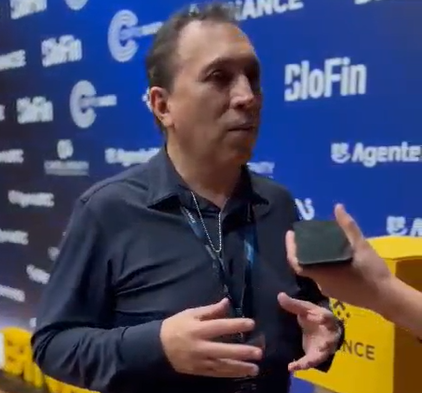
In itself, what is in Popescu’s mind, is not just a sporting event, as he revealed in conversation with cryptootics during the Peru Blockchain Conference event:
«The idea is to make a massive adoption of Bitcoin for all. That is why we call on the community, entrepreneurs, students already want to learn about Bitcoin, which is a way to promote tourism in Huanchaco. »
Valentín Popescu, Motiv.
His model to follow is Bitcoin Beach in El Zonte, El Salvador, the community project that It became the catalyst so that a whole country adopted the digital currency as legal tender money. “We are inspired by them,” Popescu admitted.
«We have to teach financial education, create circular economies, but also teach values. That is the plus that motiv is bringing, ”he said.
Teach to fish with Bitcoin cane
The story of Motivo with Bitcoin did not start in a boardroom, but in the midst of the hardest crisis of recent years. “Five years ago, in the middle of the pandemic, we were looking for resources to help families who had lost everything,” recalls Popescu. It was then when Someone suggested that he could receive donations in Bitcoin.
“At first it seemed a little weird, thinking that it was a Ponzi scheme or a casino issue,” he confessed. However, after documenting, he accepted the challenge, although he met the wall of the lack of adoption in Peru.
“The challenge was to use Bitcoin directly in the store, but I found the surprise that there was no store in Lima to accept Bitcoin to buy products from the basic basket or shoes for children,” he said. That frustration was the seed: “There arose the idea of creating the project to educate BTC and equip the communities with this financial alternative.”
The motiv method is summarized in a powerful philosophy: “We do not give the fish, but teach to fish.” Their work focuses on boosting entrepreneurs and providing them with financial tools that have traditionally been denied, as reported by cryptociases previously.
“We teach the person the difference between assets and liabilities, and that Bitcoin could be more than the fuel to pay the expenses of the day,” Popescu argues. The goal is to break a cultural paradigm.
«The word savings in our society seems of science fiction, something just for the rich. We teach that savings is a healthy custom that can be learned by infection ».
Valentín Popescu, director of the NGO motiv.
For Popescu, Bitcoin is the ideal vehicle for this purpose, especially for the most vulnerable sectors. «We are talking about a sector that sometimes does not know how to read or write, it does not have a bank account, many do not even have an identity document! The decentralized metcoin decentralized and made Match, “he says, highlighting how Bitcoin technology can offer an alternative to jump the barriers of the traditional financial system.
And while he looks at Huanchaco, the Motiva project evolves. Not only focuses on the most disadvantaged, but It opens to universities, schools and a whole community that seeks in innovation a new wave of prosperity.
The “Bitcoin Cup” of September will not be just a surf competition; It will be the fire test for a dream: that from the coasts of an ancient fishermen’s town, the currency created by Satoshi Nakamoto begins to be massive in a town with access to the ruins of the cities and temples of the ancient Chimú and Moche villages, one of the unmissable destinations of the land of the Inca empire, the largest civilization of pre -Columbian America, more than 500 years ago.
Regulation, education and massification: pending tasks
While Valentín Popescu goes up to motiv in a wave of enthusiasm, Erick Ortíz, the president of the Blockchain Association of Peru, believes that it is necessary to lift solid foundations to boost Bitcoin’s mass adoption in Peruvian territory.
“For Peru to lead, there are three important things,” Ortíz warns, putting the institutional vision on the table. «First, the regulation. You have to come from the State so that startups and exchanges can work hand in hand with banking entities.
The specialist’s words show a great dilemma: although Popescu and his team are already in the field promoting the adoption of Bitcoin, state machinery, according to Ortíz, has not yet started.
In addition, for Ortíz, education is the second pillar that is needed. «There must be knowledge in companies, and universities have to make it known [a bitcoin]so that there is greater adoption ». And add a third crucial point: “We have to reach the masses, because so far what we have is a niche.”
Interestingly, the Motivo Method directly attacks the problem that Ortíz points out, but on a scale that does not seem noticeable for the president of the Blockchain Association of Peru. And while Ortiz raises the “mission of educating all of Peru, reaching all departments”, Motiv is already reaching distant territories to apply that same recipe, demonstrating that financial education can begin in a small community and spread throughout the country.
The gap between immediate action and long -term planning becomes even more evident when talking about the future. On the possibility of Peru, such as El Salvador, to have strategic reserves of Bitcoin, Ortíz is cautious but optimistic. «I think so, that is the trend. But again, there will have to be a regulation so that the government can do it.
Thus, the dream of Huanchaco becomes an open -pit laboratory for the country’s future. The Popescu project does not expect for a legal framework; He builds it in practice, an entrepreneur at the same time.
The September Bitcoin Cup will be more than a sporting event. It will be the fire test of a model that challenges the status quo. The question that floats in the air is whether the energy of this shirt revolution will be sufficient to boost an entire country or if, as Ortíz warns, without the institutional bases, it will remain as a fascinating, but isolated, experiment on the north coast of Peru.