Exclusive interview with Luis Eduardo Daza – DiarioBitcoin
 By Angel Di Matteo @shadowargel
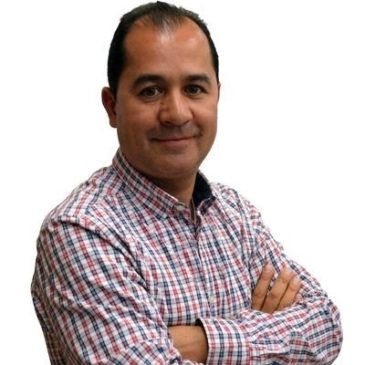
DailyBitcoin interviewed Luis Eduardo Daza, international consultant, forensic auditor and expert in anti-fraud issues for virtual assets, who shared some opinions and perspectives on the current state and future of the crypto sector in Colombia.
***
- Luis Eduardo Daza shares his perspective on the changes facing the Colombian crypto ecosystem
- He presented some details about the current state, and certain contradictions between regulators and the industry.
- He shared his reading on the regulatory state, regional examples and the course that Colombia should follow
- He considered the arrival of Wenia is generating an impact between banks and regulators
Latin America is one of the most promising regions for the crypto sector, since socioeconomic and political conditions have created an ecosystem where digital currencies are especially useful for society. Among these countries, the case of the Colombian ecosystem stands out, which has been facing a series of important changes in recent months.
After the fall of certain regulatory proposals, the increase in crypto operations in the country, the arrival of new projects and recently the launch of the exchange Wenia in alliance with one of the most important banks locally, there are many questions about the outlook for Colombia in crypto matters.
Interview with Luis Eduardo Daza
To learn more about the aforementioned topics, DailyBitcoin interviewed Luis Eduardo Daza, international consultant in prevention of money laundering and terrorist financing, forensic auditor, as well as consultant on anti-fraud, anti-corruption, financial crimes and corporate risks for virtual assets-cryptocurrencies and projects associated with Blockchain.
Crypto panorama in Colombia: Challenges and opportunities
When talking about the current panorama for cryptocurrencies in Colombia, Daza identified three visions or perspectives to consider on the topic:
The first of them is the vision of the authorities and regulators, highlighting positions and actions such as those of the Banco de la República, the Financial Superintendency, the National Tax and Customs Directorate and other entities, which have published statements and measures where they make it clear that cryptocurrencies are not recognized, but have tried to clarify some paths to proceed in tax and legal matters in relation to their operations. “This situation has not changed much despite having several legislative initiatives that have not had a successful result. The country has had two failed attempts to pass a crypto law“he points out.
The second vision has to do with the actors of the local crypto industry, which have been developing mainly economic activities hand in hand with certain use cases linking Blockchain and aspects Fintech. “TOnly a portion of the actors in this crypto industry have had a regulatory approach through ‘La Arenera’, proposed by the Financial Superintendency. So far, without any concrete results“.
And the third vision, more practical according to Daza, is that of public entities that have embraced use cases based on Blockchain. Here he highlighted initiatives such as “Reference Guide” developed by MinTIC, the prototype for land registration with the National Land Agency and the National University of Colombiaas well as the creation of a platform for the exchange of values between the Bank of the Republic and R3:
“In general, it seems that the use of technology in certain projects of social or public interest has more acceptance than the same initiatives for the development or exchange of cryptocurrencies or virtual assets. In contrast to various publications and forums in which it is mentioned that Colombia is one of the most active countries in the crypto industry in the region,” Daza points out.
In the face of challenges and opportunities, Daza focuses more on the possibilities:
The crypto industry is much more than the virtual asset exchange market. There are diverse and abundant forms of use of the digital exchange market, the use of smart contracts, applications in decentralized developments, the multiple uses of stable currencies, the trend of central bank digital currencies and many other forms of tokenization of financial assets with the security of these new technologies.
However, he considers that the main challenge for greater adoption has to do with legal uncertainty and the associated risks. “Due to global growth and the novelty of the market, it has also been attractive for criminal organizations. However, global reports already confirm that this way of transferring value is the worst option to hide illicit funds from criminal organizations due to the possibility of tracking and tracking they leave..
Political will and crypto adoption
Talking about the apparent government intentions to establish rules despite the absence of resolutions and concrete measures, Daza considers that there is political will to implement these changes, but the global panorama and the characteristics of the region must be taken into account, in order to direct the efforts and design frameworks applicable exclusively to Colombia:
I believe that there is a will to seek a regulatory security framework that promotes crypto businesses and the crypto industry. The crypto union has been the first to insist and request regulation by the authorities, especially so that the financial sector allows the connection and conduct of business with appropriate preventive measures.
Looking at the regional panorama, it is important that Colombia does not lose perspective of what is happening with its neighbors. Daza mentioned the extremes posed by El Salvador (pro Bitcoin) and Bolivia (restrictive posture), and in the middle are the cases of Chile, Brazil and Panama, which are moving forward on the path to establishing regulations applicable to their respective local crypto ecosystems.
“This generates trust between the different actors, the financial sector, regulators and of course creates favorable conditions for trust and collaboration,” he alleged, and considers that It is important to take guidance from international standards to prevent and investigate illicit activities with cryptocurrencies.
The arrival of Wenia to Colombia Changes in the crypto landscape?
One of the most important recent events for the country was the arrival of Wenia, local crypto exchange backed by Bancolombia Groupa historic event for the local financial sector and the digital currency industry.
“For the financial sector it is a challenging gesture to incorporate innovation into their businesses. The new Bancolombia Group Exchange will offer the exchange of five cryptocurrencies, including a stablecoin tied to the Colombian peso and guaranteed by the trust company. In addition, participation in the tokenization of assets was announced as a medium-term objective,” Daza highlighted.
Regarding the crypto industry, he described the fact as “a boost to other actors in the sector, to the authorities and regulators”:
A risky bet when operating in Colombia with an exchange entity (Exchange) licensed in Bermuda. For other actors in the industry it was a disloyal or incoherent act. While the crypto project that gave rise to Wenia was being developed, bank accounts continued to be closed for carrying out operations related to cryptocurrencies. I am a crypto-friendly financial group or I am not.
Will banks follow the example of Wenia? What will the regulatory entities do?
But what does the arrival of Wenia mean for other banks in the country? Daza points out that this surely raises many questions internally for these organizations:
“Are we also going to intervene in this market with our own entity? What will be the supervisor’s new rules? What is required to mediate and achieve participation in this new virtual asset market? How will it affect the market? national the existence of the first stable currency of the Colombian peso? among many others.
While these aspects are defined, Daza reports that there are certain doors that remain open, and that is where big changes can also come:
For now, Wenia will only offer exchange services for natural persons. Offers for the segment of legal entities, transfers, remittances, loans, guarantees, etc. are available to the market. Without a doubt, it is a fact that moves the industry not only in Colombia, but in the region and that invites other actors to participate in it.
Article by Angel Di Matteo / DailyBitcoin
Picture of Unsplash, edited with Canva
WARNING: This is an informative article. DiarioBitcoin is a media outlet, it does not promote, endorse or recommend any particular investment. It is worth noting that investments in cryptoassets are not regulated in some countries. They may not be suitable for retail investors as the entire amount invested could be lost. Check the laws of your country before investing.