FTX will inject liquidity in Bitcoin since May 30
-
The funds are not returned in Bitcoin, but in dollars.
-
This fact will act as fuel for the price of Bitcoin in a historically bullish period.
FTX Recovery Trust has confirmed that on May 30, 2025 the second distribution of funds will begin to the creditors that qualify according to the reorganization plan under Chapter 11.
In total, More than 5,000 million dollars will be released through the distribution suppliers chosen by users: Bitgo or Kraken.
But this is not just a judicial news or an administrative procedure in the long saga of the fallen exchange. Actually, It can become one of the most important catalysts for the price of Bitcoin in this quarter. Because? Because a considerable part of that money – which will be in the hands of users who were disappointed by the Exchange and want a second chance – could be reversed in Bitcoin (BTC) or cryptocurrencies.
A mountain of liquidity on the road
The magnitude of the refund is significant: more than 5,000 million dollars, which represents one of the largest capital redistributions towards private hands in the history of the digital asset ecosystem.
This process will not be done through traditional bank checks or deposits, but The funds will be sent directly to accounts in Kraken or Bitgoplatforms that facilitate immediate access to Bitcoin and cryptocurrency markets.
The official statement clarifies that when choosing a «Distribution Service Provider«, Creditors have resigned to receive cash directly, instead opting for the funds to be sent to their accounts in these exchanges or custodians, from where they can freely dispose of them.
And this is where an interesting opportunity is generated: those who receive those funds are already within the cryptocurrency ecosystem, and many of them could take advantage of the time to invest again in Bitcoin.
It is not unreasonable to think that a significant fraction of those 5,000 million dollars ends in BTC. In fact, in previous cycles, judicial distributions or massive returns (such as Mt. Gox, although not yet at all) have been seen as events with potential impact on market dynamics, either by sale pressure … or, as in this case, by a wave of recompras.
Unlike Mt. Gox, this time could be bullish
One of the great concerns that usually circulate around mass returns such as this is the fear of sales pressure. However, this case has a characteristic that substantially differentiates it from other similar processes: The funds are not returned in Bitcoin, but in dollars. And that modifies the incentive.
In addition, this flow of money comes in a specially favorable context for Bitcoin. It is not just a judicial return: it is an injection of liquidity to the market at a time of bullish narrative, reinforced by macroeconomic and technical factors.
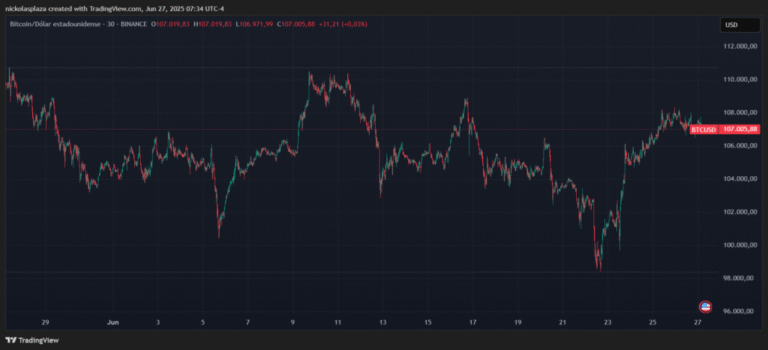
Bitcoin has been doing its historical maximum for several daysand there are several reasons to think that I could soon overcome it.
One of the most relevant factors is the commercial agreement (truce) between the United States and China, which – as cryptootics has reported – has begun to decompress the tensions generated by the war of tariffs. This geopolitical turn not only improves global macroeconomic perspectives, but also returns appetite due to the risk of financial markets in general, and to the cryptocurrency market in particular.
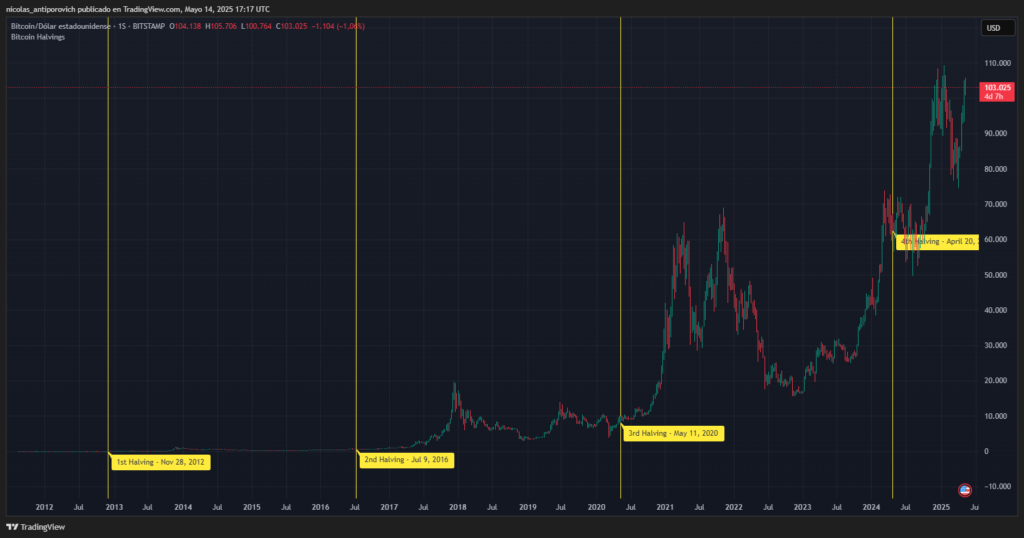
In parallel, the price of Bitcoin is transiting the acceleration phase typical of post-halving cycles. As has been documented in previous cycles (2013, 2017, 2021), Bitcoin tends to enter a parabolic stage between 6 and 18 months after halving, with price increases that in some cases have exceeded 500%. The most recent halving occurred in April 2024, so we are just within that golden window.
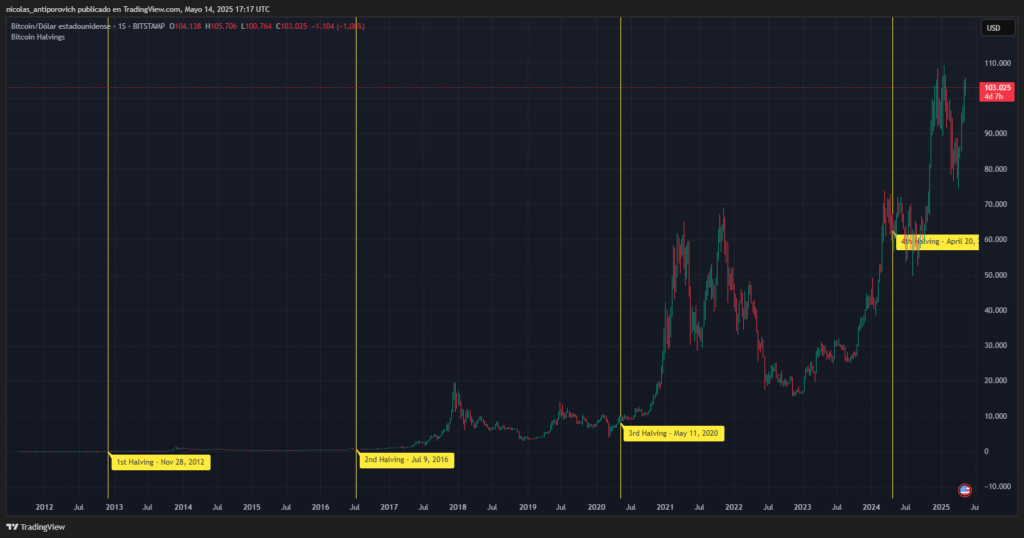
And now, as if more fuel was needed to feed that rocket, more than 5,000 million dollars arrive at user cryptocurrency accounts that could be wishing to take advantage of this new upward wave.
How much could this impact the price?
While not all money will be invested in Bitcoin (some users will withdraw their funds, others will leave them immobilized or diversified), Even a relatively low fraction – for example, 10% of the funds – would represent an injection of 500 million dollars of potential demand.
In a market where the daily liquidity is limited and the BTC circulating is increasingly retained by long -term holders, this type of income can move the price significantly.
In addition, the fact that the distribution is staggered, and that users begin to receive the funds between May 30 and the first days of June, suggests that the effect will not be immediate, but could be extended for several weeks, coinciding with the beginning of a historically strong period for Bitcoin in the post-halving years: the third quarter of the year.
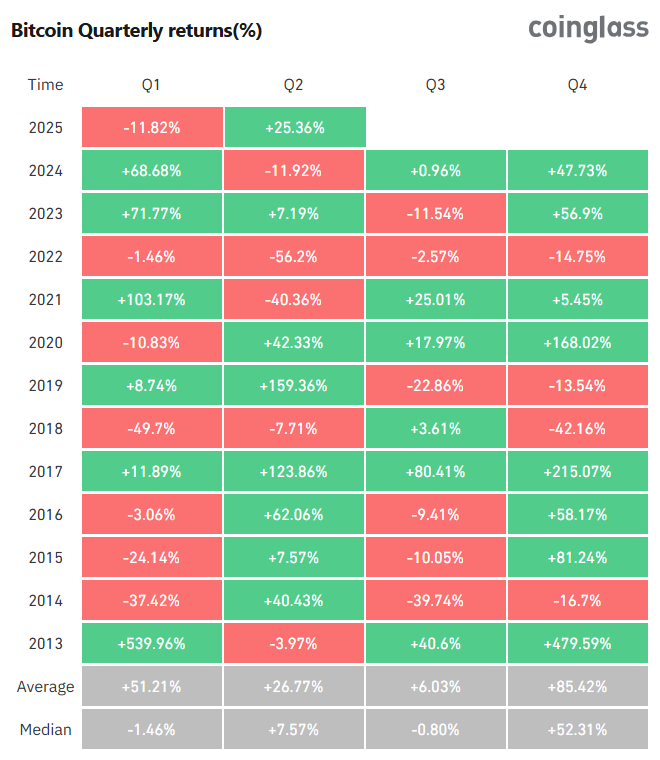
It is also important to take into account market psychology: the announcement of this return can already be interpreted as a positive signal by investors, encouraging BTC’s early accumulation before the new buyers arrive.