Goldman Sachs is now the biggest investor in Bitcoin ETF
-
In March, Goldman Sachs recognized the great growth of Bitcoin (BTC).
-
If ETF shares for Bitcoin, Goldman Sachs would have approximately 20,176 BTC.
The financial giant Goldman Sachs has taken a decisive step in the digital asset market by becoming the main investor identified in Bitcoin quoted funds (BTC) in the United States.
With a significant investment in the Ishares Bitcoin Trust (ibit) fund managed by Blackrock, The entity demonstrates a growing interest in Bitcoin, In a context where Bitcoin experiences a boom in its adoption and valuation.
Last Friday, Goldman Sachs presented its 13F form before the stock and values commission (SEC), a mandatory document that details the investment positions of financial institutions at the close of each quarter.
According to this report, corresponding to March 31, 2025, the American Bank It has 30.8 million shares in the Ibit Fund, valued at 1.4 billion of dollars.
In addition, it maintains 3.47 million shares at Fidelity Wise Origin Bitcoin Fund (FBTC), with a value of 250 million dollars.
In comparison, Form 13F presented as of December 31, 2024 showed a lower position in Ibit, with 24 million shares, and a practically identical amount in FBTC, with 3.5 million shares, according to Macroscope data.
This indicates that Goldman Sachs increased his exposure to the Blackrock Fund by approximately 6.8 million shares During the first quarter of 2025, including the addition of some 30,000 shares in that period.
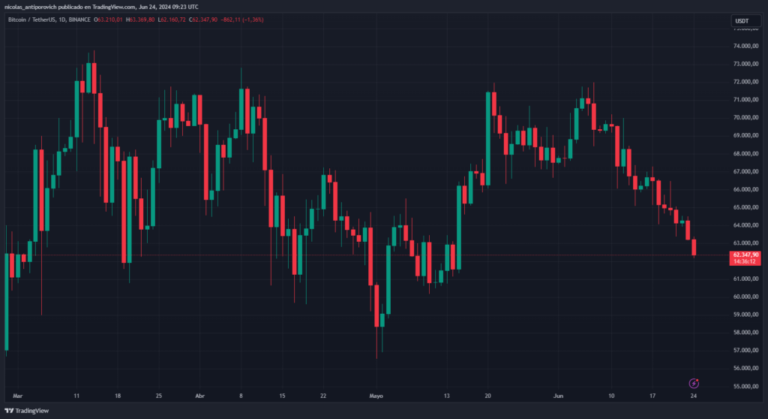
This movement occurred in a volatility context, since the price of Bitcoin experienced a fall during the first months of the year, at the time that the bank took the opportunity to increase its Bitcoin ETF investment.
Leadership in the ibit fund and a strategic change
With these figures, Goldman Sachs is consolidated as the largest Ibit holder worldwideaccording to the documents presented to the SEC.
This leadership reflects a strategic adjustment in its portfolio, since December 13, 2024 reported additional positions that do not appear in the current report.
Among them, an IBIT purchase option for 157 million dollars, an Ibit sales option for 527 million dollars and an FBTC sales option for 84 million dollars, Macroscope said.
The absence of these positions in the last report It suggests a restructuring in its approach to the Bitcoin ETFs.
For its part, the Blackrock Ibit Fund has shown a prominent performance. According to Sosovalue data, this ETF has registered net tickets in each of the last 18 days of negotiation.
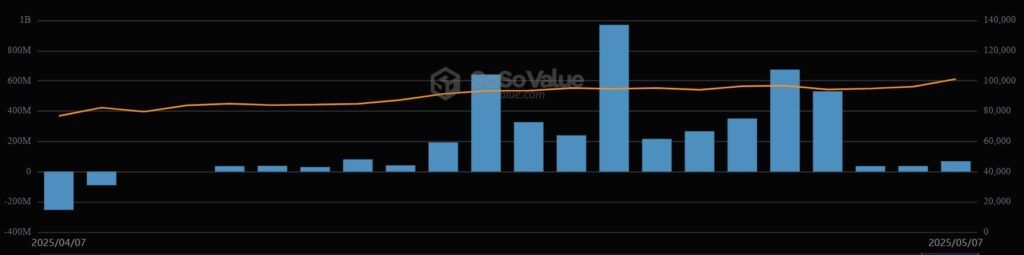
In that period, Ibit raised approximately 4.5 billion dollars, leading the Bitcoin fund market.
If Goldman Sachs turned his participation in Ibit, as of March 31, Bitcoin directly, he would have about 20,176 BTC, a figure that underlines the magnitude of his investment.
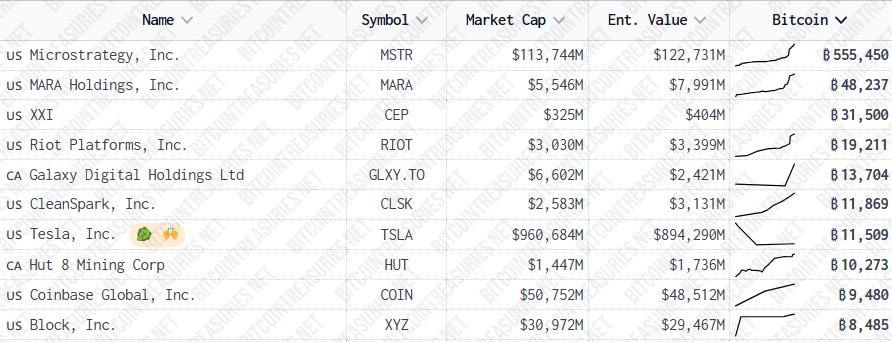
With that amount, The bank would position itself as the fourth company with more bitcoin in the marketjust behind Twenty One, a fund of 3,000 million dollars designed for the accumulation of Bitcoin that was launched in April 2024 and currently has 31,500 BTC, according to data from Bitcoin Treasuries.
In this context, Bitcoin funds in the United States accumulate a liquidative value exceeding 121,000 million dollars, the highest since January 2025, which reflects the growing institutional interest in this market.
Growing institutional adoption promotes the Bitcoin market
Beyond financial institutions, Bitcoin is also gaining land as a strategic asset between companies from various sectors and even some countries, which explore their use as a strategic reserve against global economic uncertainty.
This mass adoption has a direct impact on the market. By granting greater legitimacy to Bitcoin, These entities reinforce their position as a viable asset, which drives its generalized acceptance.
In addition, large -scale acquisitions, such as those of Goldman Sachs and Twenty One, generate significant demand volumes that reduce the amount of BTC available in circulation. This relative scarcity creates a bull pressure on Bitcoin’s pricewhich could translate into a sustained increase in its medium and long term price.
A public recognition to Bitcoin’s potential
The interest of Goldman Sachs in Bitcoin is not new. In March 2025, the entity highlighted the remarkable growth of this asset, a point that was reinforced in its annual report of 2024.
For the first time, The bank included cryptoactives in this document addressed to their shareholdersa gesture that marks a change in its perception of the sector. According to the report, the prevalence of cryptocurrencies and technologies such as distributed accounting is intensifying competition in the financial sector.
In April, Cryptonotics reported that Goldman Sachs recognized the existence of competitors who offer financial products based on cryptocurrencies, which could be preferred by their customers.
This recognition, combined with the mention of technologies such as artificial intelligence and electronic commerce, evidence that the bank sees digital assets as a disruptive factor in the global panorama.
The risks of institutional investment in Bitcoin
Despite the current enthusiasm, institutional investments in ETF of Bitcoin face significant risks derived from strong oscillations in the price of Bitcoin.
The volatility of this currency can raise doubts about its ability to offer long -term stability, a critical factor for investors such as Goldman Sachs. These fluctuations can erode the value of funds such as Ibit, affecting the confidence of the institutions that have opted for this asset.
In addition, the unpredictable nature of the digital asset market could generate a domino effect on the financial sector. If the price of Bitcoin experiences abrupt falls, losses could discourage other institutional investorsbraking the adoption trend that currently drives the market. Although Bitcoin is gaining ground as a strategic asset, its volatility remains an obstacle that tests the resilience of these investments in a global uncertain financial scene.