Inditex regains strength and reopens the debate within the Ibex

Inditex returns to focus after months of erratic behavior on the stock market. The Galician company has rebounded 11% in December and is trading again around historical highs, in the area of 56 euros per sharewhich places it among the most bullish values of the Ibex in the final stretch of the year. The market rewards the group’s operational strength, its cash generation and margins that, according to several analysts, continue to show resilience despite the slowdown in consumption in Europe and They can continue to surprise in 2026.
The rally of recent weeks coincides with a general upward revision of target prices. Entities like bank of AmericaGoldman Sachs, Deutsche Bank and Barclays have raised their valuations. Some of these firms already place the potential above 60 euros per share, which implies a market capitalization of more than 180,000 million and consolidates Inditex as the largest listed company in the Spanish market by a wide margin.
In the latest results, the textile group exceeded expectations, strengthened its financial position and showed the ability to continue growing despite the context of weakness in European consumption. The market has positively received the increase in margins, the improvement in comparable sales and the strength of the balance sheet. Net cash exceeds 11,000 million and the dividend policy remains one of the most attractive on the Ibex, with a distribution of 60% of the profit.
At the operational level, Inditex continues to advance in logistics efficiency and digitalization. Its business model, focused on fast-moving collections, global scale and total control of the chain, has once again stood out compared to its European and American comparables. The direction of Óscar García Maceiras has consolidated the transition after the departure of Pablo Isla and the arrival of Marta Ortega to the presidency, without strategic surprises and with a message of continuity well received by the market.
While its competitors need up to six months to transfer a trend from the catwalk to the store, Inditex does it in three weeks. This ‘living fashion’ model or ultra fast fashionas they call it internally, allows us to maintain competitive prices and operating margins typical of the luxury sector. The group achieves gross margins of over 56% and a return on capital of 33%, figures that only you sign as Hermes or LVMH can match.
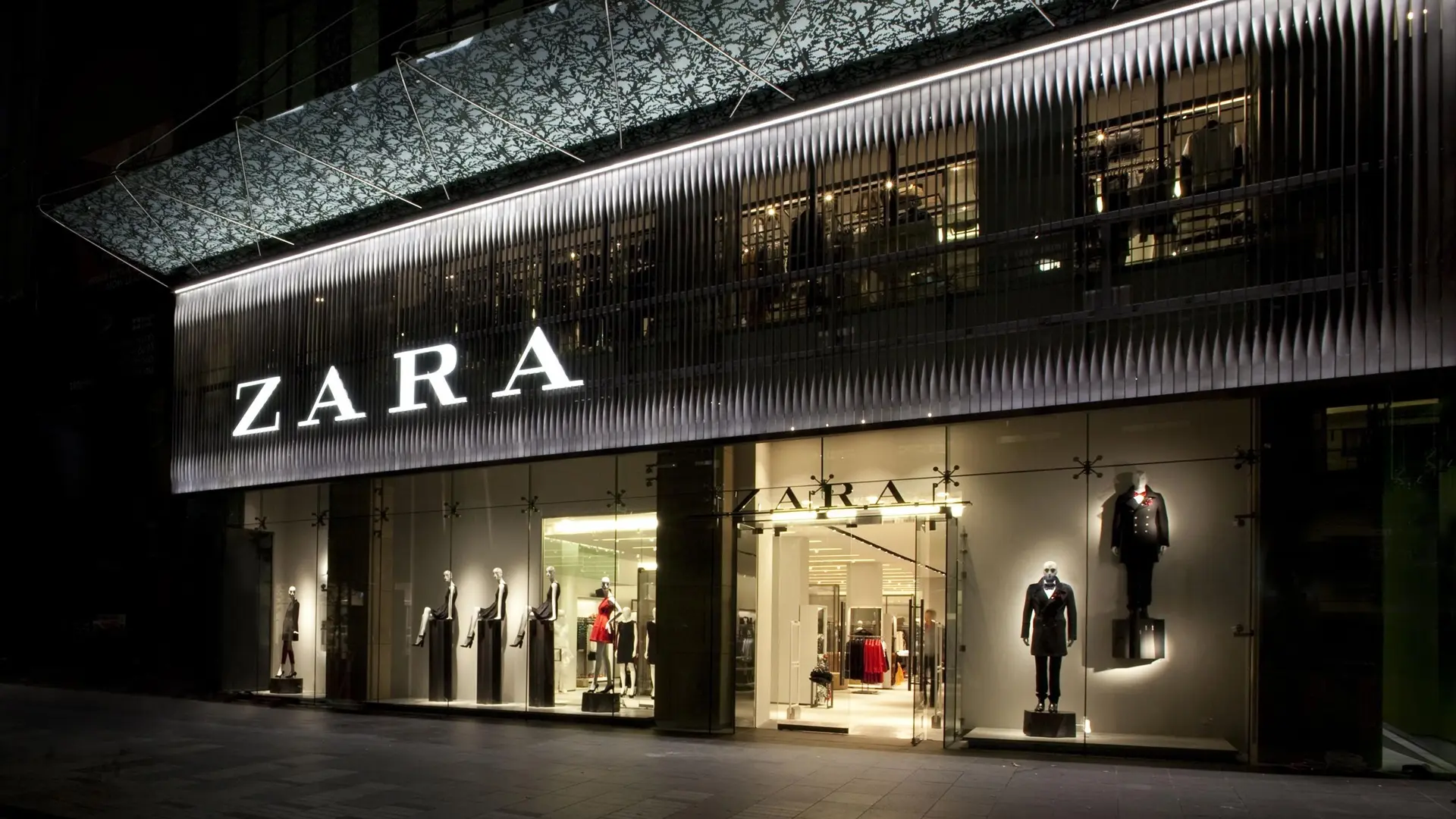
Zara, the group’s locomotive, generates more than 70% of the incomebut she is not alone. Pull&BearStradivarius, Bershka, Oysho and Massimo Dutti also have strategic roles and global penetration. This brand diversification, together with its geographical expansion (the United States is already its second market), allows Inditex to maintain aa resilient position in the face of regional economic shocks.
Inditex strengthens its institutional portfolios
The market consensus once again places Inditex as one of the candidates to lead the Ibex next year in a more selective and less banked environment. In that context, The stock also gains attractiveness in institutional portfolios that seek rotation towards values with visibility, moderate growth and low exposure to the cycle. Large international managers have slightly increased their exposure to value, according to Bloomberg data, to the detriment of sectors with a shorter journey after the 2025 rally.
Inditex is part of the main portfolios recommended by Renta 4, CaixaBank Private Banking and Bank Sabadell. He also appears in the defensive selections of BlackRock by 2026, as one of the European names with the best risk-return profile.
Antonio Castelo, analyst iBrokerbelieve that, After such a vertical year for the Ibex, the market enters a phase of greater selectivity. “We are not at a definitive ceiling, but yes in an area where the profitability binomial–risk is no longer so comfortable,” he points out.
In this scenario, stocks like Inditex, with net cash, profit visibility and low leverage, gain attractiveness.”
In his opinion, the investment logic now involves rotating towards values with global income and sustainable margins, rather than betting on a new bullish leg of the block index. “In that scenario, values like Inditexwith net cash, profit visibility and low leverage, gain attractiveness“he adds.
The challenge now will be to maintain the tone in a year that is expected to be flatter for European indices. Profit growth in the sector retail will largely depend on the evolution of consumption in the United States, stabilization in China and cost containment logistics. In the short term, the evolution of the euro against the dollar and the upcoming inflation data could set the tone for securities with high international exposure such as Inditex.
With a dividend yield close to 4% and a PER still below its historical average adjusted for growth, Inditex faces 2026 with renewed arguments to regain its leadership in the Ibexthis time without depending on a banking rally.