Inspired by El Salvador, a colorful Colombian town adopted bitcoin
Key facts:
-
The University of the Coast and the Mayor’s Office of Usiacurí promoted the project.
-
The aim is to position Usiacuri as a modern and accessible tourist destination.
In Usiacuri, a town known as “The Manger of the Atlantic”, in Colombia; The bitcoin (BTC) and cryptocurrency revolution has arrived. Following the example of El Salvador, the authorities of that town allowed, since last week, the use of digital assets for commerce, with the aim of boosting tourism.
The Mayor’s Office of Usiacuri, a town located one hour from the city of Barranquilla, authorized commercial premises to accept BTC and cryptocurrencies as payment. All in a context of growing adoption of digital assets in coffee land.
Julio Mario Calderón, mayor of Usiacuri, stated that They decided to promote their project to massify the use of crypto assets.
In this way, Usiacuri became the first municipality in Colombia to adopt cryptocurrencies for commercial transactions. The initiative is designed for national and foreign tourists, who visit that population with interest in using crypto assets.
Usiacuri’s project for locals to accept cryptocurrencies, is supported by the Universidad de la Costa (CUC), as well as local companies such as CienTech. The latter responds to the Colombian businessman and politician Tito Crissien.
According to Crissien, the idea for Usiacuri to accept BTC and cryptocurrencies is inspired by the legal adoption of bitcoin in El Salvador. He claims to have seen in that Colombian town the right place to implement a policy similar to the Salvadoran one.
“This is ideal so that foreigners can buy from artisans or purchase their accommodation without having to change their national currency,” Crissien told the local press.
60 artisans already accept cryptocurrencies
According to what was stated, merchants in that town rely on the Exodus cryptocurrency wallet, a multi-chain wallet that supports bitcoin (BTC), ether (ETH), litecoin (LTC) and stablecoins such as USD Tether (USDT) and USD Coin (USDC).
According to reports, currently more than 60 artisans from Usiacuri are learning to accept cryptocurrencies as payment through Exodus. These are training sessions given by specialists from the CUC, as well as the Mayor’s Office.
It was explained to these merchants that, by scanning a QR code, they can make transactions. They can do the same to receive payments in cryptocurrencies.
After the announcement, hotels, restaurants, tourism agencies and other businesses They began to record increases in their sales. This is due to the boost given by the cryptocurrency ecosystem and the growing community of this emerging sector.
It is estimated that with its new project underway in Usiacurí, not only will that town benefit, but rather serves as a model for other municipalities in the region.
“We started the pilot with Usiacurí and we know that it can be replicated in larger municipalities,” said Tito Crissien, from CienTech.
As Crissien sees it, there are other Colombian municipalities that could follow in the footsteps of Usiacuri, such as Puerto Colombia. The businessman maintains that by next year, it is feasible that that town also start accepting cryptocurrenciestaking advantage of the tourism potential of that region.
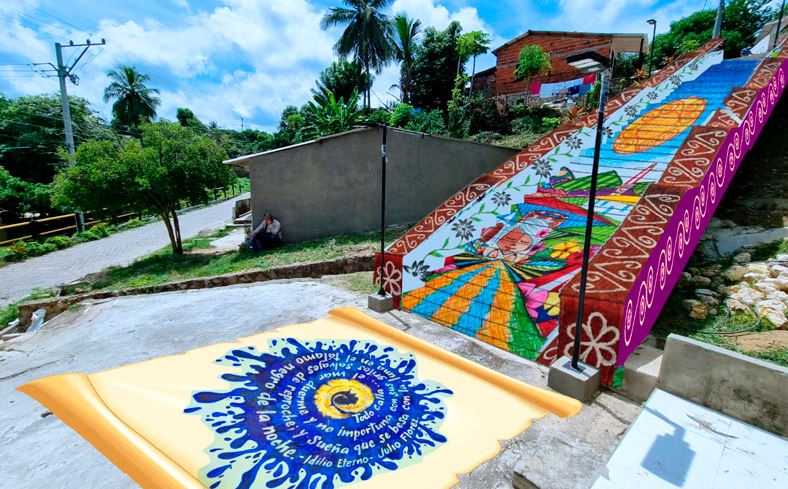
For now, the focus is on El Sebre del Atlántico, a town rich in culture, history and traditions, with cobblestone streets and colorful houses. A town that decided, hand in hand with its authorities, walk the path of the new economy and obtain the benefits it offers.
In the absence of regulation, autonomy is present
The Usiacurí population project occurs in a context in which Colombia is still waiting for formal regulation for the emerging ecosystem.
Almost a year ago, the Financial Superintendence of Colombia (Superfinanciera or SFC) presented its vision to the government of Gustavo Petro on the regulation of the cryptocurrency market.
And recently, the Minister of Finance, Ricardo Bonilla, assured that the coffee-growing country is moving forward in the development of a regulatory framework for cryptoassets. He revealed that these rules would be added to the regulations that already govern virtual asset service providers, which require these companies to report their activities.
Even so, there is no clarity in Colombia for prompt regulation of the cryptocurrency industry. In fact, the country’s Congress It has already closed its session without any news about it.
As a consequence, the waiting time will be longer for regulation to be finally approved for the bitcoin and other cryptocurrencies sector. While this happens, the adoption of digital assets is taking place from small communities like Usiacurí, which are willing to take advantage of the bitcoin market.