Lightning Network gains ground as a means of payments for decentralized miners
-
Although the use of LN accelerates payments and lowers commissions, it could have liquidity problems.
-
Braiins, another pool, informed that he had made 150,000 payments through the LN in the last year.
The use of the second layer of Bitcoin (BTC) Lightning Network (LN) as a payment route for the miners continues to expand, as demonstrated by recent data from two mining pools that already implement this technology.
On March 11, Cryptonotics reported that the Pool Brains, a centralized mining pool, had exceeded 1,000 daily payments and reached 150,000 payments accumulated in the last year through LN. That figure is now complemented by what is done by another Bitcoin mining pool, this time one that decentralizes the chain transaction templates. This is Ocean, a platform that points to decentralized mining and that also adopted this second layer solution for the Bitcoin network.
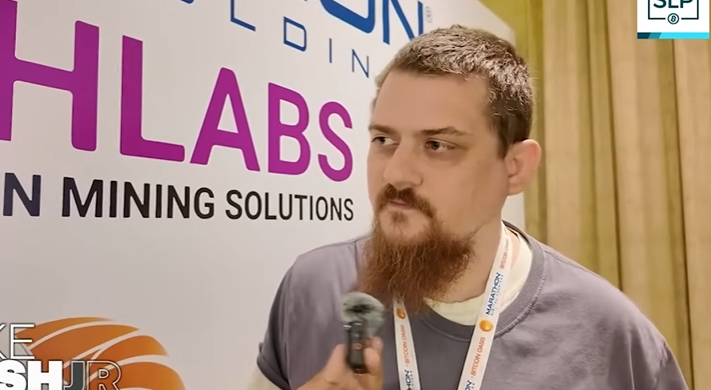
According to data provided by who operates under the pseudonym ‘Bitcoin Mechanics’, an Ocean member and developer, this organization already processed more than 17,000 successful payments through Ln. However, that figure responds to an ‘self -support’, since the amount of exact payments that this pool has made through the LN is not known nor was it specified in what period those 17,000 payments were made.
Most of these transfers, according to ‘Bitcoin Mechanics’, were carried out towards nodes that use Core Lightning, which implies that the recipients are users who operate the network sovereignly, without resorting to intermediaries such as Lightning Service Providers (LSP).
Ocean grant his miners rewards through Bolt12, a Network Lightning Payment protocol. Miners must configure Core Lightning nodes with sufficient liquidity to receive their rewards directly and not custodial.
If a payment fails due to liquidity problems, Ocean accumulates the rewards until reaching a minimum threshold of 0.01048576 BTC (equivalent to 1,048,576 satoshis). This amount is not configurable by the user and applies to both payments on the main Bitcoin network and through Lightning Network.
In the event that a miner ceases its activity or changing its Bitcoin address, Ocean can make discretionary payments for balances greater than 0.00065536 BTC (65,536 Satoshis), whenever it is practical to do so.
“Luke Dashjr refusing to accept shortcuts in this aspect is something that must be held and is working as expected,” said Bitcoin Mechanics in reference to Ocean’s developer and co -founder.
Luke Dashjr, co -founder and technology director (CTO) of Ocean, is a relevant software developer and a key figure in the Bitcoin ecosystem. For example, since 2011, it has stood out as one of the main developers of Bitcoin Core, the main implementation of the Bitcoin protocol, contributing significantly to its technical infrastructure.
Miners and pays with lightning network
In a transmission published last January, Bitcoin Mechanics explained how Ocean Integra ln in his payment system. Once the pool finds a block, it generates a reward transaction that is distributed to the miners through Payment channels on the light network.
This operation, through the design qualities of the LN, is specified more quickly a cost less than the main network of Bitcoin, allowing miners receive your rewards on shorter terms and with less impact by commissions.
However, the use of LN entails certain operational requirements. To be able to receive payments, Users must keep their channels open and with sufficient liquiditya task that demands constant management and technical knowledge. Unlike the main Bitcoin network, which allows direct transfers without dependence on liquidity in channels, LN is mainly designed for micropayments and can face limitations in case of managing major amounts.
In this context, if the volume of payments to the miners increases, it could be presented A tension between LN scalability and payment requirements in Pools as Brains or Ocean. The liquidity management both by the pool and the miners could become more complex, which suggests that the growth of the use of LN for these purposes must be accompanied by infrastructure improvements.
Despite these limitations, the data shows that the use of Network Lightning as a means of payment in Bitcoin mining is found In a stage of increasing adoption.
Pools’s experience such as Ocean and Brains offers a first indication that this technology can complement the traditional on-chain payments, at least for certain use cases.