Meningioma, what is it? – MAPFRE Blogs
Meningiomas are common, generally benign brain tumors. Know its symptoms, diagnosis, treatment and prognosis according to its malignant grade

Dr. Roser Mateu
MAPFRE Health Blog is a leading blog in the world of medicine thanks to the fact that all its contents are written by specialized doctors.
MAPFRE’s years of experience in the sector guarantee us as a source of truthful and practical information, helping you with your questions about the health of the body and mind.
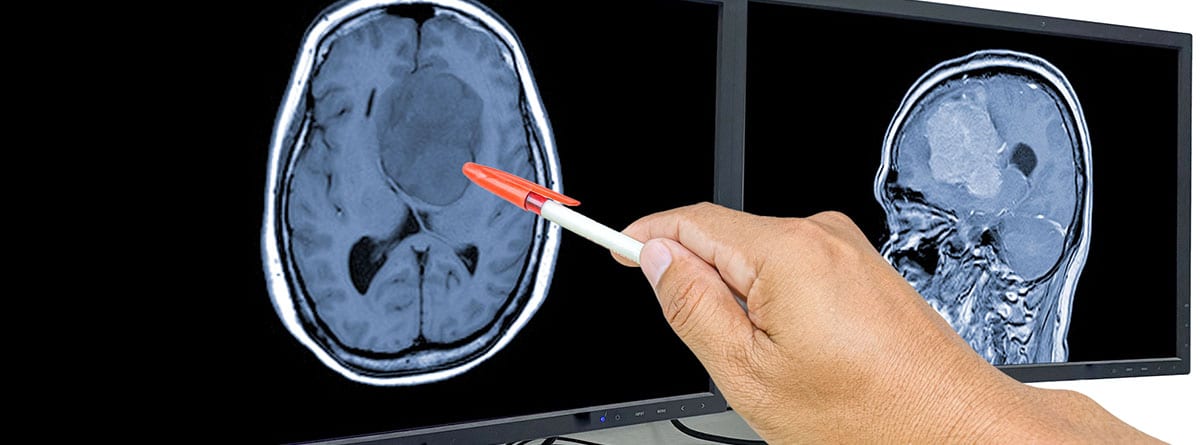
Meningiomas are the most common primary intracranial neoplasm of the central nervous system (CNS), representing approximately 40% of all primary CNS tumors. The majority of meningiomas present a non-malignant behavior.
They originate in the meninges, which are the membranes that cover the brain and spinal cord and therefore tend to displace neighboring nervous tissue instead of invading it. Spinal cord meningiomas represent only 4% of meningiomas.
meningioma It mainly affects adults and is more common in women. It is rare in children and when it occurs in childhood it is usually associated with genetic syndromes (neurofibromatosis 2…); In these genetic syndromes there is a “germline”, hereditary mutation, present in all the cells of the body that predisposes to the appearance of meningiomas.
Classification and degrees of malignancy
According to the 2021 World Health Organization (WHO) classification, meningiomas are classified into three grades: Grade I (80%), Grade II, and Grade III. A lower grade is associated with more benign behavior, slow growth and lower risk of recurrence.
Meningiomas present a variety of chromosomal alterations and recurrent mutations related to tumor development and progressionl; They are specific alterations that are found only in the meningioma cells and are therefore not hereditary. Some of these mutations have already been incorporated into the latest 2021 classification since they allow predicting the clinical behavior of meningioma.
Risk Factors
The exact cause of meningioma is unknown, although several risk factors have been identified:
- Genetics: for example, mutations in the NF2 gene.
- Irradiation exposure previous cranial injury, especially in childhood.
- female sex hormones.
- Obesity.
Clinical Presentation
- meningiomas They can be asymptomatic or detected incidentally (for example, when having an imaging study for another reason).
- They tend to grow very slowly.
- In other cases, they generate symptoms due to compression of neighboring structures, increasing intracranial pressure and causing edema, hemorrhage or ischemia.
The symptoms depend on the tumor location and include:
- Seizure disorders(partial or generalized).
- Neurological deficits : speech disturbance, weakness in the arms or legs, loss of coordination of movements.
- Changes in behavior or personality(apathy, dementia).
- Visual disturbances (double or blurred vision) or hearing.
- Headache.
Diagnosis
To diagnose a meningioma, the doctor will perform a complete neurological examination followed by some complementary examinations:
- Magnetic resonance imaging (MRI): it is the study of choice for detection and determining the location and extent of the meningioma and for follow-up.
- Computed tomography (CT): to be used in cases where MRI is contraindicated or to assess bone involvement.
- PET(positron emission tomography).
Preoperative angiography and embolization can be used to minimize bleeding during surgery.
- Biopsy : The definitive diagnosis is obtained by histopathological analysis of a sample of the tumor.
If you are diagnosed with meningioma, MAPFRE Health Insurance provides you with the necessary support to access advanced diagnoses, surgical treatments and radiotherapy.
CALCULATE YOUR PRICE
Treatment
Since most meningiomas develop slowly and often cause no symptoms, do not always require immediate treatment. In some cases, it is possible to conduct follow-up before deciding to intervene.
Surgery
Obtain a tissue sample to make the diagnosis, alleviate the mass effect and improve or eliminate neurological symptoms if they are present. The rSurgical excision is the treatment of choice and is operated with the aim of achieving complete removalof the tumor; However, because the meningioma can be near very delicate parts of the brain or spinal cord, sometimes the entire tumor cannot be removed. Surgery can carry risks, including infection and bleeding; The risks and possible consequences of surgery will depend on the location of the meningioma.
Radiotherapy
Can be used as primary treatmentas a complement to surgery when the resection is incomplete or in high-grade tumors to reduce the probability of recurrence, or as rescue treatment at the time of tumor progression or recurrence. Stereotactic radiosurgery uses radiation beams precisely focused against the tumor, sparing the surrounding brain tissue as much as possible; It is another technique that can be used in the treatment of some meningiomas. The role of radiotherapy is less defined for spinal meningiomas and in pediatric cases.
When surgery and radiotherapy are not effective, especially in recurrent, aggressive or surgically inaccessible tumors, experimental options are investigated:
- Conventional chemotherapy: limited effectiveness.
- Others: tyrosine kinase inhibitors (sunitinib, or lapatinib in the case of menigiomas associated with neurofibromatosis), immunotherapy, radionucleotides directed at somatostatin receptors.
- Gene therapies : The identification of tumor-associated mutations opens the field for research into specific therapies.
- Supportive treatment: anticonvulsant treatment….
Forecast
The prognosis mainly depends on the histological grade, the degree of surgical resection, and the genetic aberrations of the tumor. Losses of chromosomal material in certain chromosomes (6,10, 14…) are associated with greater recurrence and aggressiveness of the tumor.
Factors that worsen the prognosis include advanced age, male sex and associated comorbidities(other diseases of the patient).
The 5-year survival varies between 60% (for aggressive meningiomas) and more than 95% for those with benign behavior.
What you should know…
- Meningiomas are the most common primary tumors of the central nervous system, generally benign, that originate in the meninges and mainly affect adults, especially women.
- The symptoms depend on the location and include seizures, neurological deficits, sensory alterations, behavioral changes and headache, although many cases are asymptomatic and detected incidentally.
- Treatment is based on surgery as the first option, complemented by radiotherapy or experimental therapies depending on the case, and the prognosis depends on the histological grade, complete resection and genetic mutations associated with the tumor.
Literature
- Wang JZ, Landry AP, Raleigh DR, Sahm F, Walsh KM, Goldbrunner R, Yefet LS, Tonn JC, Gui C, Ostrom QT, Barnholtz-Sloan J, Perry A, Ellenbogen Y, Hanemann CO, Jungwirth G, Jenkinson MD, Tabatabai G, Mathiesen TI, McDermott MW, Tatagiba M, la Fougère C, Maas SLN, Galldiks N, Albert NL, Brastianos PK, Ehret F, Minniti G, Lamszus K, Ricklefs FL, Schittenhelm J, Drummond KJ, Dunn IF, Pathmanaban ON, Cohen-Gadol AA, Sulman EP, Tabouret E, Le Rhun E, Mawrin C, Moliterno J, Weller M, Bi WL, Gao A, Yip S, Niyazi M; International Consortium on -Meningiomas (ICOM); Aldape K, Wen PY, Short S, Preusser M, Nassiri F, Zadeh G. Meningioma: International Consortium on Meningiomas consensus review on scientific advances and treatment paradigms for clinicians, researchers, and patients. NeuroOncol. 2024 Oct 3;26(10):1742-1780. doi: 10.1093/neuonc/noae082. PMID: 38695575; PMCID: PMC11449035.