Ouigo follows Iryo’s strategy and relieves its CEO after consolidating its business in Spain

Ouigo has decided to change its management team after closing its first stage of expansion in Spain. Just like Iryo did a few months ago With the return of Fabrizio Favara to replace Simone Gorini, the low-cost subsidiary of the SNCF replaces its CEO at a time when it considers its business consolidated and faces a new phase marked by growth, competitive pressure and the search for profitability in the liberalized market.
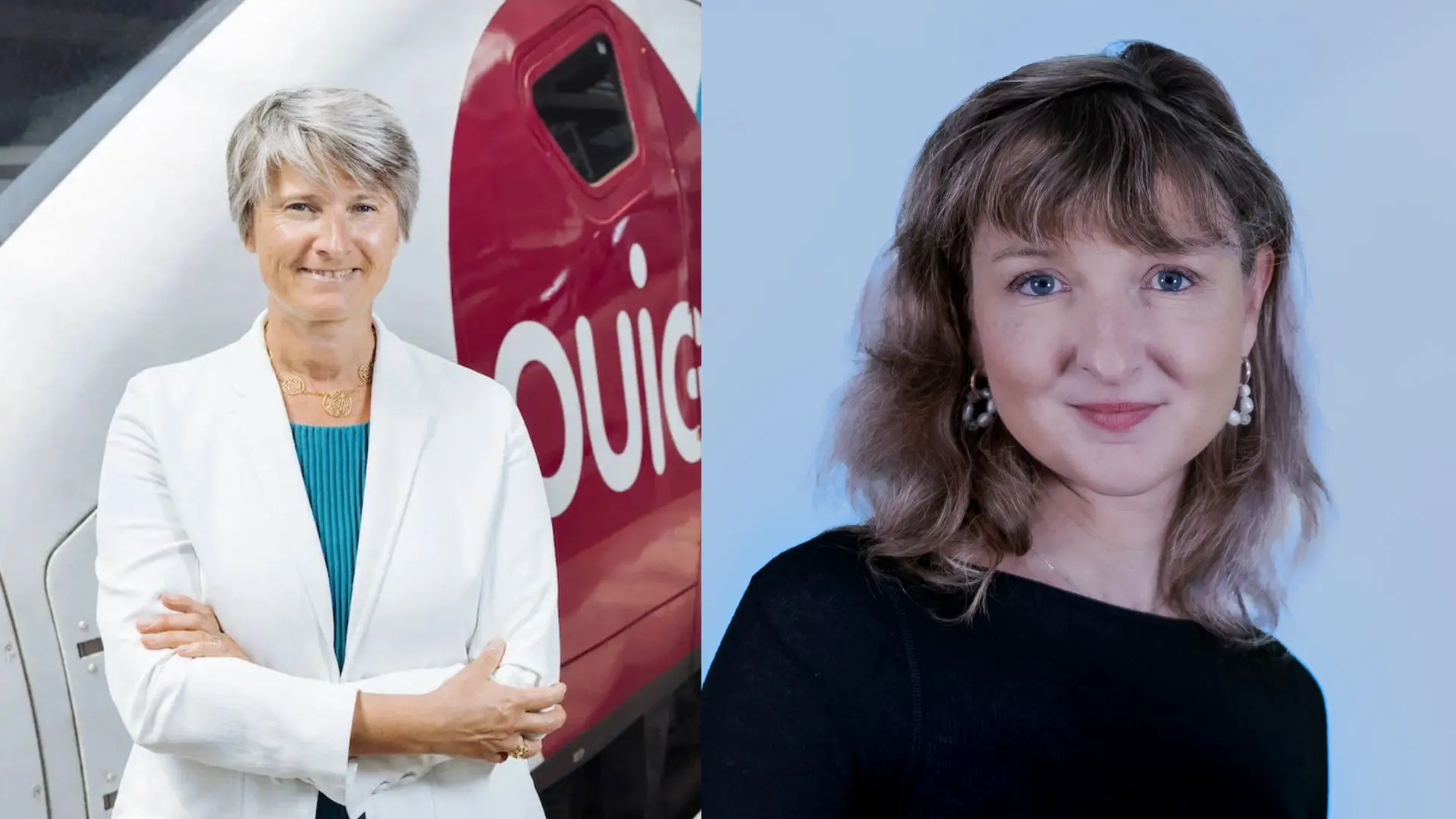
In a statement, Ouigo has announced the renewal of its management leadership with the departure of its current general director Hélène Valenzuelawho will leave office at the end of the year after seven years in office, and the commitment to Amandine Thomas-Commin as a relief As is usual in these movements of its parent company, the new director comes from SNCF Voyageurswhere he served as director of Intercitésthe division responsible for conventional long-distance lines in France.
His career in the French public group spans 15 years, during which he has held both operational and strategic responsibilities. Among the milestones of its most recent stage are the launch of new routes, including several night lines, and the recovery of the unit’s positive operating results, as well as the awarding of the first tender organized by the French State for these connections.
The board of directors lands in Spain to take on the second phase of the Ouigo project, with its operations already established – it has already exceeded the 20 million passengers transported since its launch – and a balance that faces its inflection point with the aspiration of closing 2025 as its first “profitable” year after chaining severe losses since its arrival on the market.
Valenzuela’s balance sheet at the head of the Spanish subsidiary has developed in a period marked by successive external tensions: the pandemic, the subsequent rise in energy prices and episodes of traffic interruptions linked to climate disasters. Despite these conditions, Ouigo claims to have achieved sufficient growth to move towards a Positive EBITDA in 2025thanks to a model focused on operational efficiency and low-cost rates. The company does not detail, at the moment, disaggregated figures on its margins or its contribution to the results of the SNCF group.
The management change coincides with a phase of greater maturity in the liberalized railway market, where Ouigo competes with Iryo – a subsidiary of Trenitalia and Air Nostrum – and with Renfe in the corridors with the highest demand. Competitive pressure has intensified especially on the Madrid–Barcelona and Madrid–Valencia axis, where the entry of new operators has driven a reduction in prices and an increase in the number of frequencies. In this context, the French company now faces the challenge of sustaining its low-cost model with still volatile energy costs and the need to continue expanding the occupancy of its trains.
From the matrix, Alain Krakovitchpresident of Ouigo Spain and director of TGV–Intercités, has highlighted Valenzuela’s contribution during the implementation phase. Although the manager has highlighted the “determination” of the outgoing team during the most complex years, the subsidiary avoids advancing specific objectives regarding new corridors or expansion calendars for the coming years. With the arrival of Thomas-Commin, the company simply points out that it begins “a new stage” that should serve to consolidate its position in the Spanish market and continue growing in volume of travelers.
For her part, the new general director has indicated that her objective is to strengthen the operator’s presence in Spain after the transition towards profitability. “We have the responsibility to continue consolidating our offer and incorporating more and more high-speed travelers,” he says in a statement. The Ouigo council has thanked Valenzuela for his work during these years and has highlighted that the replacement occurs with the “foundations laid” for the next phase of the project.