Province of Argentina launched its “state shitcoin” today, the chacho
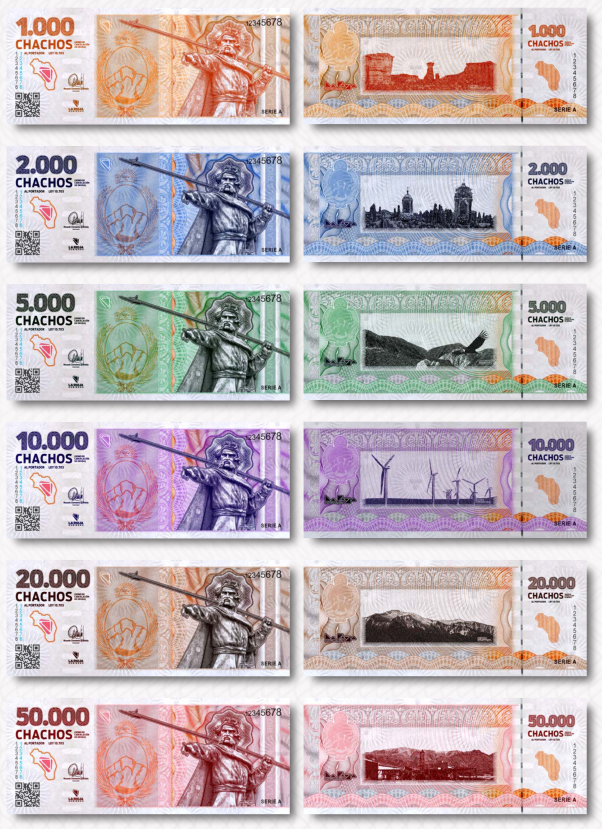
Today the Debt Cancellation Bonus (Bocade) enters circulation in the Argentine province of La Rioja. This quasi-currency is called “chacho”, in honor of the nickname of the leader Ángel Vicente Peñaloza.
The creation of the chacho was an initiative of the governor of La Rioja, Ricardo Quintela, who argued that it is an “obligatory” measure in view of “the cruelty of the adjustment applied by the Government” of the president of Argentina, Javier Milei.
The project of this quasi-currency was approved by the Legislature of that province after an intense debate. Specifically, Quintela’s administration is authorized to issue for 22,500 million Argentine pesos (about $17 million at the free market exchange rate).
The currency allows up to 30% of public administration salaries to be paid through this modality. In addition, they have a value 1 to 1 in relation to the Argentine peso.
The chacho is used to buy products in participating businesses and pay for services and taxes in La Rioja. Besides, It was clarified that no bank operates with this currencyThe official website does not state the “Terms and Conditions”. “We will publish them soon,” the provincial administration argued.
According to reports, if at the time of making a payment, the business or entity reports that the bill is false, it cannot be retained. The only ones authorized to do so are the offices authorized by the provincial administration.
The main figure on the obverse of the La Rioja banknotes is the federal leader “Chacho” Peñaloza, an important historical figure of the province. On the reverse, landscapes and scenes are shown that represent the geography and productive activities of the region.
In this regard, Mariano Di Pietrantonio, co-founder and director of strategy at MakerGrowth, defined the chacho as a “state shitcoin” and said that Gresham’s Law will come into force. This principle states that when two types of legal tender currencies circulate in a country, one of them is considered by the public as “good” and the other as “bad.” Bad assets always drive good assets out of the market. This means that people will seek to get rid of the chacho quickly.
As CriptoNoticias already reported, shitcoin is a term used to refer to cryptocurrencies that They do not add value to the ecosystem and are a complete fraud.It is a subjective matter to qualify a currency as a shitcoin since the utility and value depends on the perspective of each individual.
The reaction of President Javier Milei
The President of Argentina He did not oppose the plan launched by Governor Quintela. In fact, through X’s account he stated:
“To think that during the campaign they called me crazy for proposing a scheme in which there would be free competition between currencies and now they are promoting it.”
Javier Milei, President of Argentina.
The president allows the governors of the provinces to issue the so-called quasi-currencies although he insisted on remembering that “unlike what happened in the past, in no way are they going to be rescued by the national government.”
However, Milei considers that the inhabitants of La Rioja They are going to realize how they would end up being scammed by this quasi-currency. For the libertarian leader, this type of emissions causes distortion in the market and to solve the deficit problem he stressed that “what (Quintela) has to do is remember the expenses” of the provincial State.
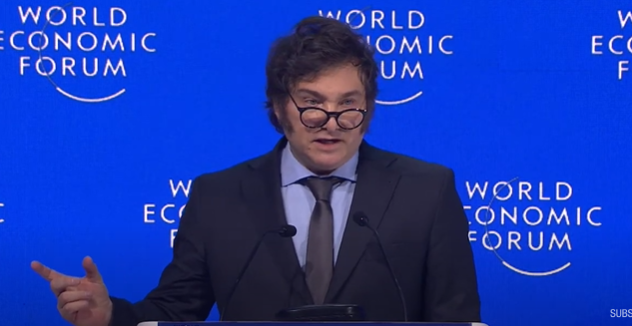
On the other hand, this measure goes against the Argentine president’s objective of cutting off inorganic monetary emission, which generates inflation and devaluation. In an interview he gave last week on La Nación +, he explained: “We have managed to consolidate one of our main policies, which was zero deficit. (…) Therefore, what comes from now on is: the zero deficit stage has passed; now we are going to the zero emission stage.”
Background of quasi-currencies in Argentina
La Rioja created a “provincial currency” in 1988 that was put into circulation during the period 2000-2001, after the financial crisis that affected the country.
At that time, several provinces such as Buenos Aires, Córdoba, Entre Ríos, San Juan, Chaco, Catamarca, Tierra del Fuego, Chubut, Río Negro, Mendoza, Tucumán, Corrientes, Misiones and Formosa, issued emergency bonds.
Due to the Convertibility Law, in 1991, monetary issuance was restricted and due to the resulting lack of liquidity, these bonds were designed as an alternative mode of financing.
In this way, both the national government and the provinces were able to pay their obligations and sustain consumption.
In 2003, these quasi-currencies gradually disappeared until they were reabsorbed by their issuers.