“Stop the obsession with inflation and worry about recession”
In the United States, the monetary policy of the Federal Reserve (FED) has focused on controlling inflation. A strategy that they have managed to carry out through increasing interest rates. This has led to inflation averages of 2.5% in recent months.
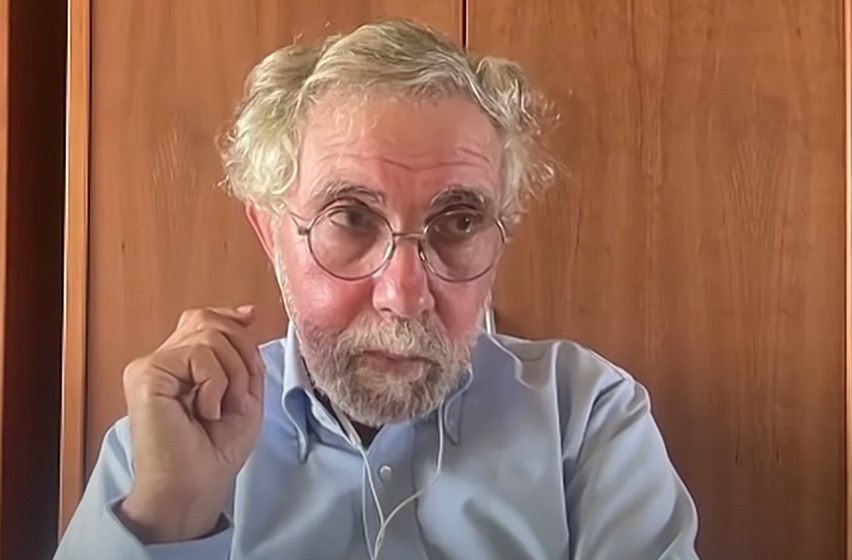
However, most attention has been focused on inflation, reaching to the point of being an obsession for the US monetary authorities. This is according to Nobel Prize winner Paul Krugman, for whom it is time to focus on another threat to the American economy: recession.
In a column, the American economist explained that it is difficult to know whether movements in inflation rates represent “a real change or just statistical noise,” thus suggesting that this economic phenomenon is under relative control in the United States, even with the slight rebounds at the beginning of the year.
Recalling that in April 2024 US inflation closed at 2.7%, the economist maintains that it is possible that inflation has returned to the “traditional (but arbitrary) target” of the FED, of a Consumer Price Index (CPI) of 2%.
For Krugman, who was awarded the Nobel Prize in economics in 2008 (the year of the last major financial crisis in the United States), “inflation really doesn’t seem like it should be a major concern right now.”
Be careful, the recession is coming
Now, he says, “I’m starting to worry a little about an economic slowdown” as a result of the pressure of interest rates, which have remained above 5% for almost a year.
Although Krugman notes that “there is nothing out there” to suggest that an economic recession is imminent, “there are straws in the wind,” i.e. it is possible that this will happen.
He explains, for example, that inflation-adjusted consumer spending fell slightly in April. Also, that the manufacturing sector showed weaknesses in its development.
“We are not yet talking about alarms, but the balance of risks has clearly changed,” said the Nobel Prize winner in economics.
“So it’s time to stop obsessing about inflation, which increasingly looks like yesterday’s problem, and start worrying about the possibility of a recession,” Krugman said.
He went on to warn that the strength of the US economy “is finally beginning to erode under the pressure of high interest rates.” “So yes, I think the FED should start cutting interest rates, and soon,” Krugman said.
Krugman’s warning about the possible recession in the US comes a week before the FED announces its decisions on interest rates. An event that causes uncertainty among investors and financial companiesdue to the important impact that these policies have on economic dynamics.
If the FED decides not to cut rates and keep them at the current level, approximately between 5.25% and 5.50%, the recession scenario proposed by Krugman could take more prominence. This is if we take into account that there are more than 60 US banks at risk of bankruptcy. And precisely the decision on interest rates plays an important role in their destiny.
As reported by CriptoNoticias, the Federal Deposit Insurance Corporation (FDIC) of the United States recently indicated that there are 63 financial entities within the List of Problematic Banks, which highlight institutions that are on the verge of collapse. since they have financial, operational and management weaknesses.
Historically, bank failures have been indicators of recessions in many countries. This is because the banks play a crucial role in the economy, since they are intermediaries. When such an institution collapses, it can cause a domino effect in the economy.
Bitcoin, the solution
The possible economic debacle that could arise if one or more US banks close their doors as a result of the monetary policy decisions of the authorities, reminds us of bitcoin (BTC), the largest digital asset on the market, which does not suffer from these evils.
Due to its decentralization, BTC is not at the mercy of monetary policies imposed by governments. Therefore, it is not governed by increases or cuts in interest rates. Nor is it due to decisions that often lead to financial crises, such as money printing.
Although its price in the market yes it is influenced by monetary policy decisions, such as interest rates or anti-inflation measures; BTC is a currency that, far from the dollar, does not go through economic attacks, such as depreciation, that are caused by state policies.
This is how bitcoin is emerging as a true asset of value for Americans, whose national currency, the dollar, can pay the bills of the possible recession predicted by the Nobel Prize winner in economics Paul Krugman.
Instead, BTC aims to continue growing and strengthening as a safeguard against economic crises, as recognized by large financial companiessuch as BlackRock and Fidelity.
Although for Krugman it is not so much like that. The economist’s position has been critical against this digital asset. In 2022, he assured that BTC “was approaching its extinction.” The bear market was then running and BTC fell to lows of USD 16,000. He also said at the time that Bitcoin technology was “useless.” Although it was clearly a personal vision that did not value the real benefits of bitcoin for people.