

symbols of struggle against a corrupt system
Key facts:
-
Julian Assange received cryptocurrency donations to evade state surveillance.
-
Like Bitcoin, the journalist challenged power structures and represented an ideal of freedom.
After a long journey of accusations, judicial persecution and political hostility, Julian Assange regained his freedom and arrived in his native Australia on June 26. The founder of Wikileaks paid a high price, after publishing more than 100 million copies of his documents in 2010. 250,000 US diplomatic cablesHe was almost sentenced to 175 years in prison on criminal charges.
Twelve years after the start of this journey, the journalist is considered by his followers to be a symbol of democracy and freedom of the press. His detractors see him as a dangerous person who attacked the United States and the global political order. And he did so by appealing to decentralized and transparent technological tools.
So far, the Assange mythology has an obvious similarity to Bitcoin (BTC)But these are not the only crossroads and forks in a story about institutions that are bleeding out their authority and experiencing a legitimacy in clear decline.
Self-described as a “cryptopunk,” Assange revealed confidential information and state secrets provided to him by his “mole,” the analyst Bradley Edward Manning (now Chelsea Manning). The leaked documents exposed the inner workings of an utterly corrupt system, sparking riots and protests in several countries.
The motives behind the wars launched by the United States in Afghanistan and Iraqthe CIA (US Central Intelligence Agency) cyberattacks and “cablegate” operations exposed the hypocrisy and violence perpetrated by governments around the world, exposing cases of bribery, money laundering and other illicit activities.
As in the economy, where the individual can do little in the face of the rules of governments, central banks, financial centers and large corporations that shape global economic governance, the Assange case exposes the vulnerability of the citizen to the mandates of the “security” of the State.
In both cases, the freedoms and rights guaranteed de jure They disappear in the face of the power that wants to limit them for the survival of the community.
However, technological advances have changed the matrix of this inequality. Global connectivity and the ways in which data and information can be circulated within the reach of individuals have increased the public’s ability to communicate and exchange with others.

For transparency and against centralization
Julian Assange and Satoshi Nakamoto’s cryptocurrency have emerged as symbols of resistance against centralized and opaque power structures, where it is unknown who controls them, under what objectives and with what interests.
Timothy Garton AshIn his book “Freedom of Speech,” he argues that the character of a regime is like a proportion between two variables: what the State knows about the citizen (E) and what the citizen knows about the State (C).
“The higher the ratio of C to E, the better the state in question. The best state is the one that combines the greatest possible privacy for the citizen with transparency for the rulers. The worst is the one where the citizen is transparent to the state (…) but the state is totally opaque to the citizen,” says Garton Ash.
The example of Wikileaks was the ultimate expression of these principles, exposing the dark secrets of power to Assange. This molecular and collaborative journalism, appealing to cryptographic technologies, circumvented the mechanisms of coercion that are justified in the name of National security.
Bitcoins, on the other hand, are the opposite of the same thing in the economic regime: a transparent, self-regulated and decentralizedwhich operates on a network that the State cannot tamper with. Exchanges can be seen throughout the protocol, but it is not easy to identify them with individuals.
“Cryptography can protect not only the freedoms of individuals, but also the sovereignty and independence of entire countries, solidarity between groups with a common cause, and the project of global emancipation. It can be used not only to fight against the tyranny of the State over the individual, but against the tyranny of the empire over the colony,” Assange notes in the book “Cryptopunks. Freedom and the Future of the Internet.”

A “revolutionary” system that allowed him to survive
In 2013, following the eruption of the scandal over the leaked documents, all of Julian Assange’s financial accounts and credit cards were were frozen.
Visa, Mastercard, Paypal, Amazonamong other companies, joined in the persecution of the journalist. Once again, traditional financial institutions demonstrated their coercive and police capacity, in alliance with the power in power.
The only way to sustain Wikileaks and the members who supported the project was through bitcoin donationsAccording to a report by the British newspaper “The Times”, the leak platform took advantage of the sharp rise in the value of Bitcoin in recent years.
Assange was an early admirer of cryptocurrency. He saw a connection between the artificial currency and his ideology that civil society should be organized outside of existing corrupt structures.
In Cryptopunks, Assange argues that the three fundamental freedoms are the “freedom of communicationthe freedom of movement and the freedom of economic interaction“All of them are threatened and can be controlled through technological changes.
“If you buy something from your neighbour with your VISA card, which in a traditional commercial society you could have done almost privately (…), everyone finds out. The major Western powers share information about the transactions and store them forever,” argues Assange.
For the journalist, from this point of view, bitcoin creates problems and benefits similar to cash. However, it allows you to control your own money without intermediaries, unlike fiat money.
“Once it is in your possession, you are sure that you have received payment, the check cannot be cancelled, the bank cannot reverse it. The ties of coercive power relations are cut,” he explained in the book Criptopunks.

Beyond the advantages, for Assange, Bitcoin “It’s a revolution” and the “real Occupy Wall Street”, for its challenge to traditional financial institutions. And he described it as a ““almost perfect balance” capable of achieving a “true global consensus” in transactions.
“Transactions in the entire Bitcoin economy are completely public. And that’s how it works; it needs to be that way in order for everyone to agree that a transaction has taken place; that the source account now has less money and the destination account has more,” Assange notes in Criptopunk.
“What is truly innovative about Bitcoin is the distribution and the algorithms that make it possible so that you don’t have to trust any part of the Bitcoin financial network. Trust is distributed,” he reflects in the book.
Resistance and opposition
Both Bitcoin and Assange have faced stiff opposition and resistance in recent years since their emergence in the global firmament.
The founder of Wikileaks was in a situation of political asylum for several years, following his judicial persecution. He faced several years in prison, after being arrested in the Ecuadorian Embassy in 2019 from the United Kingdom, in a clear violation of the diplomatic rulesHe faced several extradition requests to the United States.
In the mirror of the system’s breakdown, Bitcoin has also been subject to strict regulations and bans in several countries. Cryptocurrency transactions continue to be prohibited or face serious obstacles, as CriptoNoticias reported in the case of China.
However, the strength of the digital asset and its growing adoption worldwide is breaking several resistances. So far, only The Savior managed to legalize bitcoin as a legal tender.
In the context of this struggle, technology has been fundamental in the trenches of resistance, both for the leak of classified documents and for the security of Bitcoin.
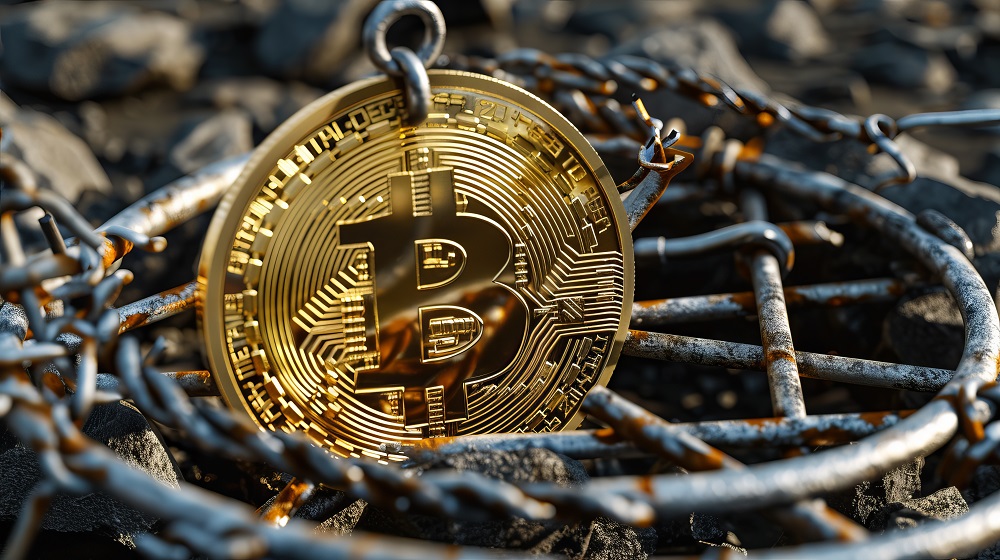
WikiLeaks’ use of advanced encryption allowed it to protect the identities of its sources and the flow of information. Bitcoin’s cryptographic and algorithmic chains ensure that transactions are more secure, controlled and private for the owner than any other system.
However, Julian Assange himself formulated the dilemma of which freedom has a higher hierarchy, when confronting the ideals of Wikileaks and the Bitcoin ecosystem.
“Isn’t freedom, or privacy, of economic interactions actually more important than freedom of expression, because it is these that really underpin the entire structure of society?” Assange asked in Criptopunks.
Disclaimer: The views and opinions expressed in this article belong to the author and do not necessarily reflect those of CriptoNoticias. The author’s opinion is for informational purposes only and does not constitute investment advice or financial advice under any circumstances.


