Taxes with Bitcoin, an agreement puts Panama among the pioneers of Latin America
-
Mayor Mayer Mizrachi highlighted this novelty as a milestone, highlighting its strategic importance.
-
Mizrachi promised citizens that the process will not be complicated.
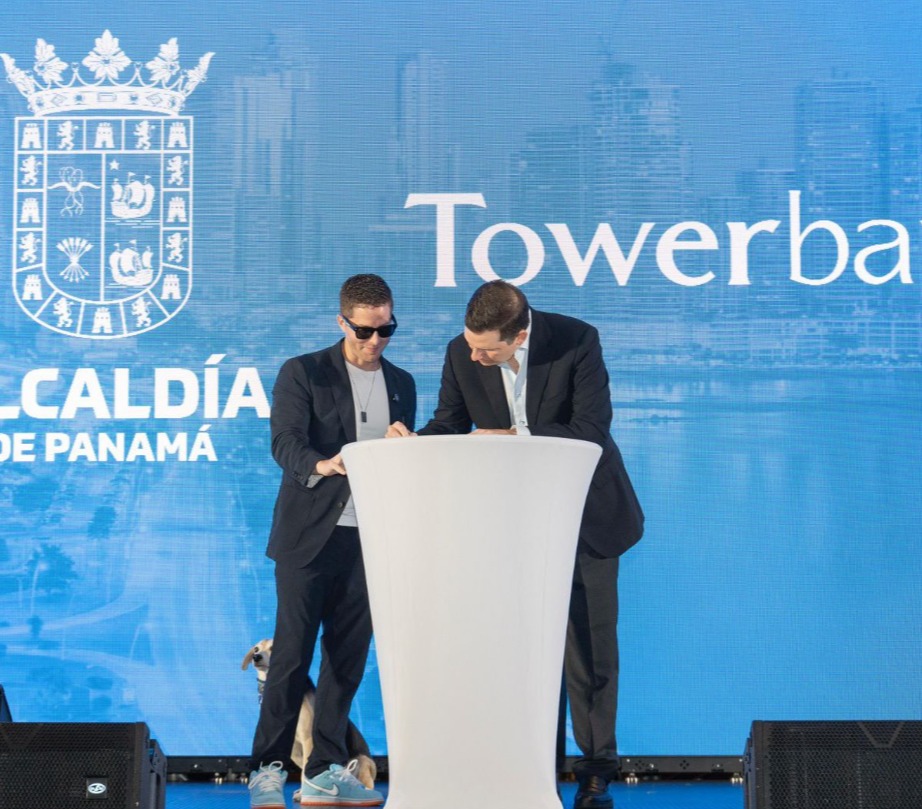
Panama City signed an agreement with a local bank to enable voluntary taxes and services with cryptoactive. The news was shared in X by Mayor Mayer Mizrachi, who a week before had advanced some details about the procedure.
The alliance, which will allow citizens to pay their tax obligations with BTC, ETH, USDC and USDT, was signed during the Panama Blockchain Week 2025, Among the mayor of the city and Benjamín Méndez, president of TowerBank. The information was covered by local and international media.
Days ago, Mizrachi celebrated the initiative of its municipal council, ensuring that the city – which described as the financial mecca of Central America – “was staying behind.” The mayor clarified that those who wish to use cryptoactives to fulfill their payments will not face great difficultiessince the process will be carried out through a bank that will convert the cryptocurrencies into dollars, and then transfer them to the mayor’s office. This was reported by cryptootics.
In relation to the signing of the agreement with TowerBank, the official appealed to his profile in X to declare before his followers that “the city has made history”, and assured that Panama will continue to be “The financial capital of South America”. Mizrachi, in previous statements, has been in favor of eliminating redundant processes, so that things work reasonably.
Thus, The Panamanian capital is positioned among the cities of the region that allow its citizens to pay taxes with cryptoactives. While some locations in the United States and Europe have already implemented similar measures, Panama joins jurisdictions such as Mendoza, in Argentina, in Argentina, which in 2022 launched a system for tax payments that facilitates the use of digital currencies. This advance reflects an improvement in the interaction between this technology and banks, marking a significant change with respect to historically restrictive positions.
Currently the payment of taxes with cryptocurrencies is a fairly rare option in the world, so much that in places and the state of New York is not available. However, some local legislators, such as Clyde Vandel, president of the State Banks Committee, are now working for a change. Vandel recently proposed a bill to modify state financial legislation, in order to allow citizens to use cryptoactive for pay taxes, fines and rentals to New York government agencies.
TowerBank has stood out as a key actor in the connection of the traditional banking system with the cryptocurrency ecosystem. From the pandemic, this Panamanian bank strengthens its presence in the sector through products such as its ‘Crypto-Friendly’ account and the Ikigii platform, both designed to facilitate the integration between cryptoactive and dollars.
In December 2024, Johan Hernández, Bank’s Business Executive, explained to Cryptonoticias that, although digital assets still lack specific regulation in Panama, TowerBank collaborates closely with regulators to anticipate future normative scenarios.
Facilitate the payment of taxes and services through cryptoactive marks a significant advance towards a more modern public administration. This initiative will not only benefit cryptocurrency users, but also will open opportunities for those who historically have been out of reach of the financial system. By offering an alternative to the exclusive use of Fíat money, obstacles are eliminated as complicated bureaucratic procedures and lack of access to conventional banking services.
This advance is complemented by legislative efforts that seek to offer a clear regulatory framework for the use of digital assets within the country. Gabriel Solís, an alternate deputy, recently presented to the National Assembly a draft law to establish said scheme, highlighting the potential of cryptocurrencies for Generate employment and attract foreign investments. Solís stressed that, unlike what was previously thought, this technology is no longer something of the future, but a reality that is transforming the present.