The “crypto dollar” is already a vital part of the global financial system
Key facts:
-
The stablecoin market has grown 1,500% in four years.
-
Low cryptocurrency transaction fees make adoption easier, analytics firm says
A new report from the analysis firm, CoinMetrics, shows the relevance that stablecoins are taking on in the world. These are cryptocurrencies that maintain the same price as fiat currencies, mainly the US dollar (USD). That is why they are also known as “crypto dollar” or “digital dollar.”
“Stablecoins are becoming a vital part of the global financial system, facilitating transactions and serving as stores of value,” he highlights. For the firm, its adoption, driven by the dominance of the dollar, transaction speed and low fees, underlines its usefulness in cross-border payments and decentralized finance (DeFi) applications.
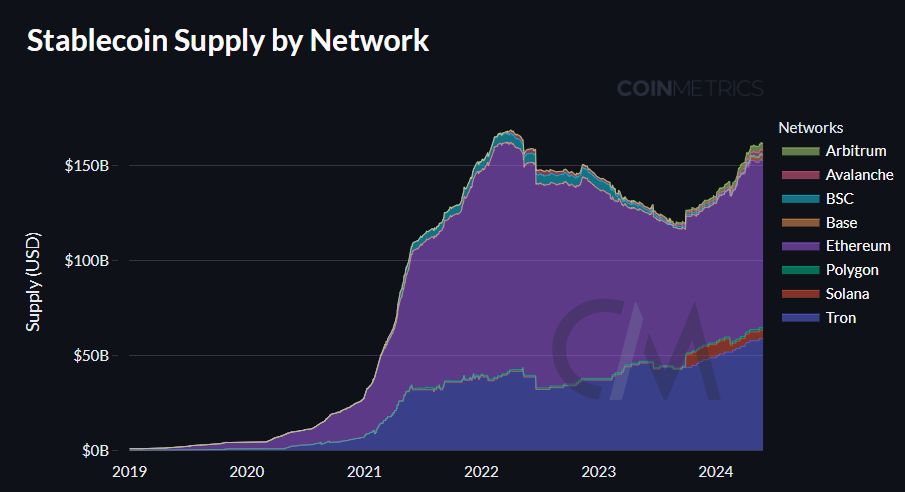
CoinMetrics indicates that the stablecoin market has grown from less than USD 10 billion in 2020 to more than USD 160 billion today. This reflects an increase of more than 1,500%. In this way, it has returned close to the historical maximum levels it reached in 2021, as can be seen below.
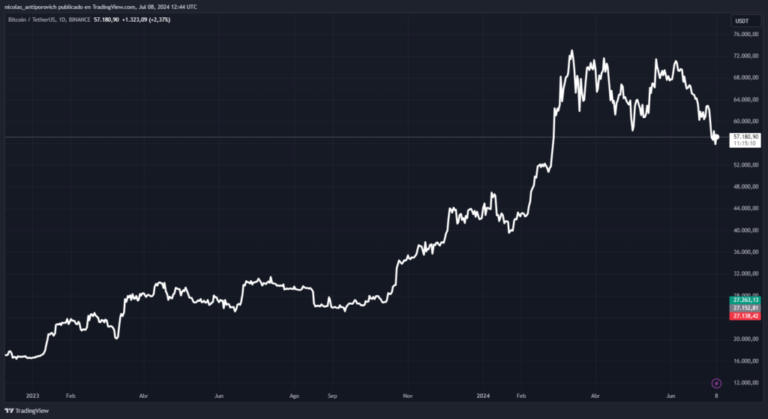
As reported by CriptoNoticias, this occurs in the face of the new bull market that bitcoin (BTC) has been undertaking since last year, after completing the last one in 2021, which motivates the adoption of cryptocurrencies.
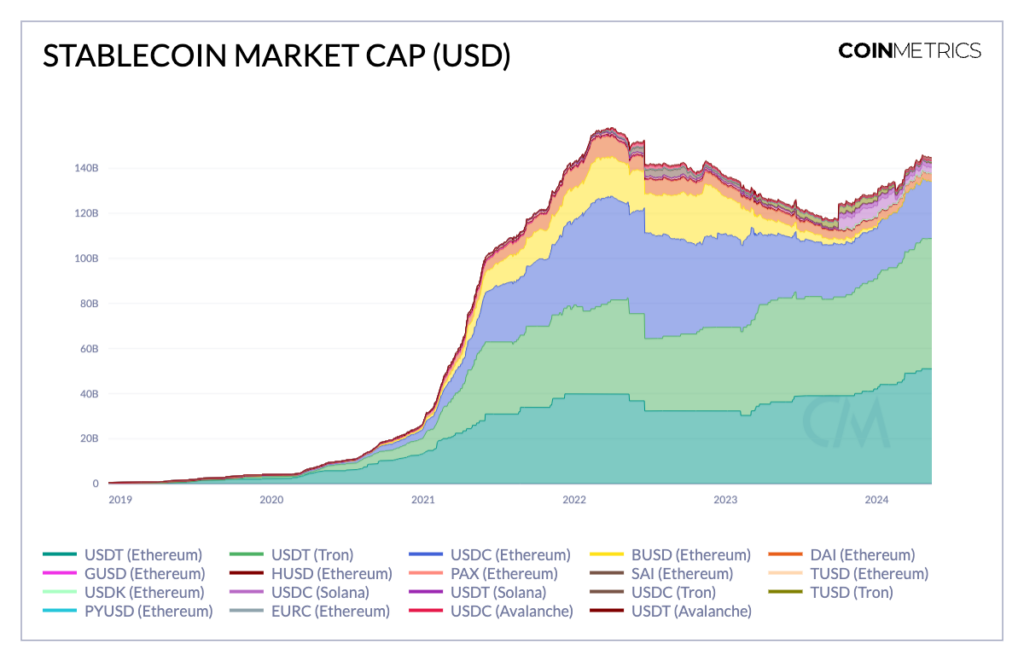
The growth of stablecoins came mainly from the adoption of tether (USDT), which is the stablecoin with the highest market capitalization, as the graph shows. It has USD 51 billion (44%) of supply circulating in Ethereum, USD 58 billion (52%) in Tron and the rest in Solana and Avalanche.
CoinMetrics explains that this scenario occurs because the US dollar has long dominated as the world’s reserve currency. This is, he clarifies, despite the fact that this status is currently being questioned as various countries explore asset alternatives to protect their value (such as bitcoin).
“The adoption of stablecoins is not only relevant for the United States, but is also important for dollar-starved economies and emerging markets facing monetary instability or limited access to financial services”
CoinMetrics, data company on-chain and market analysis.
In this sense, he maintains that The emergence of stablecoins is driving demand for US dollars and Treasury bonds throughout the financial ecosystem. This is due to the fact that these cryptocurrencies generally maintain part of their support in such assets.
The firm specifies that one of the most significant value propositions of stablecoins is their global utility for the exchange of value 24/7. This feature makes it even more advantageous than using fiat currency, plus it has no limitations or higher costs for making international transfers.
“As stablecoins evolve, their importance in the financial landscape will continue to expand,” he emphasizes. Therefore, it concludes that it is imperative to closely monitor its development and integration to fully understand its impact and potential within the economy.
Argentina is an example of the deployment of the “crypto dollar”
A place where stablecoins have gained great popularity is Argentina, a South American country that ended last year with the highest annual inflation in the world. Economic difficulties, dating back several decades, have made Argentines turn to the dollar in an attempt to maintain the value of money.
Despite the demand for dollars in Argentina, access to this currency has been restricted by the previous government (and the current one maintains the restrictions), which has driven the adoption of stablecoins. Even due to their trading volume, these cryptocurrencies are quoted at a different price than the US currency, which is sometimes higher.
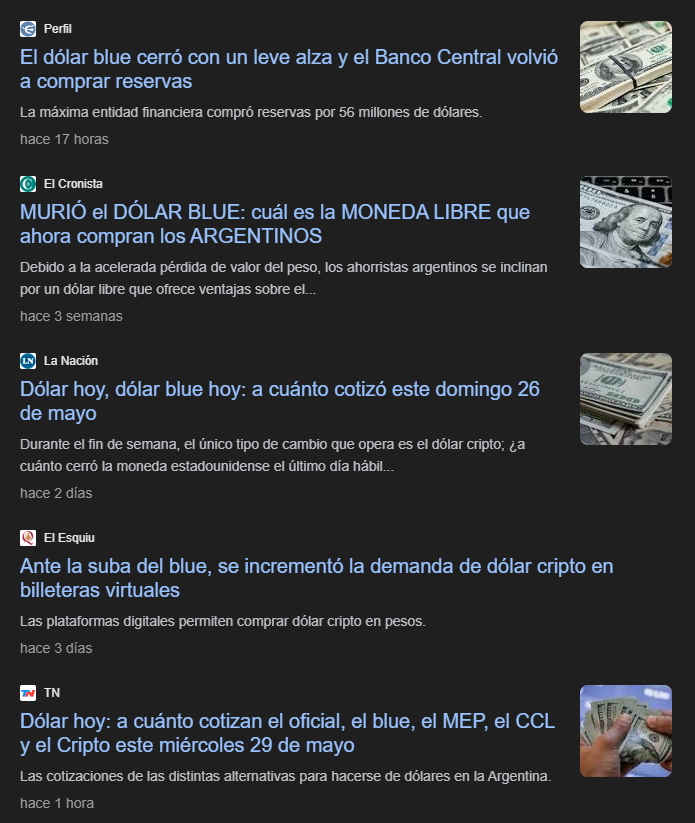
The use of stablecoins has become so popular in the country that even traditional news media report the value of the “crypto dollar” every day, just as they have done with that of the US currency for years. Furthermore, this has become routine due to the exchange rate trap, which leads informants to disclose the different quotes that exist, as shown in the following screenshot.

It should be noted that the exchange rate is a restriction on free capital mobility, a policy that the current government of Javier Milei has promised to eliminate. This system has led to different prices in Argentina for the official dollar, the “blue” or also called “free”, which is the one that works in the informal market, and others such as the “MEP” that is used in investments.
The rise of stablecoins in Argentina is also due to the economic and free accessibility of cryptocurrencies to make transfers or collect fees internationally. The taxes that it cost to do this in dollars through the banking system have led to the use of the “crypto dollar.”
The use of stablecoins in Argentina not only shows that it is already a vital part of the financial system, but is also a reflection of the deployment that they can have these cryptocurrencies in places where there are economic problems and monetary restrictions. Currently, according to the research firm Chainalysis, this country is the 15th with the highest adoption of cryptoassets and the second in Latin America after Brazil.