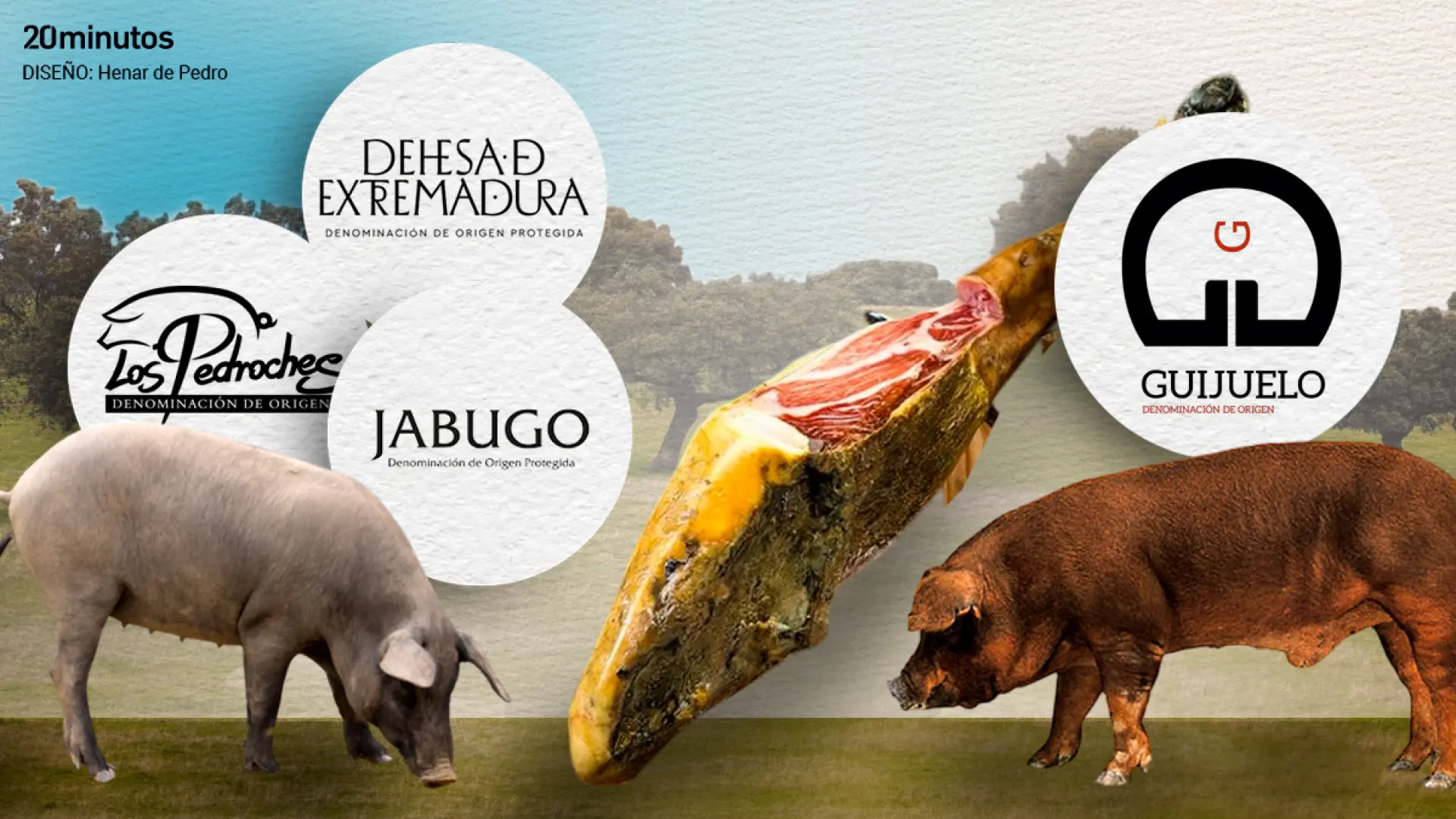
The Iberian ham denominations confronted with Guijuelo do not rule out going to court if Agriculture does not rectify
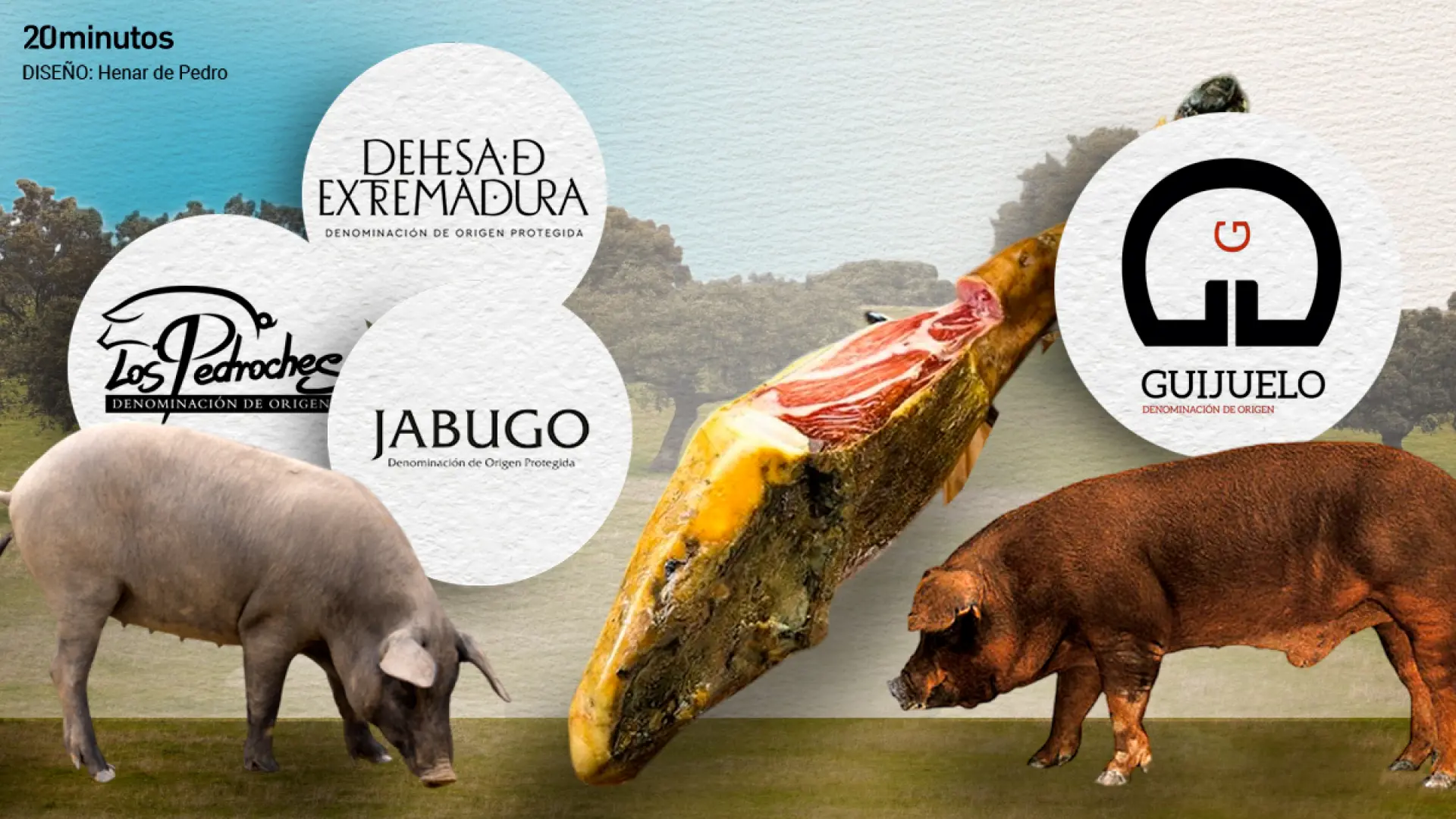
The controversy surrounding the changes approved by the Guijuelo Protected Designation of Origin (DOP), which includes a new category of ‘50% Iberian breed pig’ and the door opens at intensive farms in the designation “50% Iberian breed field bait”, among other novelties, has entered a new phase that may end up in the Court if the Ministry of Agriculture does not uphold the appeal presented by ‘Dehesa de Extremadura’, ‘Jabugo’ and ‘Los Pedroches’.
In the text published in the Official State Gazette (BOE) on September 1, the General Directorate of Food endorsed these changes and described Guijuelo’s proposal as “a request for a normal amendment to the specifications”which would not need the endorsement of Brussels to move forward according to European regulations. Something that none of the other three DOs agree on, which await the Ministry’s resolution in the coming weeks and, if it is negative to their interests, they do not rule out going to court.
Possible scenarios
According to legal sources consulted by this medium, the department headed by Luis Planas may consider “one, several all or none of the points contained in the resources.” Which would open the door, for example, to considering the requests of Jabugo’, ‘Dehesa de Extremadura’ and ‘Los Pedroches’. The controversial resolution may even be annulled, which would mean starting the process again. Likewise, the sources consulted point out, “if they reject the appealthe contentious-administrative route is opened.” That is, the judges would have the last word.
What the denominations argue
“If that time comes, we will again present the situation to the Plenary Session of the Regulatory Council of the DO, which will have to make the decision within the following period to open a dispute – administrative and judicialize a change in the specifications”, The general secretary of the Los Pedroches Protected Designation of Origin (DOP) Juan Luis Ortiz points out in this sense. In this regard, he adds that “no one would like it: we do not want to see ourselves there.”
When asked about the arguments of the appeal against the decision of the Ministry of Agriculture, adopted unanimously by the governing body of this DO, Ortiz explains that Los Pedroches does not share the Ministry’s decision to describe how “a normal modification” the changes that Guijuelo has proposed. “In this sense, we request that the modification be provisionally stopped, which does not prevent the marketing of Guijuelo PDO products,” he clarifies.
Ortiz also adds that the changes proposed by the Salamanca denomination “also affect the territory, by introducing intensive production (they do so only in the case of the designation of “cebo de campo”), which for ‘Los Pedroches’ impacts the territorial bond because the intensive can occur anywhere. In any case, the general secretary of this Denomination calls the above “atrocious” and recognizes that “The interest in linking the Iberian with Spain is surprising” when “intensive productions where there is no connection” are then introduced.
Furthermore, the representative of this denomination located in the province of Córdoba, shows his concern about the impact on the soil, cork oaks and acorns of the lack of slurry treatment, especially in intensive farms. “We feel attacked,” recognize.
The arguments of Jabugo and Dehesa de Extremadura
Those responsible for the regulatory councils of the other two Ibérico denominations speak out in similar terms: ‘Dehesa of Extremadura’ and ‘Jabugo’. The president of the first, Francisco Javier Morato, confesses his “doubts” about whether the changes promoted by Guijuelo can be considered normal and do not require the approval of Brussels. Specifically, from this Denomination, they argue that the modification endorsed by the Ministry “it directly affects the other Iberian PDOs” which, as a figure of differentiated quality, “apply more rigorous demands and controls than the regulations, justified by compliance with the Specification and consumer protection.”
In a similar vein, the president of the Regulatory Council of the Protected Designation of Origin (DOP) ‘Jabugo’ Guillermo García – Palacios, criticizes that “to go from 75 to 100% Iberian breed we had to go to Brussels but that this is not the way if it is the other way around.” García adds that “Brussels said that this cannot be done, although Guijuelo already had 50% of the Iberian breed” and also charges against the inclusion of intensive farms in the designation of “field fattening with 100 pigs per hectare of 50% Duroc/Iberian.”
It is something that, like his counterparts from ‘Los Pedroches’, he does not see as sustainable from an environmental point of view and maintains that the regulations limit it. In any case, asked about the success of the appeal, the president of the DOP ‘Jabugo’ believes that “there are reasons for it to prosper” and also requests that this change be submitted to a national opposition procedure, so that the parties involved can express their opinions.