The registration period for cryptocurrency companies in Argentina has ended, now what?
The deadline or the deadline since, until yesterday, Argentine cryptocurrency companies had 45 days to register with the National Securities Commission (CNV), the capital market regulatory body. It is an obligation that they must abide by if they seek to operate with bitcoin (BTC) and other digital assets in the country.
In total, some 35 companies decided to formalize their registration to the “Registry of Virtual Asset Service Providers” (PSAV). This requirement was established after the last reform of the law on the prevention of money laundering to comply with the recommendations of the FATFthe international entity that designs policies against these violations.
Those who have already registered or have their process in progress will not have difficulties carrying out activities. The CNV will keep registration open indefinitely.
Since the entry into force of the registry, 85 applications from legal entities were received and, finally, 8 of human persons. Of all of them, the first 35 have already been registered, among which 4 of foreign origin.
After meeting the first deadline, those exchanges or firms specialized in cryptoassets will be liable to receive summonses or sanctions. The regulations established by the regulatory body indicate that unregistered companies “must refrain from carrying out in the country any of the activities or operations included” in Law No. 27,739.
As reported by CriptoNoticias, this norm was approved on March 14 in the Senate, and establishes modifications to the provisions on money laundering, the financing of terrorism and the proliferation of weapons of mass destruction that had been sanctioned in 2000.
Registered companies or people identified as PSAV become obligated subjects under the regulations of the Financial Information Unit (UIF)
On the contrary, operators who avoid registration will have restrictions to exchange virtual assets with fiat currencies; virtual assets with each other; carry out their transfer, custody or administration or, also, the provision of financial services linked to virtual assets.
Some wallets and companies that have already registered are Koibanx, TruBit, BCrypto, Satoshi Tango, PayEx, Xcoex and Decryptoamong other.
Only smaller companies or companies with a lower turnover will be exempt. The rule establishes that companies that carry out activities for an amount less than 35,000 UVAs in the calendar month will not have to comply with the requirement. This sum is equivalent to almost 35 million pesos, which is just over 38 thousand dollars at official listing value.
Supervision, a new barrier for the cryptocurrency industry
This new regulation produced discomfort and distrust among users, who described the measure as “a delivery” from the government of Javier Milei of its liberal principles. The PSVA of the CNV began to have new functions of supervision, regulation, inspection, supervision and sanction of said cryptoasset providers.
For the moment, the registry will only serve to collect information, but in fact it will be a first barrier to entry for companies that avoid registering.
In this adaptation and information process, there were meetings with representatives of the PSAV sector, members of the Argentine Fintech Chamber and important legal firms in the country to explain details of the initiative.
At the institutional level, the Argentine Fintech Chamber remained open to dialogue with regulatory and government authorities. Ecosystem actors ask for regulatory certainties to operate smoothly.
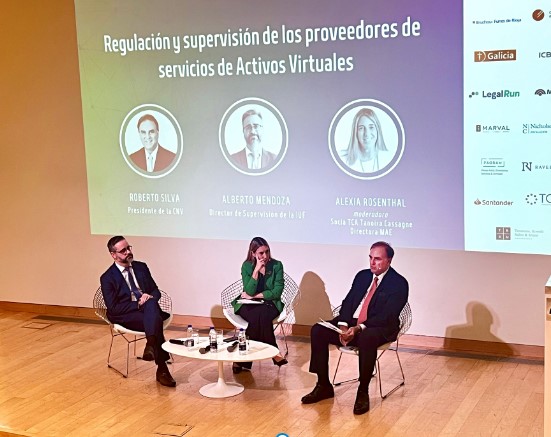
In a statement, this sector expressed that “the establishment of an adequate, intelligent and flexible regulatory framework with the evolution of technology and that, at the same time, preserves the security of users, is of great help for this process.”
However, the business representation warned that, given the nature of virtual assets, “an excess of regulation or tax burden could imply the paradox of greater informality and the tendency to trade towards unregistered/deregulated exchangescontrary to the objectives proclaimed by the regulations.”
In line with the demands of the FATF, the CNV’s desire is to use the PSVA to deepen controls regarding the prevention of economic crimes, in conjunction with other inspection bodies, such as the Financial Information Unit (UIF) and government entities. decentralized.
The companies that make up the registry
To date, the CNV reported that a significant number of companies completed the registration process and no natural person had done so. The cryptocurrency companies that registered on the official website are:
- 1 Arex Activos Digitales SA (Arex)
- 2 BCrypto SA (BCrypto)
- 3 Bill Argentina SRL
- 4 Fintech SA (Satoshi Tango)
- 5 Liquid Arg SAS (Solidus Capital)
- 6 PayEx SRL (PayEx)
- 7 Plus Fintech SA (Plus Crypto)
- 8 Cobon OTC SA (Decrypto)
- 9 Vita Digital SRL (Vita Wallet)
- 10 PMSA Capitales SA (PM Capitales)
- 11 Miactiva SA
- 12 Beehive Soft SAS
- 13 Koibanx El Salvador SA de CV (Koibanx)
- 14 Cocos Crypto SA
- 15 Lirium AG
- 16 The Reserve SA
- 17 Digital Prime System Limited SA de CV (Xcoex)
- 18 Mar Exchange SA
- 19 Selmiro SAU
- 20 AMG Capital Group S.A.
- 21 Sixalime SAS (Crypto Store)
- 22 VitualPays SAU (Cryptanz)
- 23 FWOTC SA (Fiwind)
- 24 Alerce Argentina SRL
- 25 Intrapolar SA (Pozitiva)
- 26 Administration Group SAS
- 27 Naluso SA (Kriptonmarket)
- 28 Transfero Pagamentos SA (Transfero)
- 29 Settle Arg SAS (Latamex)
- 30 Galactic Holdings Inc (TruBit)
- 31 Gresham SAU
- 32 Della Foresta Public Limited Company
- 33 Kulipa SRL
- 34 My Balance SRL
- 35 Triple W SRL (Argenbtc)