Trump forges a new order and Bitcoin is in his anti-globalist crusade
-
Trump positions the US as a leader with a strategic Bitcoin reserve, challenging China.
-
The “orange trilogy” promotes sovereignty and free market, facing the UN and the EU.
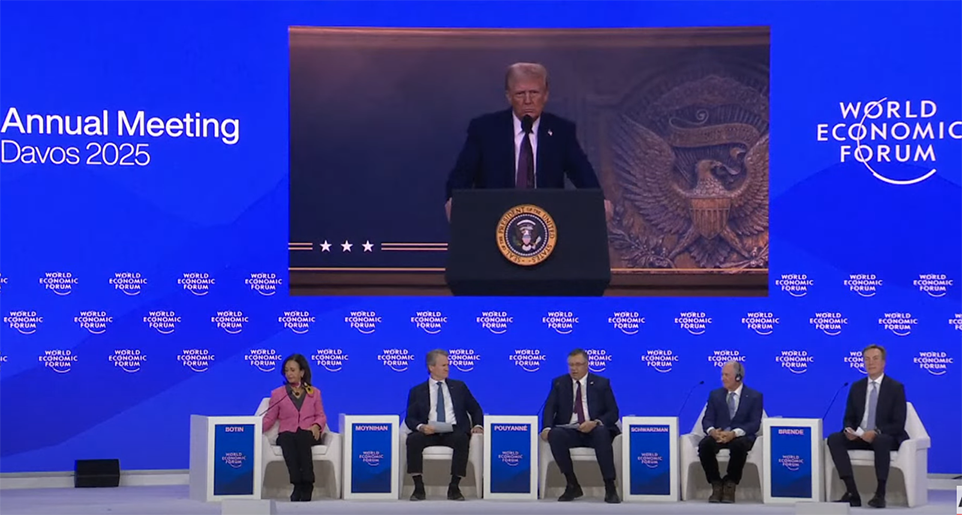
From the White House, Trump is forging a new world order. His vision of “America First” defies the centralized agendas of the World Economic Forum. Far from reforming the existing system, Trump builds a parallel where American sovereignty reigns in a supreme way.
This risky bet seeks to redefine global domination, although it adds economic tensions and risk of international isolation. Trump’s agenda promotes national sovereignty and rejects globalism, with Bitcoin emerging as a symbol of financial freedom and centralized control resistance.
In his second term, Trump has shaped events such as the Constant Political Action Conference (CPAC) towards an agenda that resonates with its base, such as individual values, free market and national sovereignty. Its influence extends globally through alliances with conservative leaders in Japan, Hungary and Argentina, such as Viktor Orbán and Javier Milei, creating a transnational network of ideological support.
This collaboration seeks to export a nationalist model, Challenging multilateral governance (UN, EU) and free trade unrestricted. This, with Bitcoin as a tool to reduce the dependence of these institutions.
In the 2024 CPAC event, the stellar guests Nayib Bukele and Javier Milei pointed out the course of this insurrection, winning the fervor of conservatives with their radical policies. His nationalist and populist ideas unleashed a whirlwind of debates in the core of ACU.
The ACU, or American Conservative Union (American Conservative Union, for its acronym in English), is an American organization founded in 1964 that promotes the principles of conservatism, such as free market, national sovereignty, traditional values and a limited government. It is known for organizing the CPAC, an annual event that brings together conservative leaders, activists and politicians to discuss strategies and policies.
The conservative organization also influences politics through international alliances and lobbying activities, supporting causes such as nationalism and resistance to globalism. In recent years, he has backed populist agendas, including The use of cryptocurrencies as a bitcoin to promote financial freedom.
The opposition to the “great reset” of the World Economic Forum, raised during the pandemic, fueled this rebellion. This with Trump and Senator Ted Cruz who denounced an elitist plan to impose centralized controls under pretexts such as climate change, a message that Trump has become politics.
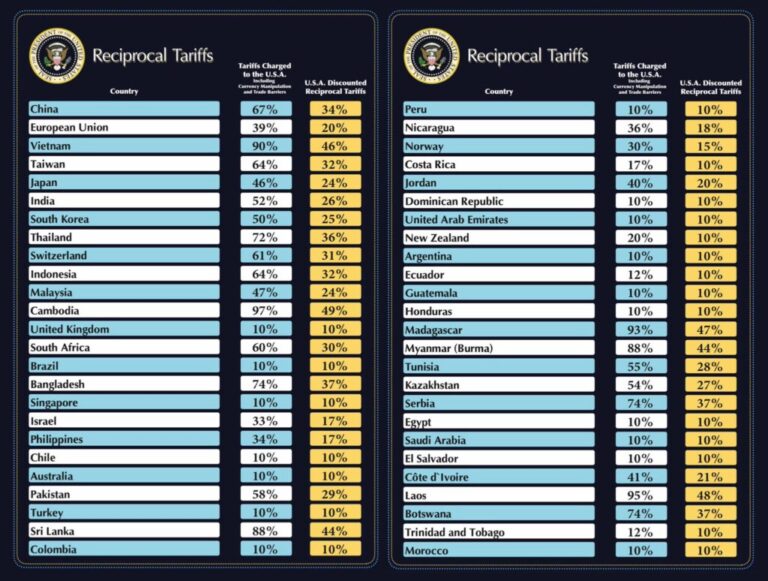
Their global tariffs, which tax imports to repatriate industries and protect workersThey comply with the call of ACU for a “fair trade.”
However, inflation has risen to 4.2% year -on -year, generating criticism from the US Chamber of Commerce on family costs and commercial tensions. Even so, the conservative base would be celebrating this resistance to global interdependence, seeing Trump as autonomy champion.
Bitcoin: A fundamental axis
Trump’s enthusiasm by Bitcoin, driven by the success of Nayib Bukele by adopting cryptoactive as legal tender in El Salvador, fits perfectly with his vision of a parallel system. In the CPAC 2022, Ted Cruz highlighted it as a bastion of financial freedom, and by 2024, the conservative movement supported regulatory freedom for cryptocurrencies.
Bitcoin, in this context, symbolizes a “money from the people”, resistant to censorship and inflation, which challenges the control of central and globalist banks, aligning with the values of sovereignty and autonomy that Trump and his allies defend.
For me, Trump has made Bitcoin a fundamental axis of his parallel system for three key reasons. First, his decentralization makes him a bulwark against digital central banks (CBDC), prohibited by him in January 2025, views as globalist surveillance tools.
Second, the Bitcoin potential as a value reserve protects the US Delarization driven by the BRICs, (Brazil, Russia, India, China and South Africa), which have intensified efforts to reduce dependence on the dollar in global trade. By integrating Bitcoin into the economic strategy of the US, Trump seeks to counteract this threat, diversifying the strategic assets of the country and strengthening their economic hegemony.
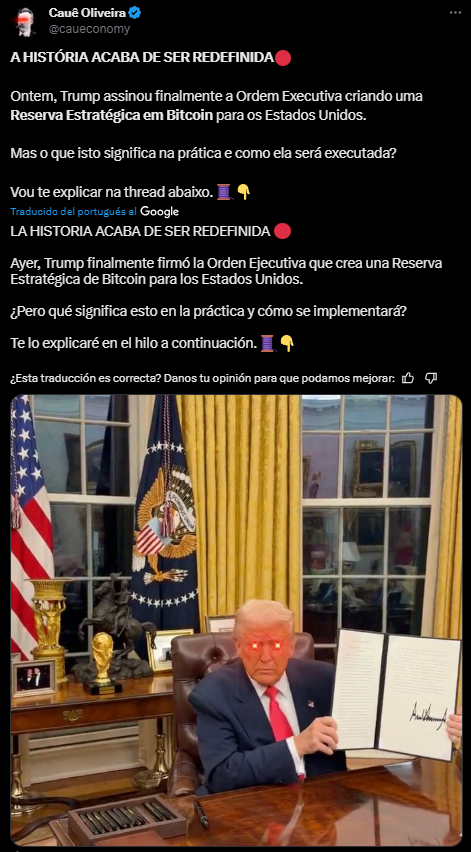
The third reason is that, with Bitcoin, Trump can position the US as financial innovation leader, attracting investment and talent in a competitive global market. In March 2025, Trump announced the creation of a strategic Bitcoin reserve, described by businessman and advisor David Sacks as a “Fort Knox Digital”.
This initiative not only Legitimate Bitcoin as an asset of national importance, but also establishes the US as an innovation center in technology focused on digital assets, attracting companies, developers and capital around the world.
In addition, Trump’s support A Bitcoin transcends the economic and inserts in his populist narrative. By promoting an asset that does not depend on intermediaries or financial elites, Trump is positioned as a defender of the working class, who sees in Bitcoin a tool to protect himself from galloping inflation and expansive monetary policies.
This message resonates with the conservative base, which Value the autonomy and distrust of global institutions such as the International Monetary Fund or the World Bank.
Thus, Bitcoin becomes a pillar of a project to reconfigure the global order, with Trump consolidating it as a symbol of the conservative movement.
The “orange trilogy”; an axis that is consolidated
Donald Trump’s vision transcends United States borders through a strategic alliance with Nayib Bukele and Javier Milei, consolidated in the CPAC 2024, where the popularity of both leaders marked the birth of a transnational populist network. This “orange trilogy” – thus called by the color associated with bitcoin and the disruptive energy of its leaders— amplifies Trump’s rebellion against globalismpositioning the cryptoactive as a symbol of sovereignty and resistance in the western hemisphere.
Bukele, with a reserve of 6,000 BTC and his hard hand against crime, and Milei, with his libertarian criticism of hyperinflation in Argentina, complement Trump. Together, they counteract Chinese influence, which invested 140 billion dollars in Latin America between 2005 and 2022. and they do it with a western block of decentralization and free market. A world redrawn between heaven and hell.
Trump is not reforming the world; It is building a new one, a parallel system where Bitcoin, national sovereignty and rejection of globalism converge to project American power. What began in the CPAC 2024, with Bukele and Milei as heralds of a transnational populism, has evolved in 2025 towards a network that challenges Davos With an unprecedented audacity.
This is not an adjustment to the global order, but a reinvention that places the US as a supreme referee. However, on this redibroid board, the line between supremacy and chaos is thin. Trump, with Bitcoin as his banner, has ignited a spark that could illuminate a new dawn or burn the world that seeks to dominate.
Discharge of responsibility: The views and opinions expressed in this article belong to its author and do not necessarily reflect those of cryptootics. The author’s opinion is informatively and under no circumstances constitutes an investment recommendation or financial advice.