Without energy or political will, this is how Bitcoin mining dies in Venezuela
Key facts:
-
Venezuela burns billions of cubic feet of gas that can be used to mine Bitcoin.
-
Operators believe that with gas flaming, they can undermine and reinforce the electrical system.
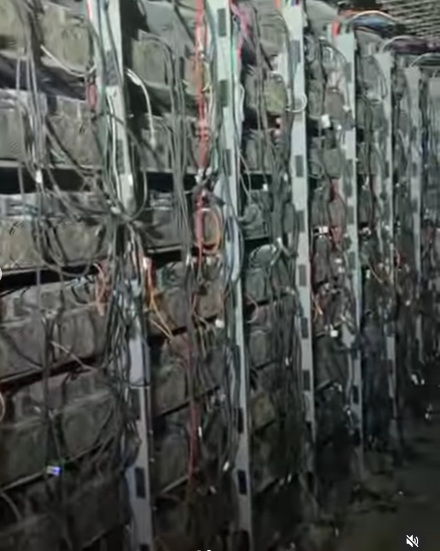
A deafening silence is what is currently perceived in the warehouses located in several states of Venezuela, where thousands of Bitcoin miners used to operate normally. The characteristic screech of the ASIC (Application Specific Incorporated Circuit) equipment was silenced by decision of the government of the Caribbean country, when the disconnection of the farms from the national electrical system was ordered.
The government has stated that digital mining is responsible for the recurring electrical failures that affect a large part of the country’s population, and That is why the Ministry of Electric Power ordered its disconnection.
With no other option, the miners reluctantly turned off their machines. If not, they knew that could be hit by the wave of raids launched by the Venezuelan authorities. The first to be visited were the farms located in the center of the country. And between all of them, more than 10,000 ASICs have been seized so far.
Now, in the desalted warehouses of what was once Bitcoin mining powerhouse Venezuela, miners are evaluating their options and among them have considered an apparently viable solution. This is Bitcoin mining with gas, energy that has long been used in Texas, the United States and Argentina, to power ASICs.
Electrical generation with surplus gas from oil activity is an environmentally friendly method that could be outlined as a maneuver for miners to avoid the Venezuelan electrical system and continue mining from Creole soil.
However, everything is complicated by the absence of a key piece of that puzzle: the political will of the Venezuelan government. Without it, there seems to be no option for miners, since they cannot use national electricity nor self-generate it.
“It is totally feasible to mine Bitcoin with gas”
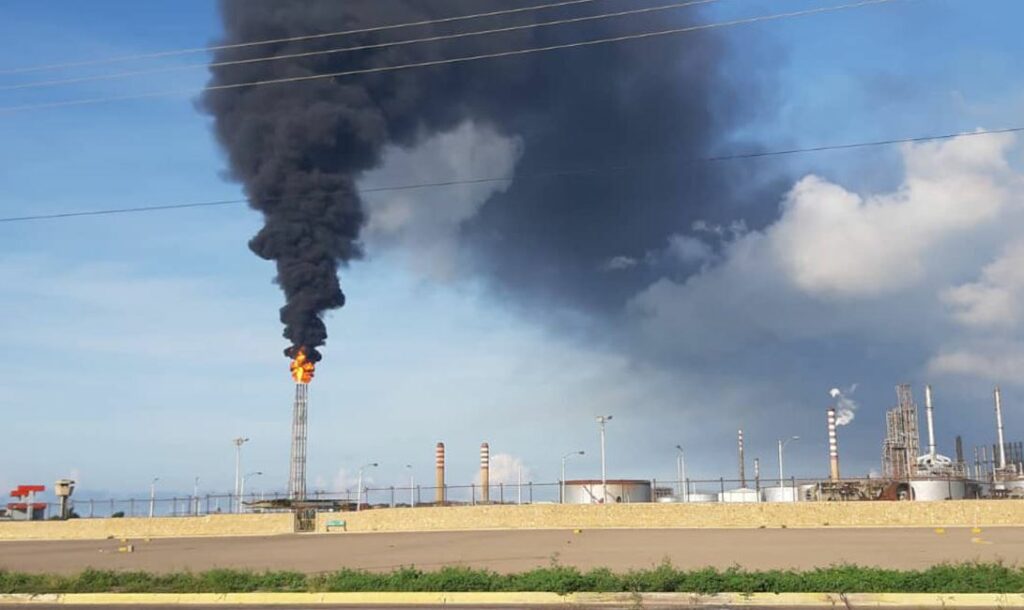
According to data from the firm specialized in the energy market Gas Energy Latin America, Petróleos de Venezuela SA (Pdvsa), the state oil company, vents and flares, on average, more than 1,700 million cubic feet of gas per day (MPCD) in the country alone. Monagas State, in the east of the country. That is equivalent to 56% of the gas produced in the Caribbean country. That is, it vents more than it produces, according to unofficial data.
This is a huge amount of gas that is vented into the atmosphere, creating a problem for the environment. It is an inconvenience for the State, remembering that gas flaring is a direct source of methane emissions, which are much more harmful than carbon dioxide (CO2).
Now, just as it happens in the United States, more precisely in Texas, or in other oil fields in the Latin American region, such as Vaca Muerta, in Argentina; that Venezuelan gas, wasted, vented and harmful to the environment, can be used to mine Bitcoin.
Marlon Rojas, executive director of Venecripto Servicios and a miner, told CriptoNoticias that Bitcoin mining with surplus gas is feasible in Venezuela. For him, It is an alternative to the national electrical systemsince it is about self-generation of energy.
However, he points out that a significant investment is required to put into operation the generating turbines that run on gas and that are the ones that can give free rein to decentralized digital activity.
He agrees with Alexis Lugo, also a miner and executive director of Criptoneros. For him, Bitcoin mining with surplus gas “It’s definitely doable” since Venezuela “has many more energy resources” than Argentina and other countries in the region.
“Yes, you can replicate a model of gas flamering. You can even think that in some way you can use solar energy and wind energy, which are expensive to implement, but over time they give returns,” Lugo told CriptoNoticias.
Lugo, from Criptoneros, goes further when talking about monetary investment and, regarding this, he considers that to mine Bitcoin with gas in Venezuela Greater legal certainty is needed. This is because, in current terms, “whether from abroad or from here, the investment will not be safe.”
The miner Lugo thus recalled the current regulatory limbo in which Venezuela has remained. This, after the intervention of the main supervisory body of the bitcoin ecosystem in the country, the National Superintendency of Crypto Assets (Sunacrip), an event that occurred more than a year ago.
What Lugo said coincided with the impressions of Alejandro Quiles, director of the Grupo Tools Caracas mining company. In conversation with CriptoNoticias, he assured that Bitcoin mining with surplus gas It is possible in your country.
But, like Rojas, Quiles indicates that to mine Bitcoin with gas a significant investment is required in the generating turbines. These can be negotiated in the energy market for over $10,000, depending on the brand and power.
It must be remembered that in Venezuela steps were taken to mine Bitcoin with gas. In 2022, an initiative was created by the government of Monagas, one of the states with the largest gas fields in Venezuela.
The intention was to use turbines that, powered by gas, generate electricity to operate Bitcoin mining complexes from the local company Coin Factory. But this project did not transcend and only remained in words.
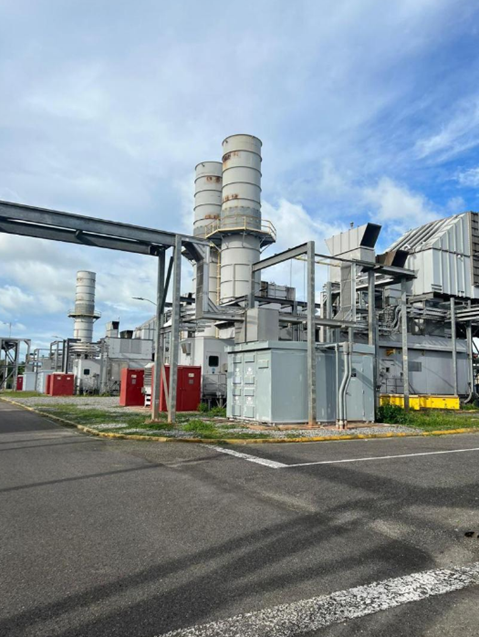
Bitcoin miners can support SEN
The miners consulted by CriptoNoticias maintain that digital activity based on surplus gas, in addition to providing them with raw materials, allows them to help and reinforce Venezuela’s battered electrical system.
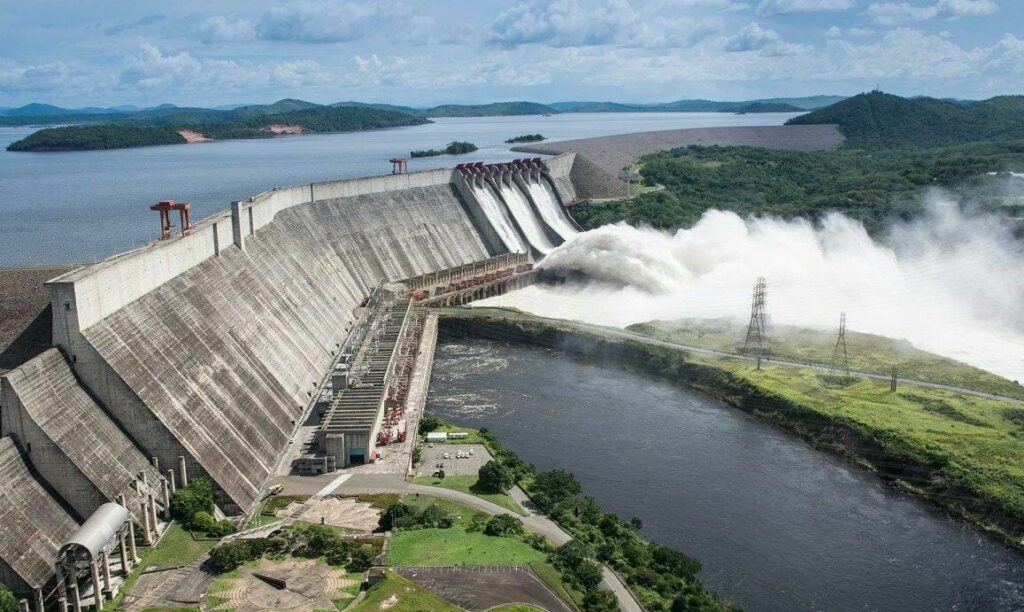
According to data from the Venezuelan Observatory of Public Services (OVSP), Venezuela faces an energy deficit of more than 3,000 MW. This, since the Guri hydroelectric plant, which is the main generating source of electrical energy in Venezuela, has a production of only 10,000 MW and demand exceeds 13,000 MW.
Added to this is the precarious state of the electrical distribution and transmission systems, that have suffered the blows of disinvestment and lack of maintenance, according to the OVSP approximations. Although for the Venezuelan government, this is a consequence of the so-called economic blockade (US sanctions).
As Alexis Lugo, from Criptoneros, explains, Bitcoin miners who use electrical self-generation with gas waste from the oil industry, can provide support to the electrical grid or even supply energy to the towns and villages surrounding its operations.
This is because if the miners have gas turbines and start generating their own electricity, they will be able to distribute the energy between what they need to mine and to feed the national electrical grid.
“It is feasible and viable to repair or buy the turbines, and reach a concession with Corpoelec to use them, maintain them, inject megawatts into the SEN and, at the same time, into a mining operation,” he stressed.
He believes that miners who generate their own energy and contribute to the State will obtain benefits in Venezuela, especially in the tax field. For example, license and tax exemptions, facilities to expand mining industries or operate in more privileged areas.
Without will there is nothing
But everything happens at the will of the Venezuelan government headed by Nicolás Maduro. It is the head of the Executive of that nation who must give in to the proposal of using the surplus gas to mine Bitcoin and, at the same time, benefit the battered electrical system of his country, according to the hash producers consulted.
It must be remembered that, after the corruption plot in which Sunacrip was involved, in March 2023, the Venezuelan cryptocurrency ecosystem was strongly felt. The industry was partially paralyzed and the union entered a sort of regulatory limbo.
Such a situation led, for example, to the voluntary disconnection of thousands of Bitcoin minersin addition to the paralysis of various cryptocurrency exchange and payment platforms that operated in Venezuela under authorization from the regulator, which is Sunacrip.
Currently, the regulatory limbo in Venezuela remains as there are no indications that Sunacrip will be re-established after its intervention. And, although the Bitcoin ecosystem is legal in that country, since 2018, It is that institution that ensures compliance with industry standards.
The limbo is worsened by the fact that Bitcoin mining can no longer rely on the national electrical systemwhich deepens legal insecurity and causes foreign and local investment in the digital mining sector to move away from Venezuela, as Alexis Lugo, from Criptoneros, warns.
As cryptocurrency advisor Aníbal Garrido sees it, what is needed for Bitcoin mining with surplus gas to take place in Venezuela, is to establish agreements with regulators to pay fees and carry out the project.
“There is simply a need for willingness on the part of the Executive because it already exists on the part of the miners,” said Garrido. “It is necessary to agree, show and educate the Executive about the gigantic potential of digital mining and generate agreements that are respected under the rule of law, which leads us to have a solid, reliable and productive sector,” he added.
However, the provision is scarce, as Garrido sees it. “This is a matter of disposition of the States and ours has, until now, no motivation to do so,” he said.
For all those consulted, it is possible that in the future Bitcoin mining will be powered by Venezuela’s gas surpluses, but it is required that the benefits of the mining industry are recognized by the authorities of the Caribbean country.
And while this scenario materializes, the Venezuelan mining industry will remain paralyzed. So far there are no signs of a quick reactivation. The question is whether the next step is to “return to the roots”, such as clandestine mining, of which there is already enough experience in Venezuela.