30% of circulating bitcoin is in the hands of centralized entities: Gemini study
 By Hannah Pérez
The creation of a strategic reserve of Bitcoin In the United States it marked a before and after, reconfiguring institutional adoption. Now more than ever, the digital currency is consolidated as Macro-Financial Instrument.
***
- Gemini publishes study together with Glassnode that denotes the growing institutional adoption of Bitcoin.
- Little more than 30% of Bitcoin In circulation it is concentrated between 216 centralized entities.
- The exchanges dominate among the institutional holders, with the companies being the most numerous group.
- The United States created the first strategic reserve of Bitcoin, positioning BTC As sovereign active.
Since its inception, Bitcoin It has been presented as a decentralized alternative to traditional financial systems. But more recently, we have been witnessing a transformation of the narrative around cryptocurrency, which has quickly become an asset recognized and preferred by institutions worldwide.
The creation of a strategic reserve of Bitcoin In the United States, the rise of regulated financial vehicles based on Bitcoin And the trend of corporations that make up the cryptocurrency to its treasury, are just a sign of this change.
A report published this week by Gemini illustrates the growing concentration of Bitcoin In the hands of institutions.
Currently, the 30.9% of the circulating offer of Bitcoin is under custody of only 216 centralized entitieshe discovered Gemini in collaboration with Glassnode. The research divides entities into six categories: exchange platforms, funds quoted in the stock market (ETF), public companies, private companies, governments and DEFI.
The circulating offer of Bitcoin At the time of edition it is 19.8 million BTC, According to data from Blockchain.com. Bitcoin It is scheduled to have a limited offer of maximum 21 million units.
216 entities control 30% supply of Bitcoin
The report of Gemini It highlights the dominant role that centralized exchanges have had over the last 10 years.
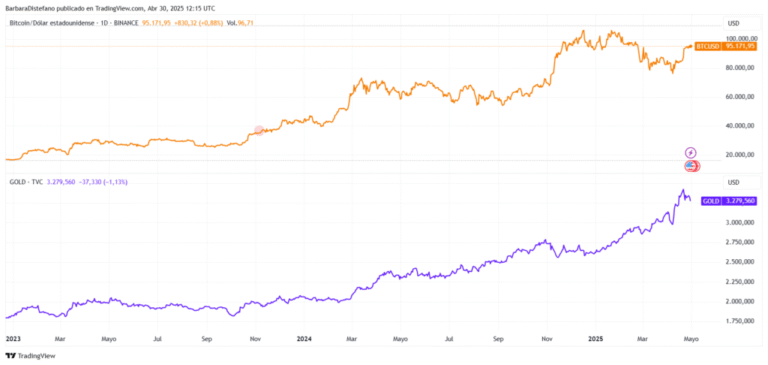
For 2015, the Exchange They guarded less than 600,000 BTC, while today, institutional and custody entities handle more than 6 million BTC, evidencing an increase of 924% in just a decade, it reflects the study. Along with Bitcoin He climbed from USD $ 1,000 to exceed USD $ 100,000.
Among the 216 entities, exchanges lead in custody volume, but public companies are the largest category.
However, the concentration is even greater within each group: in almost all categories – except among private companies – three main entities control between 65% and 90% of total holdings, which shows the influence of pioneers and large institutional actors, found the investigation.
Among public companies, the domain of Strategy It is quite evident. The company founded by Michael Saylor became 2020 pioneer in the adoption of Bitcoin As a treasury reserve asset, and since then, it has not only been crowned as the largest holder of his group, but has inspired many others to follow his example. As of June 13, the company had 582,000 BTC Of the total of 820,000 BTC In the hands of public companies, or the equivalent of 2.7% of the maximum supply, according to data from Bitcintreasuries.
ETF arrival changes the rules of the game
The role of cash custodians – centralized intercambios, ETF and protocols Defi— It has evolved. Although the balances of Bitcoin In exchanges they have decreased slightly in the last two years, this does not necessarily indicate a shortage of supply.
According to Geminithis reduction reflects a restructuring, with BTC migrating to regulated investment vehicles, especially those Americans in cash. The ETF Bitcoin In the US, they have accumulated capital tickets for USD $ 49.5 billion and exceed USD $ 72 billion in net assets under management for June 12, since its launch, according to data from Sosovalue.
Despite this change, the total amount of Bitcoin In the cash sector it has remained between 3.9 million – 4.2 million BTC since June 2021, found the report. This stable range indicates that the liquidity available for buyers in cash has not changed significantly despite integration with traditional finances via ETF.
Government treasures grow, with the US
The sovereign treasures of state governments and entities have also assumed prominence in the market.
The United States stands out as one of the largest institutional holders with more than 200,000 BTC, most acquired through federal seizures, such as the case Silk Road (69,369 BTC In 2020) and hacking Bitfinex (94,643 BTC in 2022).
In March 2025, the US government formalized part of these holdings as the basis for its new Bitcoin Strategic Reserve (SBR)after an executive order signed by President Donald Trump. The United Kingdom, China and Germany have also accumulated BTC through seizures, although Germany liquidated all its holdings in April 2025.
On the other hand, countries such as El Salvador and Bután have opted for continuous and strategic accumulations through periodic purchases, thus reinforcing their long -term commitment in the digital asset.
Market maturation Bitcoin
The study also found that the robust institutional presence has transformed the dynamics of the cryptocurrency market, making it Bitcoin It becomes less volatile over the years.
Since 2018, annualized volatility of Bitcoin It has progressively decreased in all temporary periods, a trend that was accentuated with the launch of the ETFs in cash. UU. In early 2024, according to the report. This greater stability favored constant capital entry and a greater depth of liquidity in the ecosystem.
Although Bitcoin He maintains his risk active profile, his integration into traditional finance has conferred a change in his price action. Now, rebounds tend to be more sustained instead of explosives.
The turn towards institutional liquidity
Most of the negotiation volume of Bitcoin Today flows through centralized exchanges, ETF and regulated derivatives.
Gemini It indicates that, by 2025, more than 75% of the adjusted transfer volumes occur outside the Blockchain (Offchain). Derivative markets, in particular Cme And the options have grown exponentially since 2023, reflecting institutional appetite by regulated and scalable instruments.
This trend has deepened the liquidity and standardized the execution of orders, causing the behavior of the market participants Bitcoin It is increasingly resembled that of conventional international financial markets.
Bitcoin becomes a global macro asset
While the birth of the ETFs Bitcoin In cash in the US market in 2024 it was a key catalyst for institutional adoption, US policy has marked a turning point in this movement, as the report stands out.
Public and private companies have increased their accumulation by more than 20,000 BTC per month after Trump’s order to create a strategic reserve in the US. Gemini.
This information is combined with a recent report of Binance Researchwhich found that a total of 116 public companies maintain joint reservations for a total of 809,100 BTC, valued at just over USD $ 85 billion.
The United States policy has encouraged organizations to consider Bitcoin As a fundamental part of its strategic reserves, thus strengthening its legitimacy as an asset Macro Global. This not only consolidates cryptocurrency as an asset of national sovereignty, but catapults it to a new status: that of a macro-financial instrument of global influence.
The greatest centralization, the integration of institutional entities, the development of regulated instruments and the multiplier impact convert Bitcoin in a key piece of the finance of the 21st century.
Article written with the help of AI, edited by Hannah Pérez / Diariobitcoin
Image of Unspash
WARNING: Diariobitcoin offers informative and educational content on various topics, including cryptocurrencies, AI, technology and regulations. We do not provide financial advice. Cryptactive investments are high risk and may not be adequate for all. Investigate, consult an expert and verify the applicable legislation before investing. I could lose all its capital.
Subscribe to our newsletter