Bitcoin conquers its last bastion in Latin America in Bolivia
On the Latin American cryptocurrency map, Bolivia was lagging behind. While most countries in the region were taking steps towards regulating the bitcoin (BTC) ecosystem and other cryptocurrencies, the South American country strictly prohibited trading in these assets.
He was the only one in the region who maintained such a radical positionranking alongside 6 others in the world (including Ecuador). While many Latin American governments continue to reject cryptocurrencies, they do not prevent citizens from making transactions.
Hence the strong pressure that the Bolivian cryptocurrency community began to exert, with a view to achieving the resolution issued in 2020 – which in turn ratified a ban existing since 2014 – was repealed.
They were even willing to go to the Supreme Court of Justice to obtain a response to their requests, as reported by the Ethereum Bolivia team in an X Space.
That is why the recent resolution that eliminated the ban “caught them a little by surprise.” Although they feel that their efforts, along with that of Congresswoman Mariela Baldivieso and many members of the community, were fundamental to the decision-making of Luis Arce’s government.
This is a task that has taken several years, as the deputy has expressed to the media. Even though the Central Bank of Bolivia (BCB) awarded its historic resolution to the advice of the Financial Action Task Force of Latin America (GAFILAT).
In that sense, it is possible that GAFILAT’s recommendations have had an influence, since this organization has certainly been requiring its members to regulate the sector. However, the actions of the Bolivian ecosystem in favor of the freedom to operate with crypto assets have also borne fruit.
That explains the satisfaction expressed by Deputy Baldivieso. “We did it! I’m happy! », She wrote in X as soon as she learned about the new measure that gave Bolivians access to freely trade bitcoin.
«The efforts to promote the freedom of cryptoassets in Bolivia that we started years ago have yielded results. We have worked on the draft law on the adoption of cryptoassets in Bolivia and the Bitcoin Law. We continue at the discussion table and I hope they will be approved,” Baldivieso explained.
The resolution has advantages, but it also brought fears
According to the recently approved regulations in Bolivia, banks are allowed to carry out transactions with cryptocurrencies through authorized electronic channels and the willingness to regulate bitcoin is expressed. However, the BCB clarified that cryptocurrencies are not accepted as legal tender.
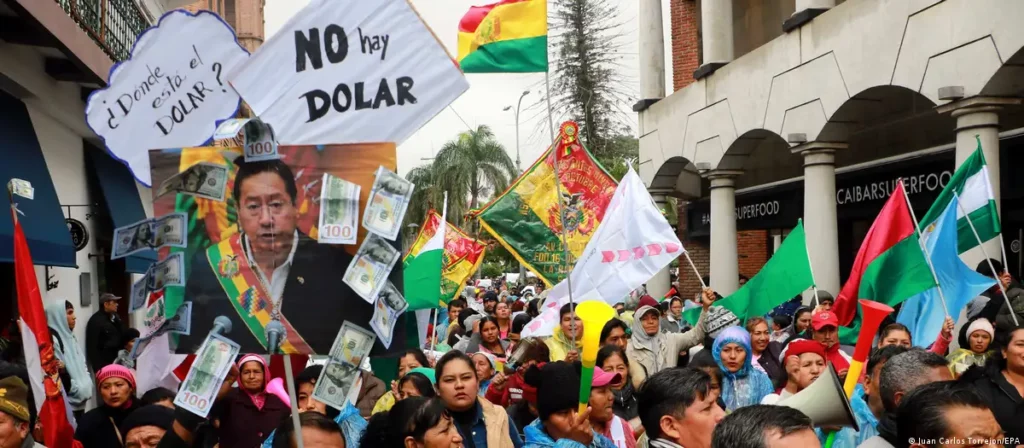
Even so, the community lists the advantages of the actions announced by the BCB, and among them its contribution to the solution of the economic crisis that is making its way in the country stands out. The dollar shortage that has plagued Bolivians since last year prevents them from having access to foreign currencies, amid the devaluation of the local currency and growing inflation.
Bitcoin and other cryptocurrencies have served as an escape valve in this situation, leading many people to unregulated foreign platforms to buy crypto assets and have an alternative to protect your assetsThey did this at the risk of being punished by the authorities, although the most savvy turned to self-guarded portfolios.
This was how investors and traders Bolivians They were exposed to the closure of their accounts or to being pursued as suspects., if their transactions were detected to be involved with cryptocurrencies. This, during the entire time that the ban has been in force.
For the members of Ethereum Bolivia, being able to operate without these fears represents a great advance, but they admit that there is still a lot of work to do. They mention among the challenges the collection of reliable statistics on transactions made in the country.
There are analysts and sources who have presented data that They point to the existence of some 285,000 cryptocurrency accountsbut Ethereum Bolivia believes it is necessary to verify this information. “Having figures is important for many cryptocurrency platforms and companies to decide to set up here.”
The path he follows now also involves the fight to achieve the approval of a lawas a way for investors to come to the country, attracted by a legal environment that offers security and favors innovation.
As reported by CriptoNoticias, the project presented by Deputy Baldivieso in March follows this trend, which joins another proposal introduced last year by lawyers Gabriel Pérez and Carlos Yupanqui Moreira.
They all want legislation and have been reviewing the regulatory proposals presented in other parts of the region, to serve as a guide.
And although the debate is now open to a new law that responds to the needs of the country, new fears arise: many fear that with it will come the collection of taxes. Others know, on good authority, that the government has in mind launch a central bank digital currency (CBDC) as a mechanism to maintain control.