From Avian Flu to Lumpy Dermatoses (NCD)
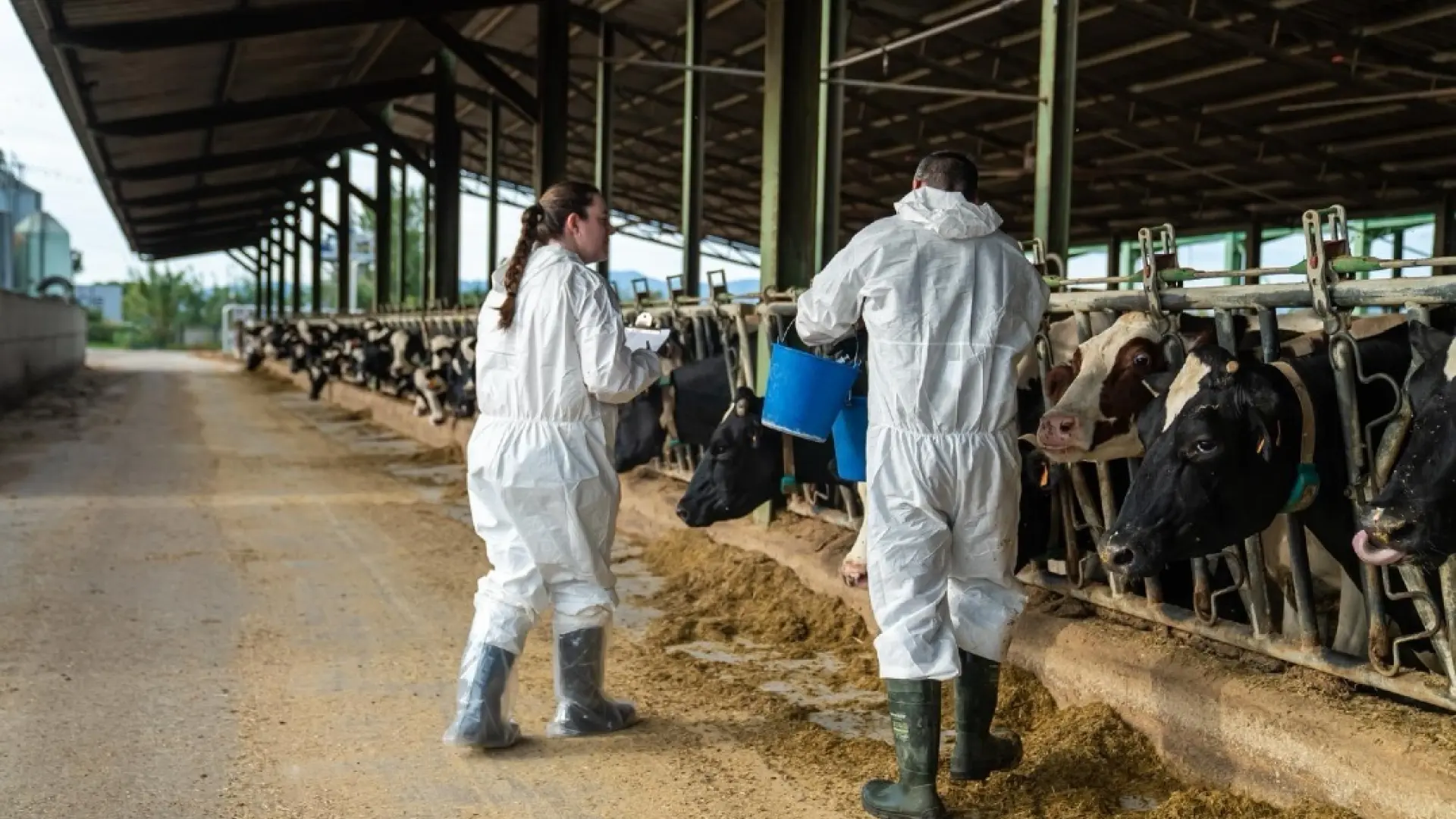
A triad of diseases shakes the Spanish livestock herd: cows, birds and sheep are its main victims. The Avian Fluthe Contagious Lumpy Dermatoses (NCD) and the Blue Tongue have made an appearance in recent weeks, testing the regional Official Veterinary Services (SVO) and the Department of agriculture. The three are also doing significant damage to the economy of ranchers in half of Spain. Climate change? Consequence of globalization? But, above all, can they affect humans? From the College of Veterinarians of Seville (ICOVS), its president Santiago Sánchez Apellániz, sends a message of tranquility and assures that In the case of bluetongue or DNC, they do not affect people. In the case of bird flu, he adds, “the possibility of contagion is low” and is not transmitted through egg products. As they agree on Asaja and COAGthe main damage to livestock farms is economic: immobilizations, sacrifices and quarantines.
Lumpy Dermatoses, the ‘new’ class
The most recent disease in Spain is Contagious Lumpy Dermatoses (NCD)whose first outbreak was located at the beginning of the month in Castelló d`Empuries in Girona (Catalonia) on a farm with 123 dairy heifers. Caused by a virus of the Poxiridae family, its symptoms in dairy cattle are fever, skin nodules as well as mucous membranes and internal organs, in addition to exhaustioninflammation of the lymph nodes and, sometimes, death. Since then, nine other outbreaks have been added in the same province and a 40 km surveillance zone has been established.
Jorge Gargallo, from COAG, points out Lumpy Dermatosis (NCD) that can cause “a loss of production of between 30 and 40%” and estimates an average mortality of 10%.”
Considered a category A pathology, the most dangerous according to European regulations, when new infections are found, the livestock must be immobilized and what is known as “sanitary emptying of the farm”. That is, the sacrifice of animals and the disposal of their corpses, as well as all products susceptible to contamination. Likewise, an emergency vaccination campaign is being carried out on all farms in the affected area. Gargallo (COAG) already talks about 80% of cattle vaccinated and highlights that DNC has “an average mortality of 10%.”
In addition, the representative of this agricultural organization emphasizes the economic damage of this pathogenic agent on the impacted farms and estimates “a production loss of between 30 and 40%”. Sánchez Apellániz, from the Seville Veterinary College, points out that an expansion of this virus can affect the export of beef from ports such as Cartagena (Murcia) while Santos (Asaja) warns that a greater incidence can impact prices. The COAG representative praises the professionalization of the Ministry of Agriculture’s technicians, and proposes carrying out more tests at source to prevent the virus from “jumping.” Dermatoses has no impact on humans nor can it be contracted through contact with the animal or the ingestion of products derived from them.
Avian flu and bluetongue, two old acquaintances
Much more familiar to Spanish ranchers are the bird flu and the blue tongue The first, according to Sánchez Apellániz (ICOVS), is “a mutable virus, similar to that of the human flu” although he estimates that there are “a low possibility of contagion.” The variant that keeps poultry producers up at night is the H5N1 strain, belonging to the ‘high potagenicity’ category. At the close of this article, there were a dozen foci in poultry in Badajoz, Toledo, Huelva, Guadalajara, Valladolid and Madrid. To which others join 47 outbreaks in wild birds throughout the country. As with the DNC, the measures adopted are those that apply to serious illnesses. For Jaime Santos (Asaja), the worst thing about this disease is the so-called “sanitary emptying of the farm” or the destruction of all birds on the same farmdespite the fact that the contagion occurs in a couple of copies, and is committed to “a unified strategy, without fissures, in which the rules are equal and rigorous.”
The bird flu variant that worries farmers is H5N1. At the close of this article, there were a dozen outbreaks in poultry in the provinces of Badajoz, Toledo, Huelva, Guadalajara, Valladolid and Madrid.
Regarding the blue tonguethis virus especially affects ruminants, especially sheep. At the end of this article, the presence of serotypes 1,3,4 and 8 had been located in almost all of Spain (the latest outbreaks have appeared in Guadalajara and Ávila), leaving the Canary Islands as the only autonomous region with the status of being free of the disease. The president of the Veterinary College of Seville talks about “a cocktail of high temperatures and humidity” which is helping the spread of the virus, especially the ‘Culicoides’ mosquito that transmits it.
Sánchez Apellániz predicts that “we will have to live with this disease” and that, currently, it has occurred a change in eradication strategy “at the request of the sector itself”: vaccination has gone from being mandatory to optional. “In Andalusia it is voluntary, although it is 100% financed by the Board,” he points out. For his part, from Asaja, Jaime Santos warns that “Two vaccinations are already being carried out: in spring and autumn” and warns against the fall in the supply of lamb at the beginning of the Christmas campaign. “Less supply will make it more expensive, which can lead consumers to opt for cheaper options like birds with more affordable prices,” he warns.
Climate change? Globalization?
When asked whether climate change may be driving the appearance of these pathogenic agents, Sánchez Apellániz (ICOVS) points out that “in epidemiology we say that When one disease disappears, another takes its place. In this regard, he highlights that in Spain other livestock-related diseases such as bovine tuberculosis and swine fever have been fought “and put an end to.” “From the veterinary profession we want to ask calm and awareness to take extreme biosafety measures,” says the president of the Seville Veterinary Council. This expert shows his concern about infectious agents present on the neighboring African continent such as foot-and-mouth disease and African swine fever.
“In epidemiology we say that when one disease disappears another takes its place”, Santiago Apellániz (College of Veterinarians of Seville)
For Joaquín Gargallo, head of beef at COAG, the most serious thing is “the elimination of fauna that controls vectors (the transmitters of diseases such as mosquitoes or humans themselves) such as bats and birds.” Something that, he adds, means “the loss of a natural barrier and this does not help” although he also points to the people themselves and the strong commercial flows (“perhaps the commercial intensity should be reduced”) as other enhancers. While in the opinion of Jaime Santos, veterinarian in charge of the Asaja Livestock Department, “We are facing a health challenge.” Gargallo (COAG), which has an extensive farm with 260 adult calves, rules out in any case a possible shortage and adds that “the Spanish market is well supplied and has a surplus.”