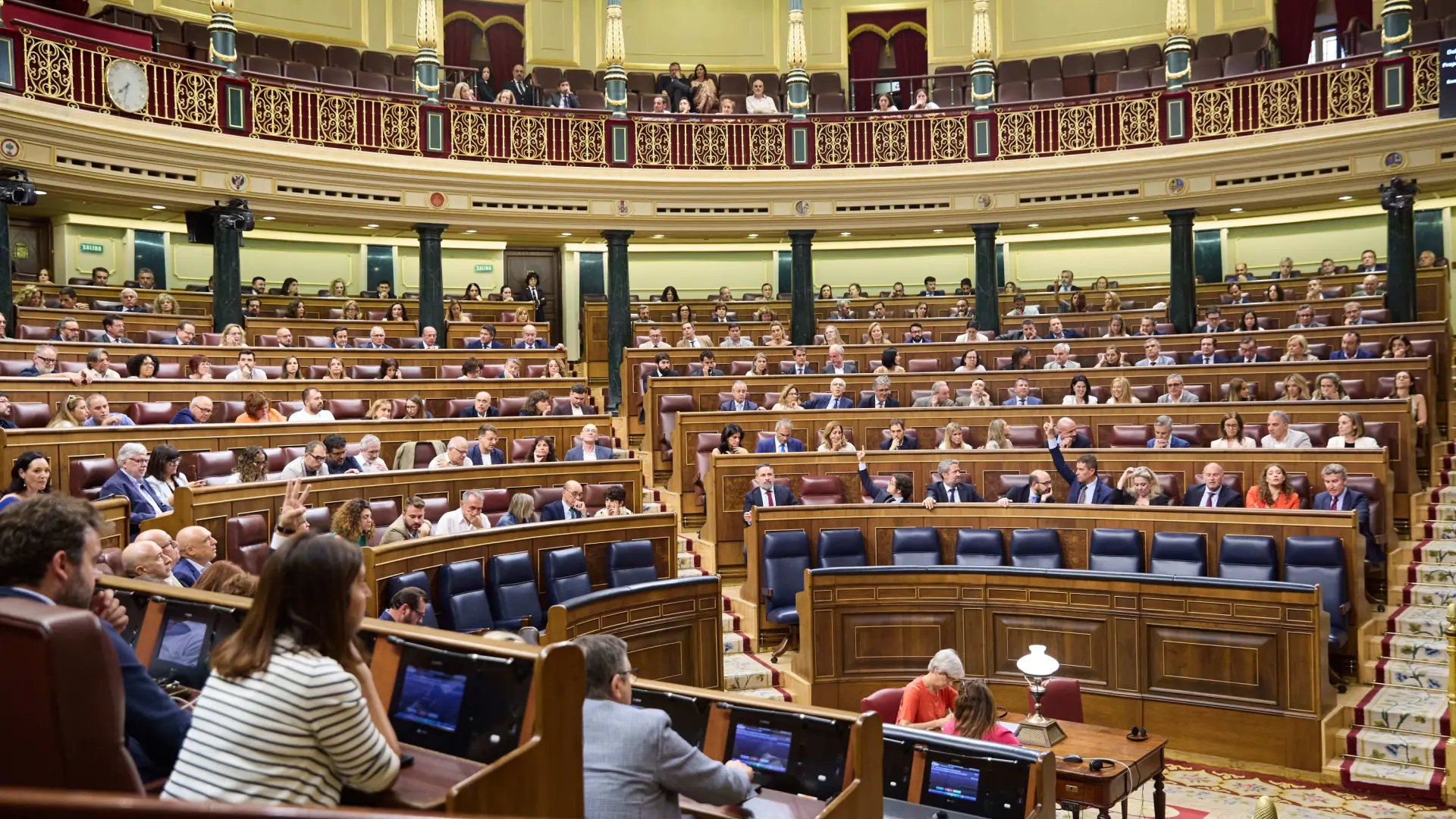
Where is the Spanish parliamentary system going?
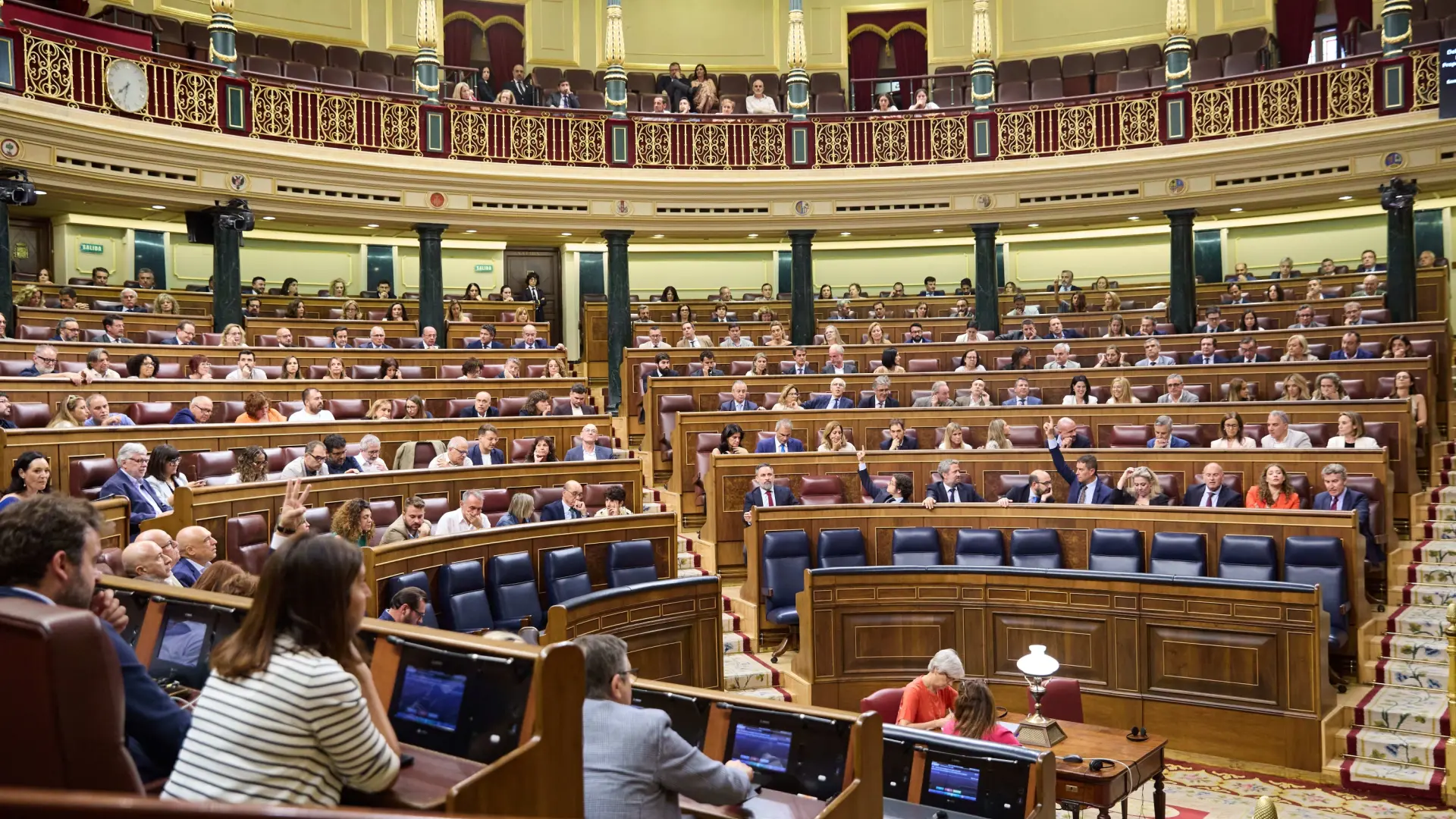
Between the new Palestinian Intifada against Israel that is sweeping through a certain part of the Western world in the form of demonstrations and the UCO Reports on the adventures of Ábalos and his henchmen, we do not pay attention to such important things, such as that one more year, it seems that There will be no attempt to approve the General State Budgets (PGE).
It seems almost a cliché to have to resort to article 134.2 of the Spanish Constitution, which orders that the Government must present the General State Budget to the Congress of Deputies at least three months before the expiration of the previous year’s budget, that is, before September 30 of each year.
Just reading the precept gives us an idea of how far the Government and our parliamentary system are from constitutional mandatessince the last approved budget dates from 2023.
It is true that our budget system connected with the financial system by dividing spending from income. Thus, by virtue of the principle of financial bifurcation, on the one hand there is legality of income and, on the other, that of expenditure. In such a way that the Government has income assured through the substantive tax laws such as personal income tax, corporate tax, VAT, etc., and in terms of spending, being an authorization to spend in certain chapters of the budget and up to a certain amount, the truth is thatand it is not met in general terms, neither with nor without a budget.. But much more is breached when there is no Budget Law.
The budgetary disorder is evident and here the Government makes a cloak of itself and spends as it pleases and suits it. If we add to this the European extra-budgetary funds, which operate under their governmental jurisdiction, the truth is that it is difficult to talk about budgetary legality.
But being important the economic dimension of the budget through which the Government directs the country’s economic policy, it is even more transcendental, if possible, if we look at it from the constitutional and political perspective, since we live at least nominally in a parliamentary regime, where the President of the Government is invested by the Congress of Deputies (art. 99 CE), to form the Government but needs to maintain said majority to articulate the political direction of the nation and to be able to carry out its program. government economic.
This, as will be understood, is what is studied in the Faculties of Law, Economics and Politics and is what, until a President came to power who proclaims, without ridicule from locals and strangers, that he could and can govern without parliament and without budgets, what if he continued down that path, some sherpa An intelligent person could enlighten him by pointing out that he can govern without elections, which is obviously not going to happen.
But this leads us to ask ourselves, from this point of view, where the Spanish parliamentary regime is going. It is not about cataloging it in a political way among the various formulas of parliamentarism or covert presidentialism, even if it is through a semantic Constitution, following the classic typology of K, Löwestein in his Theory of the Constitution, that is, a parliamentary regime in form, but non-existent in political reality, like here and now it is happening.
It is difficult to catalog the Spanish political regime in the current circumstances, such as populist Caesarism, hidden parliamentary regime, etc. The point is that the constituent defined a body as the defender of the constitution, (Der hüter der Verfassung), with certain limits, since the TC cannot do everything.
But when today we talk about the cracks in the Constitution or the perverse use of some mechanisms such as budget extension (art. 134.2 of the Constitution), when the Government has not even managed to approve the Budgets after the 2023 elections, the question is what to do.
The answer is not easy because the Government has all the resources of power and the most serious thing is that it relies on parties and parliamentary groups that take the Constitution for granted, that is, if it serves me, I will apply it; Otherwise, I do it according to my interests, whether or not they coincide with the Magna Carta.
In these circumstances the apellatio ad populumthat is, the call for elections so that the electoral body can solve the equationwould be theoretically correct. But the problem worsens if whoever can (the President of the Government) does not want to, and if whoever wants to (the parliament) cannot for reasons of vote counting (motion of censure), which of course poses not only in academic but real terms an unresolved crisis of the political system. The question, again without being circular, remains in the air, because who will solve it? In other systems the solution could come from the Head of State, but here it seems it is not possible. Hazardous times for constitutional legality and for the parliamentary system as a form of government!