how to ensure balanced and fair competition
The president of the European Commission, Ursula Von der Leyenwill go next Saturday, January 17, to the capital of Paraguay – the country that holds the ‘pro tempore’ presidency of Mercosur until July – to sign the trade agreement between the European Union (EU) and the block formed by the aforementioned Paraguay, Argentina, Brazil, Uruguay and Bolivia. The ambassadors of the Twenty-seven endorsed the pact last Friday by a qualified majority, with the opposition of France, Poland, Austria, Ireland and Hungary. The ‘yes’ bloc was led by Germany, Spain, Portugal and Italywhich finally tipped the balance. However, the final approval of the treaty still faces an upcoming vote in the European Parliament (EP) and to the strong opposition of the majority of the European camp that speaks of ‘unfair competition’. The challenge for Brussels will be to demonstrate that, after 25 years of talks, what has been agreed will benefit both parties.
How are you going to achieve it? Sources from the Ministry of Agriculture speak of triple protection towards the “most sensitive sectors” (beef and poultry, sugar, rice, honey…): tariff quotas which would barely represent between 1 and 2% of consumption at the European level, limiting imports under preferential conditions, as well as ‘safeguard clauses’ in case an increase in imports and prices have a serious impact. Specifically, according to what was negotiated a few days ago by Italy, they would be activated in the event of a drop in prices of at least 5% or a similar increase in product entries from Mercosur. To which would be added, they remember, a compensation fund for 6.3 billion euros known as ‘Unity Security Network’ to be specified in the next Multiannual Financial Framework (2028-2034).
The agreement with Mercosur designs triple protection for the most sensitive sectors (beef, sugar, rice, honey, ethanol…): tariff quotas, safeguard clauses and a fund of 6.3 billion to be specified in the next community budget (2028-2034)
Safeguard clauses, keys
The director of the Asaja office in Brussels, José María Castilla, points out that “a good commercial agreement is one that allows you to compete with the same tools and does not limit production.” However, Castilla recognizes “some improvement” by lowering the conditions for the activation of the safeguard clauses from 8 to 5% price drop compared to what was endorsed by the MEPs at the beginning of this month. However, it regrets that “its activation is unilateral” and sees as positive the intention of the European Commission (EC) to increase border controls by 50%. “It sounds very good, but this does not represent even 1% since, according to an official report, only 0.082% of the goods that enter are controlled,” he highlights.
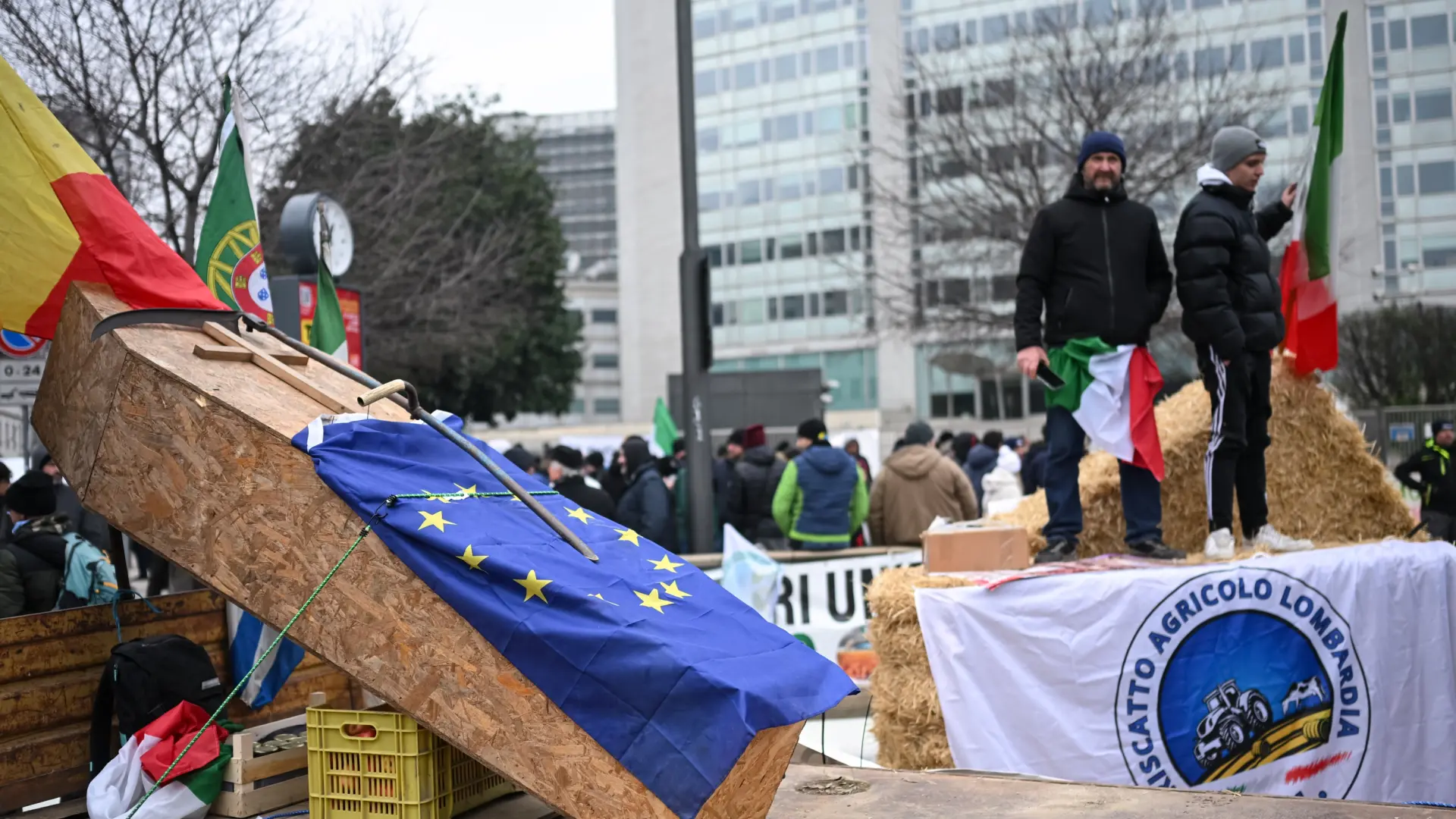
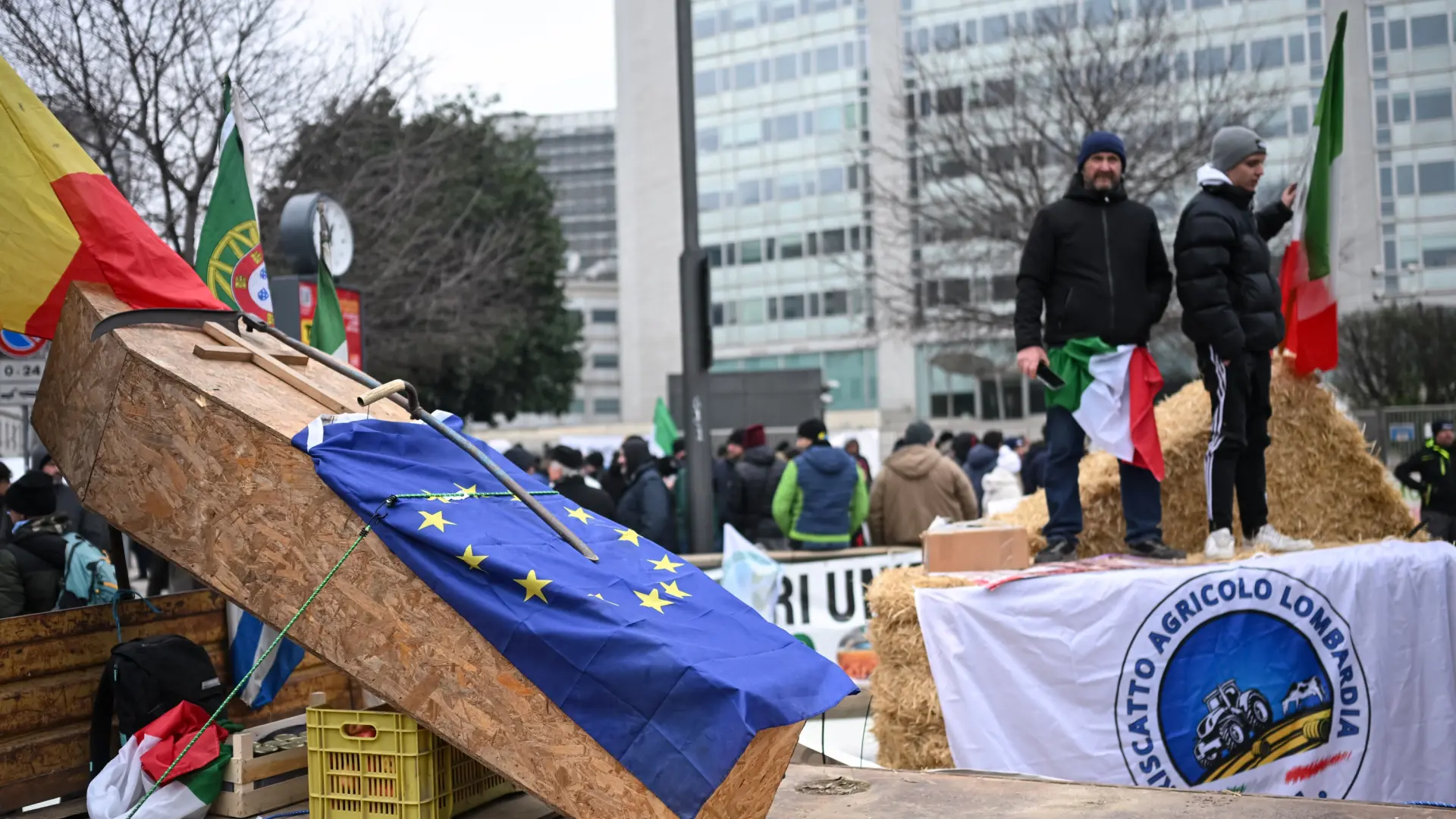
The head of COAG Organization, Andoni García Arriola, is skeptical about its application because “in the case of Morocco they have never asserted themselves. What we are looking for is trade.” In his opinion, regarding reciprocity, “there is nothing substantial in the agreement.” From UPA, its secretary general Cristóbal Cano, recognizes “important progress” in recent months and attributes it to mobilizations such as the one carried out by European farmers on December 18. “The pressure in the streets and the meetings with the commissioners have allowed us to have today a better agreement than there was at first,” he highlights.
“A good trade agreement is one that allows competition with the same tools and does not limit production”, José María Castilla (Asaja- Brussels)
The EAE Business School professor, Javier Rivas, assesses that the aforementioned safeguard clauses “are not automatic and the definition of a sensitive product is not transparent at all.” Rivas explains that“in general, they seem insufficient and since there are no automatisms, they depend on the political will of the moment.” This expert believes that the agreement “can be improved” in everything related to guaranteeing “a level playing field for European and Mercosur farmers” and, in his opinion“it is perfectly salvageable adding the obligation for the exporting country (whether from Mercosur or the EU) to undertake to comply with the phytosanitary obligations of the importing country.” Rivas believes that, faced with a European continent trapped between Russian expansionism and an unreliable United States, “Europe cannot isolate itself” and must seek counterweights.
Geopolitical “obligation” or “backstab”
This commercial agreement is testing the seams of the community club: “Geopolitically it is almost an obligation, given the rise of American influence recently, and in the longer term, also China in large areas of America. It is important that the European Union regains its momentum by promoting these types of agreements,” states Rivas (EAE Business School). In conversation with ‘The Information‘, this analyst points out that “the agreement could yield an important trade balance, especially for countries like Colombia either Braziland in Europe, especially Germany, could be the most benefited, with the most affected being the Mediterranean countries“
Sources from the Ministry of Agriculture describe this treaty as “a balanced historical milestone that will give rise to the largest free trade area in the world, with a joint market of more than 700 million consumers“. Agriculture alludes to “the historical, cultural and business ties that we have with these 4 countries” in reference to the hard core of Mercosur (Argentina, Brazil, Uruguay and Paraguay).
“The agreement could result in a significant trade balance, especially for countries like Colombia or Brazil and, in Europe, especially Germany, could benefit the most, with the Mediterranean countries being the most affected,” Javier Rivas (EAE Business School)
The sources consulted also highlight that they are going to reduce entry barriers to these markets for the agri-food sector, as well as to reinforce the protection of our designations of origin and geographical indications and, they maintain, that “increased controls and commitments in environmental and labor matters.” Specifically, they detect “significant advantages” for products as relevant as olive oil and they emphasize that the agreement will mean the elimination of the current 10% tariff. Something that they see as especially interesting in the case of Brazil, which concentrates 98% of our ‘green gold’ exports to Mercosur (93 million euros).
Opportunities are also opening up, this Ministry points out, in other productions such as pork and derived products with the end of tariffs in a period of between 8 and 15 years. In addition to in the case of wine and spirits. Regarding the latter, they remember that community wines currently have a tariff rate of 35% to enter Mercosur, but that will disappear in 8 years for bottled wine and, immediately, for higher-priced sparkling wines (8 euros per liter).
From COAG, its head of Organization Andoni García, warns against “serious impacts on European agriculture” in products such as beef, milk or honey and speaks of “a drop in prices in the medium – long term and a substitution of local productions”
Next station: the European Parliament
An almost opposite position is that of representatives of the primary sector such as the director of the Asaja office in Brussels who mentions that “the Brazilian government and the European Commission (EC) recognize that they cannot control that all the beef that enters is not fed with growth hormones.” Castilla does not consider the ‘war’ lost and, he assures, what they are going to do strong lobbying so that the European Parliament does not ratify it in January – February.” Specifically, the contrary vote of a majority of MEPs would block the application of the trade agreement. In his opinion, last Friday was “a black day and a stab in the back” for the countryside. For the representative of this agricultural organization “the agreement is the Commission’s way of asking for forgiveness for the Green Deal mistakes in industrial matters, opening the door to supplying a market of 270 million consumers at the expense of farmers and ranchers.
A similar opinion is held by Andoni García, from COAG, who warns against “serious impacts on European agriculture” of the agreement and point towards products such as beef, milk, honey, citrus, rice and cereals “who have been in a bad situation for several years.” The representative of this agricultural association warns of “a drop in prices in the medium – long term and a substitution of local production for imports.” Specifically, COAG reduces the positive impact on the Spanish economy by just 0.05% of GDP compared to other social and strategic derivatives. Cano (UPA) maintains that “the sector cannot put a blindfold on its eyes. We need rules-based trade agreements. “We believe that an attractive scenario is opening up for commerce.”