Iberian ham reinforces its commitment to China in the midst of a tariff storm
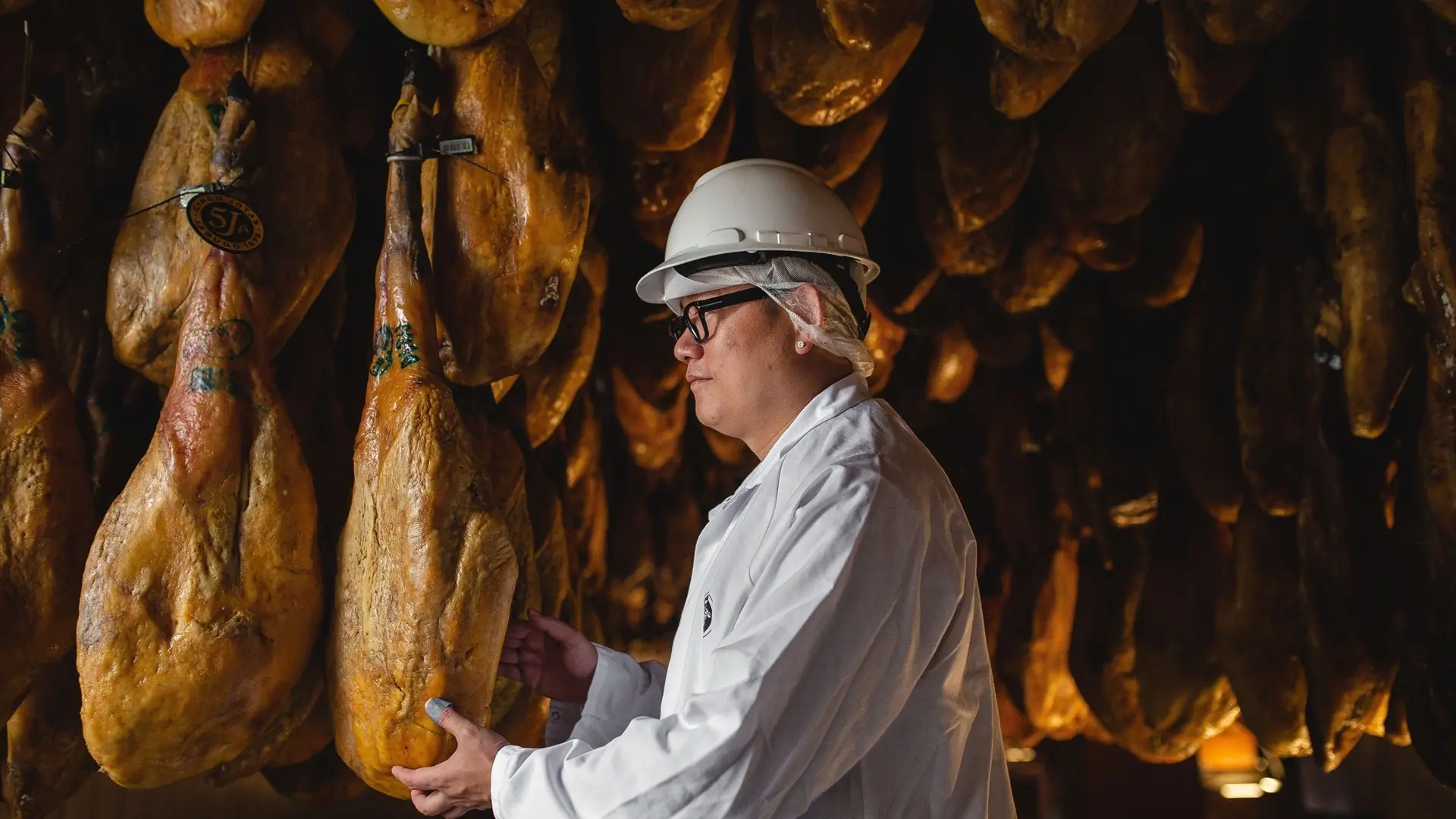
These are not easy times for export activity. The protectionist wave has also made its mark on Chinawhere temporary tariffs of up to 62.4% have been in force since September 10 for European pork exporters, whom it has accused of unfair competition. In the case of Spanish companies, the tariff is much lower and moves within a range of between 15.6% and 20%. A reality that was analyzed yesterday in a meeting of the sector with the Secretary General of Agrarian Resources and Food Security, Ana Rodríguez. During the same the Executive gave a boost to the sector and expressed confidence that the imposed tariff rates will be lifted soon. In this very adverse context, another Spanish product reinforces its commitment to the Asian giant and hopes that its exports to this market will continue to grow: Iberian ham. It is true that it is far from the figures of the white-capped pig, but the evolution in the last 5 years has been positive.
Specifically, according to data collected by the Interprofessional Association of Iberian Pigs (Asici) that covers exports of hams and cured shoulders, last year it was sold to the Asian giant for a value of more than 28.08 million euros. Which represents 0.47% more than during 2023, although if we go back 5 years to 2019, the climb has been 104% since in terms of value, 13.77 million euros have gone from being sold on Chinese soil to 28.08 million at the end of 2024. The trend has continued during this year and, in the first half of the year, they have reached 11.74 million euros. This is 8.4% more than the same period in 2024, when the figure was 10.83 million. At a global level, the largest Asian power is the first destination for Spanish pork outside the European Union (EU) with exports that were greater than 1,097 million euros. The equivalent of 11.2% of national production. The vast majority linked to the white-capped pig. Spain is the third world power in pork production and the first in the EU.
Aside from the latest Chinese tariff package
From ASICI, its managing director Jesús Pérez recognizes that it is “positive” be left out of the temporary tariffs imposed by the Chinese Ministry of Commerce on pork. In this sense, remember that “there is no local production” and vindicates the effort made by the sector in the last 5 years. Specifically, Pérez mentions the “promotion, distribution and training campaigns aimed at professionals so that Iberian ham is not only a mere sign of prestige but also a profitable product.” The Asici representative explains that they have also promoted communication through social networks, addressing a large audience. In this sense, he explains that ham is not completely unknown to the Chinese consumer that also uses it for condiments, broths… In this sense, he adds that from the interprofessional “we are working to integrate Iberian into your gastronomy, in dishes that allow it to be paired through local chefs, ‘showcookings…’. All of this, he argues, without forgetting the Brand Spain character of this product: “We are defending the differentiation of the product and its recognition, he concludes.
For example, within the ‘Awaken Your Ibérico Sense’ campaignOn September 12 and 13, an intensive course on Iberian ham was organized with executive chefs from restaurants in Beijing led by the managing director of ASICI and the master cutter Zulima Esteban. Similarly, just a few days after the imposition of the tariffs, from September 15 to 21, the ‘Iberian Ham Week’ in which 7 restaurants in the city participated, through tastings and other actions around Iberian ham. This ‘made in Spain’ product also participated in the Spain Food Nation Summit 2025organized by ICEX on September 11 to strengthen ties between both nations.
Asked about the future evolution of exports, Pérez is sure that “they will continue to increase in the coming years. It is the largest power in Asia with 1.4 billion people and a thriving middle class and where the Iberian is having a great reception.” In this regard, the representative of the Iberian interprofessional highlights that “the most difficult thing is to start” and that They are already growing in other markets by double digits although it clarifies that the figures cover both ham and shoulders. “It is a product with a production process that differentiates it” and associates it with Spanish culture, says Pérez, who emphasizes the relevance of didactic work so that the product is treated as best as possible (cutting, plating, etc…