Planas optimistically sees “the fishing marathon” to agree on the 2026 quotas and warns that Spain will remain “firm”

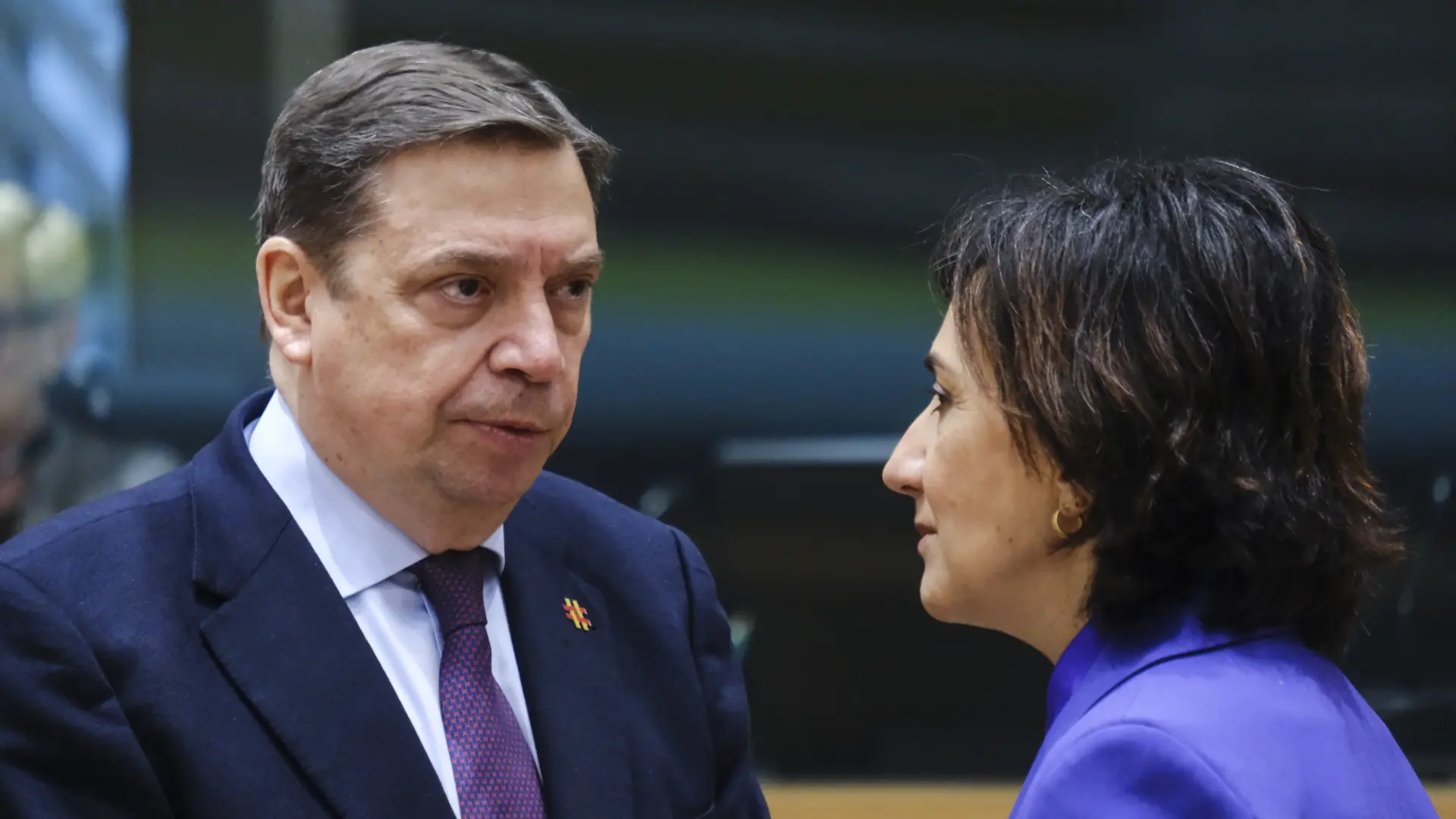
The Minister of Agriculture and Fisheries, Luis Planas, He arrived in Brussels this Thursday with optimism about the “fishing marathon” of these days to negotiate the 2026 fishing quotas, in an event that has become one of the densest and longest every year in the community capital. He assured journalists, however, that he sees “problems” in the European Commission’s proposal and that the Spanish position will be “firm.”
“Spain, as the first European fleet from the point of view of the total catches of more than 800,000 tonnes, is undoubtedly one of the Member States most interested in the outcome of the negotiations,” commented Planas, who preferred to start with the part that he considers good of the entire package to be negotiated. “If we refer to the fishing grounds of the European Union, starting with the most significant species, European hake, southern hake, we are going to maintain the 17,445 tons of the previous yearwhich is great news, because it means not only by volume but also by market price, one of the most valued catches in the market as a whole.”
The minister pointed out that sees the negotiation “in a positive spirit”, but at the same time warned “a couple of problems that we are going to try to solve“This second point, he said, “is very complicated because the scientific report in that sense is very precise and in that case negative for our interests.”
This summit is reached with a proposal from Brussels that, according to sources consulted by this medium, will have to be very nuanced. The European Commission has already put a proposal on the table in which it is committed to limiting the working hours of workers. 557 shipyes to 9.6 annual fishing days on average per vessel during 2026. It should be remembered that, for this year, Brussels has already reduced the so-called ‘fishing effort’ to 27 days per boat per year. Which was later qualified, on condition of adopting certain measures, up to around 130 days per vessel.
The proposal of the community Executive estimates its cut on fishing days this year (the so-called ‘fishing effort’) from the cuts initiated since the entry into force of the Western Mediterranean Management Plan in 2020. Something that had not happened before. According to the sector, between 2020 and 2024 the working hours of this fleet have been reduced by 40.5%. All this, despite the fact that the Commission’s draft opens the possibility of equalizing this year’s fishing days, in exchange for technical measures.
Some of these initiatives would be identical to those required for this exercise, such as the change of tights and the ‘flying doors’‘ (the doors are the devices that are placed at the ends of the network to keep it open and these, by not touching the seabed, do not damage the ecosystem), and other new ones.
Despite Planas’ good tone upon his arrival in Brussels, Spain sees the Commission’s proposal as “unaffordable” and denounces that it is based on an incorrect approach: setting the days of activity based on the state of the most fragile species – the Norway lobster – an indicator that, it argues, distorts the real portrait of mixed fisheries. The Government emphasizes that more than 550 trawlers have incorporated improvements to increase the selectivity of catches and that nearly 200 ships already operate with flying doors, advances that, he maintainssupport the reports that point to a clear recovery of the populations.