Retirees receiving the maximum pension have doubled in the last decade
When it’s time to retire, More and more Spaniards are accessing the pension system with the maximum pay offered by the system (3,175 euros this 2024). So much so, that the number of people who retire with the maximum pension has doubled in the last decade.
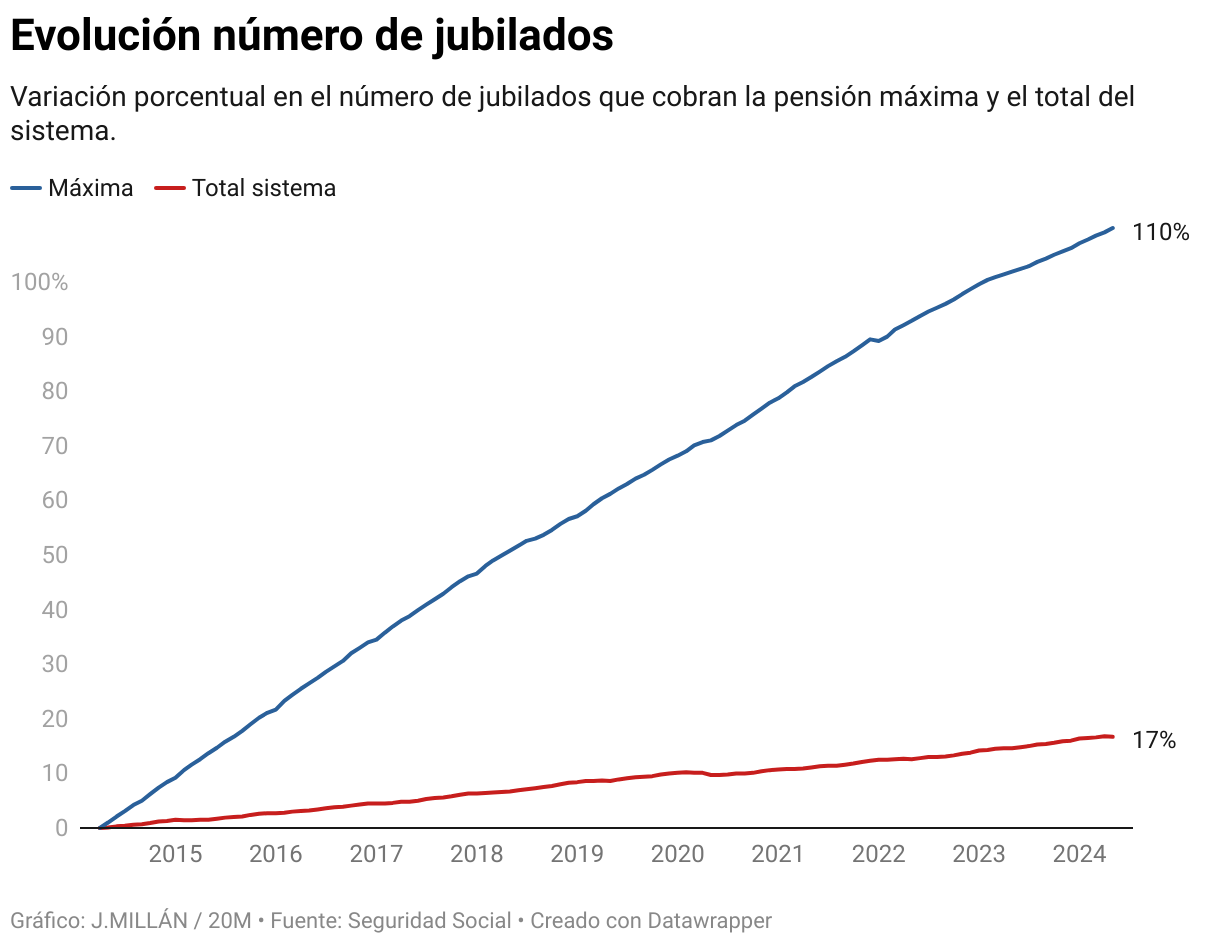
According to the latest statistical update of the system, released last Tuesday, last May there were 382,500 retirees discharged who received the maximum pension. A figure that more than doubles the 160,423 that were registered just ten years ago, in May 2014.
The increase is striking, especially if one takes into account that The number of people who have retired in the last decade has not grown as much in relative terms. Thus, while workers who retire with the maximum pension have increased by 110% since 2014, total retirements have grown only by 17%.

The explanation for these differences is that the pension system begins to include increasingly to workers who have had better working lives. The job market experienced by Spaniards who are now beginning to retire is very different from the one their parents had to deal with.
The generation of baby boom —broadly speaking, those born between 1957 and 1977— and those immediately preceding have had Longer, more stable and better paid careers than those of their predecessors. Furthermore, they are a much larger population cohort than those that preceded them and those that will take over (millennials). and generation z).
More stress on the system
The trend that has been seen in the last decade will in crescendo in the coming years as people retire baby boomers. Spain’s independent tax authority—Airef—estimates thathe percentage of pensioners receiving the maximum pension will double in the coming years.
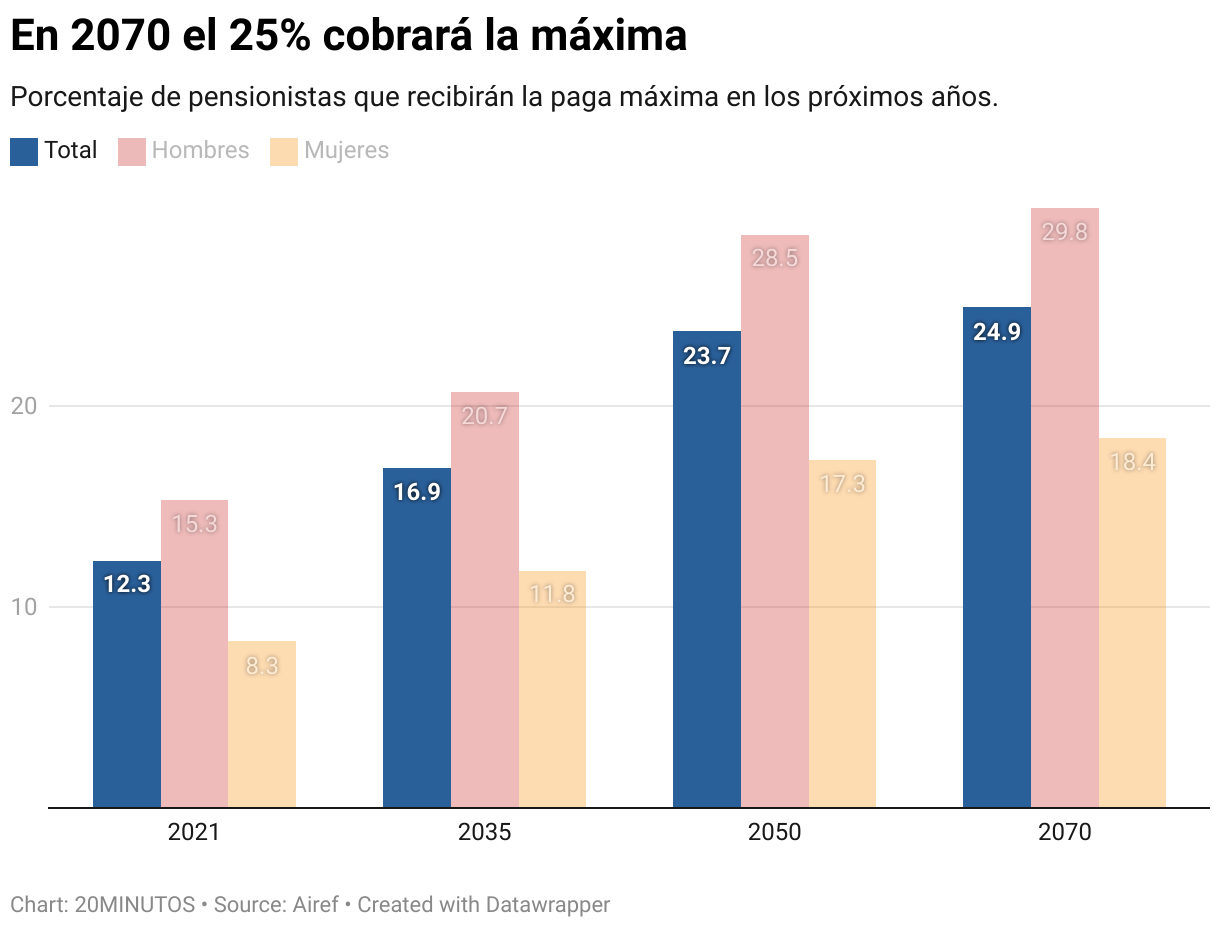
Currently, Airef estimates that 12.3% of pensioners have the right to receive the legal maximum, a proportion that in 2050 would reach 23.7%. The rate would continue to increase until reaching 24.9% in the year 2070. Which would imply that one in four pensioners will receive the maximum remuneration in 2070.
This will have consequences for a pension system that faces increasing spending in the coming years. Even more so when the reform of the system designed by the former Minister of Social Security, José Luis Escrivá, includes a considerable increase in the maximum pension to compensate for the increase in the maximum contribution base. An effect that will be mainly noticed from the year 2050.

The latest future spending projections prepared by the European Commission suggest that the increase in the number of retirees who will receive the maximum pension and the improvement in its amount will increase spending by 0.8 points of GDP (about 11.7 billion measured in 2024 euros). An effect that would counteract the demographic relief that is expected to arrive from 2050.
Precariousness, the other side of the system
The pension system has many different faces. The growing importance that maximum pensions will have for the system is just one of the different realities that coexist in it. The other, more bitter and common, is that of the retirees who barely manage to make ends meet with their benefits.
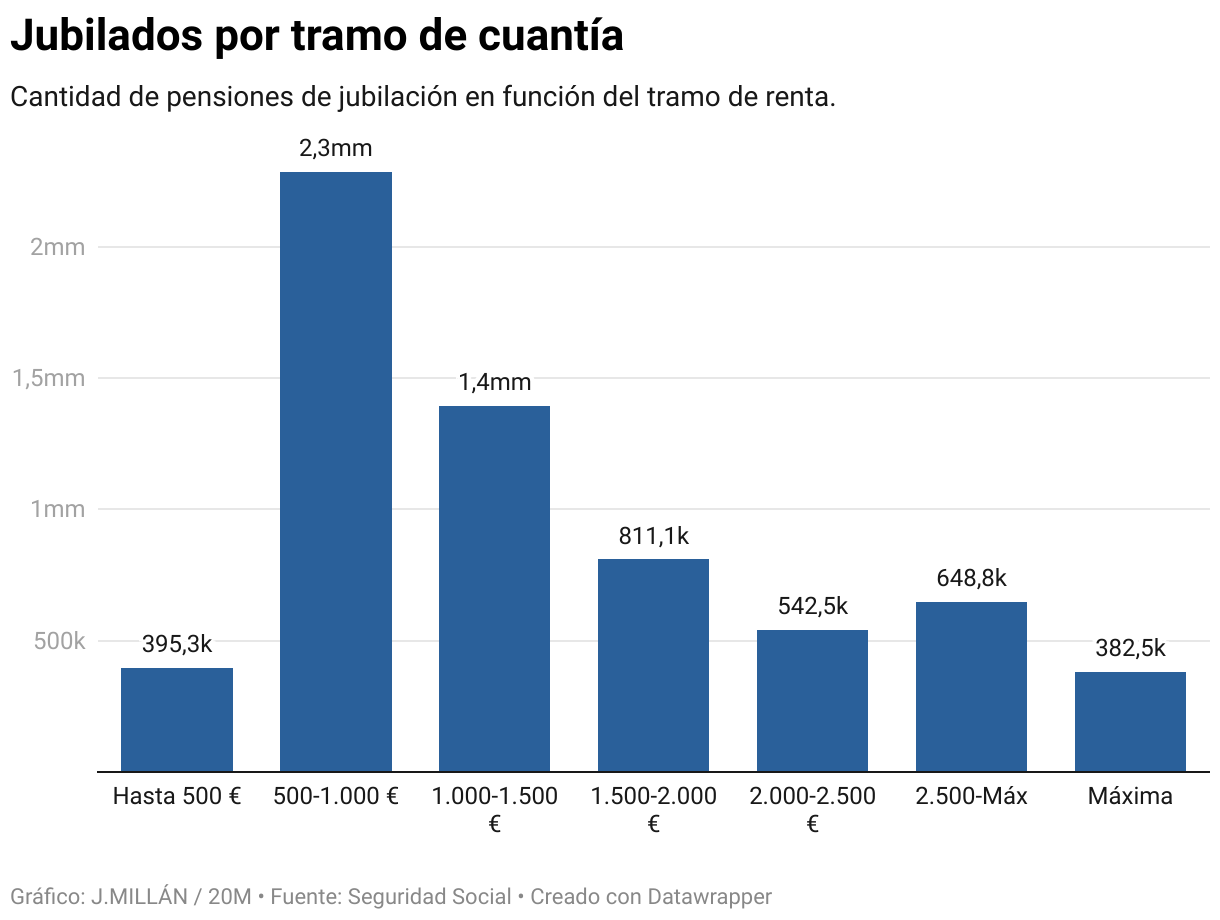
Thus, while 9% of retirees in Spain collect a pension that exceeds 3,000 euros per month, half barely make the minimum wage. Social Security statistics reflect that there are 3.2 million retirees with payments equal to or less than the SMI. Remunerations that, however, in some cases are compensated with supplements to guarantee that the pension does not remain below the minimum.
The low pension that many retirees receive It also creates situations of vulnerability. Not in vain, 30% of households made up of a single member over 65 years of age are at risk of poverty and social exclusion.