Seventeen foods already rise above 5% and chocolate, eggs and beef arrive at the start of the Christmas campaign
Food prices remain a headache for Spanish homes. Although the worst of the inflationary wave at the beginning of this decade is now behind us and the situation is now much more stable, there are products in the shopping basket that are still becoming uncontrollably more expensive. All this with the aggravating factor that it rains in the wet from all previous price increases that have been accumulating and that salaries have not been able to match.
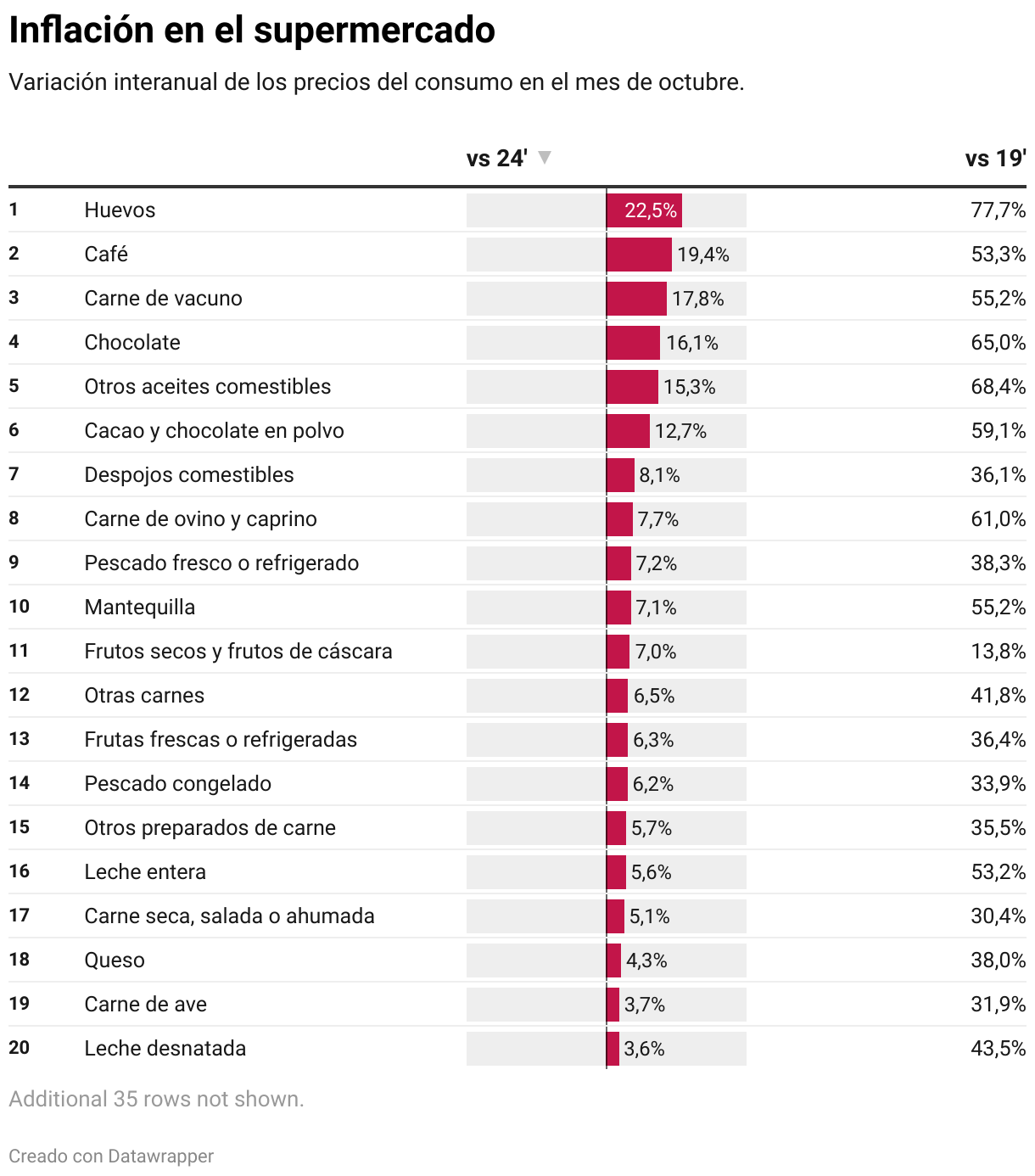
Specifically, the prices of 17 foods of the 55 groups monitored by the National Institute of Statistics (INE) rose above 5% in October in interannual terms. Everyday products such as eggs—which have become 22.5% more expensive in the last year alone—the coffee (19.4%), the beef (17.8%), the chocolate (16.1%), the vegetable oils other than olive (15.3) or cocoa and chocolate powder (12.7%) have increased by more than 10% in just one year.
To them are also added other food products such as edible offal (8.1%); the meat of sheep and goats (7.7%), the fresh fish or refrigerated (7.2%), the butter (7.1%), the dried fruits and shell (7%), other meats such as rabbit or game (6.5%), the fresh fruit (6.3%), the frozen fish (6.2%), others meat preparations (5.7%), the milk whole (5.6%) and the dried meatsalted or smoked (5.1%).
These products they arrive shot at the beginning of the Christmas campaignpeak consumption season par excellence. Not in vain, according to the OCU, spending per person on Christmas was around 683 euros last year. Foods such as cocoa and its derivatives are present in nougats, chocolates or hot chocolate, Christmas classics. The same thing happens with meat, where lamb or ham are star dishes on the table during the holidays.
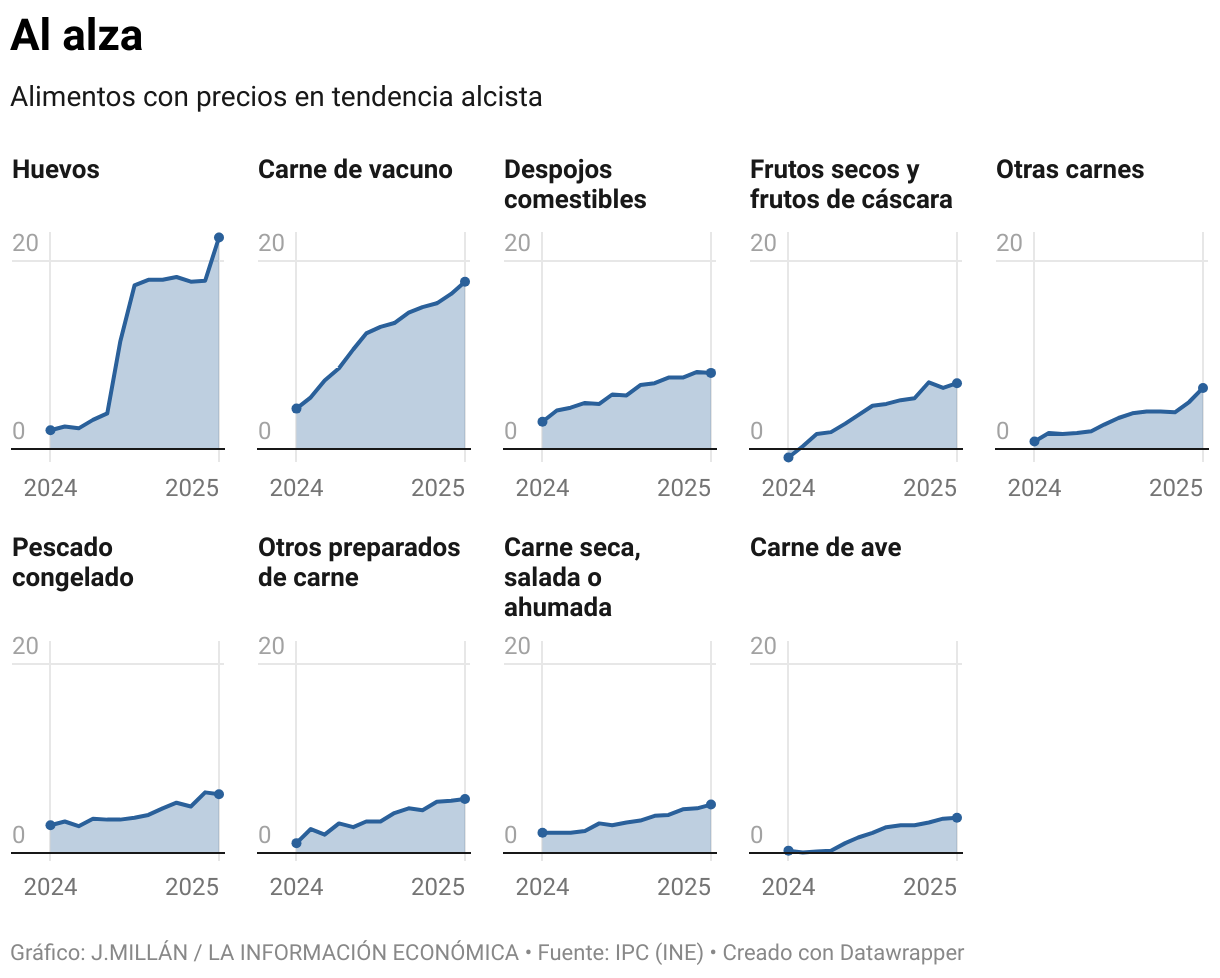
The INE counts a total of 34 products of the 200 for which it measures the price that are rising above 5%. Of them, half are food. A fact that contrasts with the global image projected by food as a whole, which has only risen 2.4% in the last year.
This disparity is explained because There is an important core of products that rise below 2% (inflation target of the European Central Bank) and even others that have become cheaper. Good examples of this are bread, legumes, prepared dishes and, above all, olive oil, which is 41.6% cheaper than last year, when it reached prohibitive levels.
Instead, the focus is on before the pandemicthe accumulated increases in the prices of some products are spectacular. Compared to October 2019, eggs are 78% more expensive, sunflower oil has become more expensive by 68%, fruit juices have risen by 66% and chocolate has risen by 65%.
The shopping basket is 37% more expensive today than it was six years agoa figure that contrasts with the increase seen in the previous six-year term. Between October 2013 and 2019, the price of food rose 8% in full economic recovery after the great financial crisis. A period, it must be said, in which the problem with inflation was the opposite of the current one: prices grew too slowly.
More inflation than expected
Until now, the main analysts agreed in pointing out that the slight inflationary rebound that Spain has been experiencing since the spring will begin to subside as of November. However, the CPI data for October have clouded the scenario because they have been worse than expected.
From Funcas, a study center for the old savings banks, the latest figures “reveal a generalization of inflationary pressures, which seem to be reinforcing since the spring.” “The result has exceeded forecasts in all major components, except for energy products, something that is unusual, which could show a change in the upward trend in the evolution of inflation,” explains the Joint area of the organism.