Spain asks to include olive oil, wine and cheese in the list of exemptions from tariffs

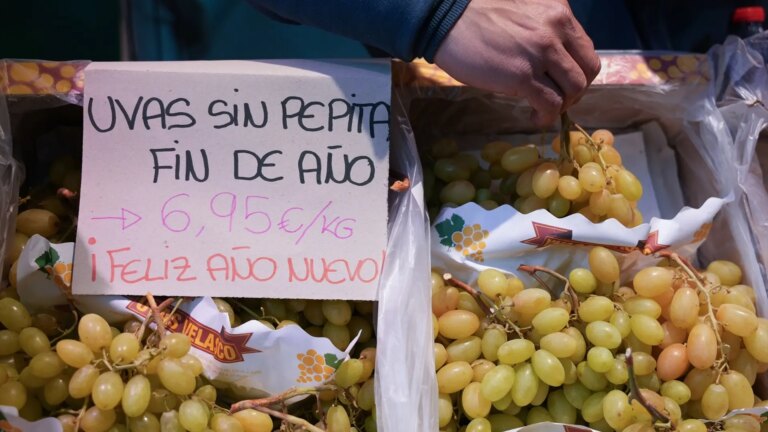
The Minister of Economy, Commerce and Business, Carlos Body, reported this Wednesday that, with the different ministries and sectors involved, a list of “strategic” products has been drawn up that includes, among others, olive oil, olives, wine, cheese, red tuna, octopus, perfumes, plaster and other building materials to reduce the tariffs that are imposed on them and fall within the different catalogs of exemptions by the United States.
“From Spain we are trying to move forward in putting on the table the interest for the American consumer in which our products do not have to face these tariffs, since it would be a beneficial situation for both our producers and their consumers, reducing prices of some essential products in your basket of basic consumption,” explained the minister during his appearance this Wednesday at the Congressional Economy Commission.
An example of this is olive oil, which is a product of which, if consumed in total by North American households, only 2% It is produced in the United States, while the rest is imported. In addition, of these imports, 40 percentage points are from Spainso “the tariff exemption for Spanish olive oil is in the interest of both countries.”
The Government’s economic representative has defended that Spain has worked “actively” to reinforce or introduce modifications to the agreement tariff between the European Union and the United Statesreinforcing the security and response capacity of the EU, strengthening suspensive and safeguard clauses or guaranteeing the compatibility of this framework with that of the WTO.
Furthermore, Spain has considered the agreement as a provisional step towards what could be trade liberalization in the medium term. According to Corps, Spain is going to “push” so that olive oil, olives, wine, cheese, bluefin tuna, octopus, perfumes, plaster and other construction materials are included in the different lists of exemptions by the United States.
Regarding the evolution of bilateral trade between the United States and Spain, Corpo explained that there has been a contained evolution in recent years, but with a certain visible deterioration, especially from mid-2024 onwards. Specifically, Spain’s trade deficit with the United States stood at 10,785.6 million euros in the first nine months of the year, figure 38.7% higher than the negative balance of 7,772.4 million euros from the same period in 2024, according to data collected in the Monthly Foreign Trade Report prepared by the Ministry of Economy, Commerce and Business.
The minister explained that this deterioration that has been observed in the balance is due in part to both an increase in imports as well as the fall in exports. “There is a very heterogeneous evolution by sectors where the sectors that evolve in a slightly positive way are compensated in a certain way with those that evolve in a slightly negative way,” explained Body.
In the case of olive oil, the evolution of exports to the United States in the last twelve months reflects a contribution “markedly negative”something that has “a lot to do” with the recent evolution of the prices of this product. However, Corps has explained that, once the price effect, exports in terms of volume They are growing at maximum levels in the last three years.
About the evolution of perfumes, the head of Economy has explained that it is one of the most important sectors quantitatively in terms of total relations of the United States and, in this case, they continue to contribute positively. “It is one of the sectors that is also maintaining that capacity for competitiveness, to compete in the American market, despite the existing tariffs,” he highlighted.
Another very significant case is the export of medicines, where export records are being broken well above the range when observed in cumulative terms throughout the year. However, Body has assessed that Spanish companies are being able “in a very clear way” to adapt to the situation, to this new framework that occurs with higher tariffs and greater complexity of operation in the United States.
ICO guarantees for 160 million
Body has also advanced that the ICO has mobilized guarantees for 160 million for companies affected by the new United States tariffs. Among the measures of this plan, the 5,000 million in ICO guarantees made available to the affected companies stand out, of which for the moment only the aforementioned 160 million have been mobilized in 24 operations, a low demand of which the minister makes a “positive interpretation” because it reflects a low impact of the commercial situation.
The tariffs have also affected the evolution of lines associated with the Recovery Plan, such as co-investment, ICO companies and entrepreneurs or green ICO, which have formalized loans for 1,070 million associated to a project portfolio of 1,213 million, 34% of them closed since April, when the new rates were implemented.
Added to this are the 663 million mobilized from ICO Canal Internacional for intermediated financing and the future ICO Growth tariff line, still pending approval. Others instruments are the extension of Cesce’s coverage limitwhich has allowed 200 policies to be taken out with 1,165 million euros insured; the reinforcement of internationalization instruments, with which 610 million have been executed for companies affected by tariffs, or the 400 million of the Moves plan, executed “in their entirety.”