the pulse of each New Year’s Eve that questions the reign of the traditional Vinalopó grape
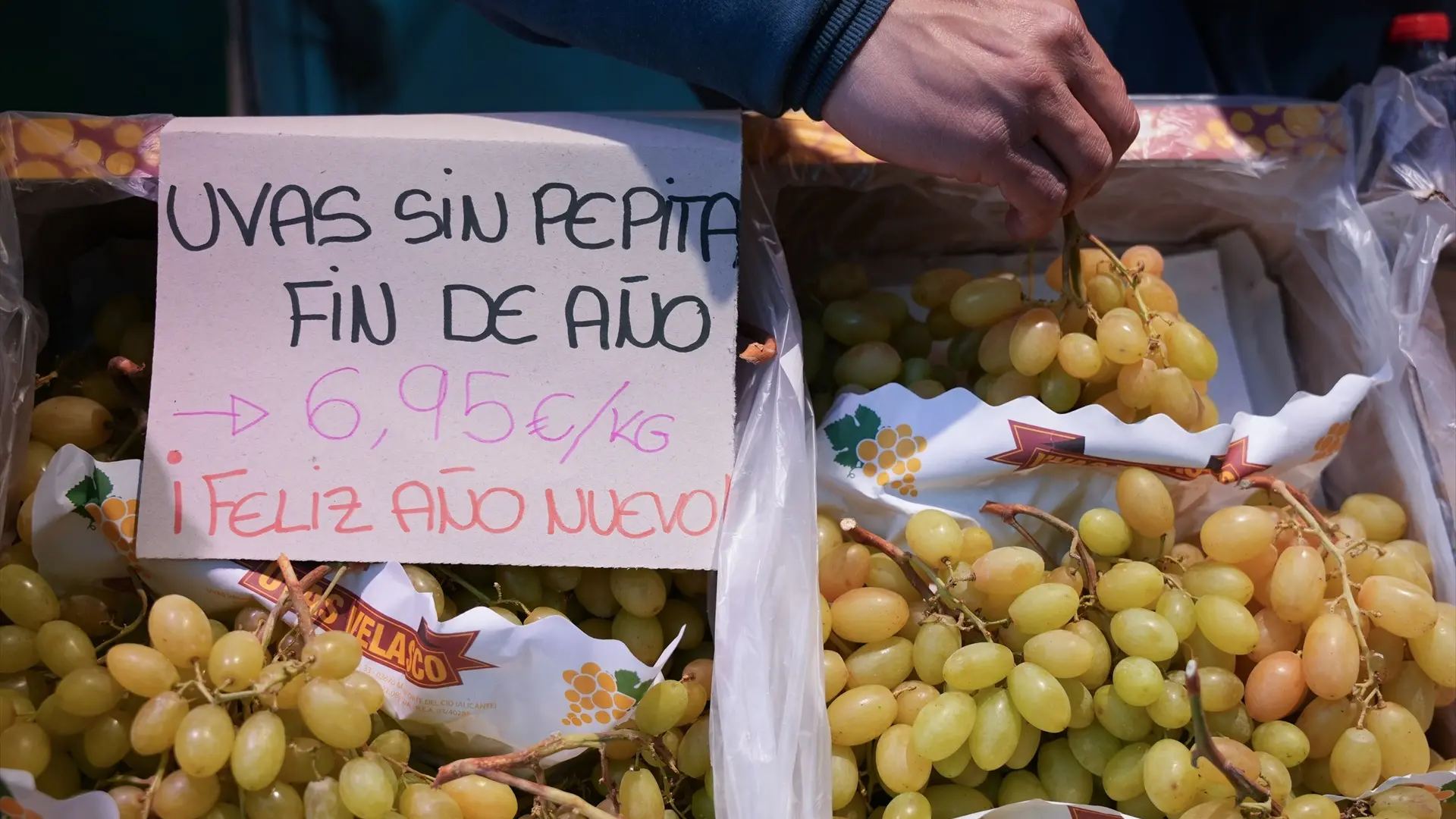
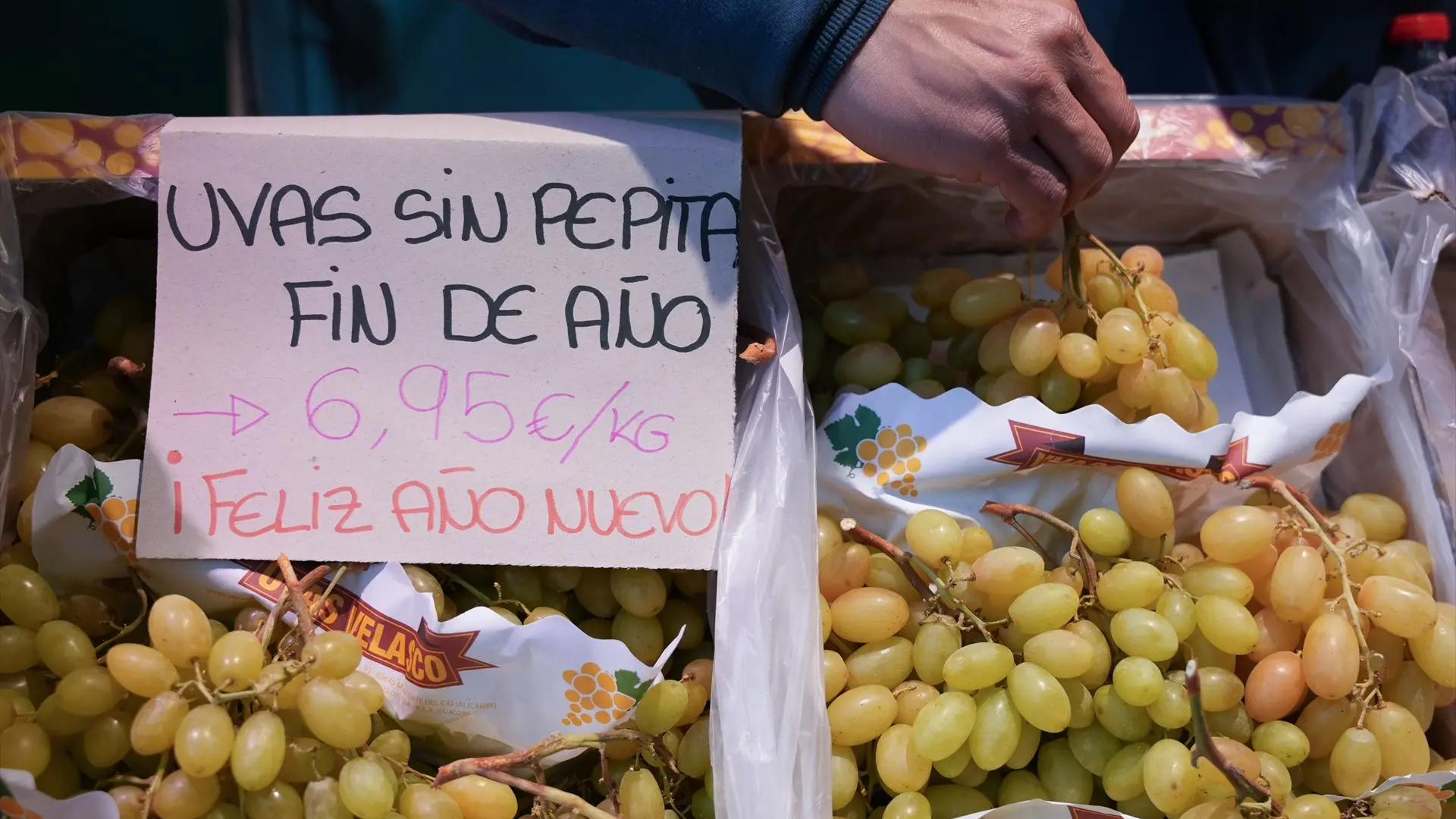
In the chapter on ‘great debates’ such as the potato omelette with or without onion and lentils, with or without chorizo, each New Year’s Eve There is a fight going on in Spanish homes: that of seeded or seedless grapes to say goodbye to the year. Tradition versus convenience. The ‘lucky grapes’, the only ones that arrive fresh at this time of year in Spain (with their season already over), and that correspond to the Aledo variety that is grown in Vinalopó (Alicante). A reign increasingly questioned in recent years, due to seedless grapes that are imported from European countries such as Italy and the southern hemisphere such as Peru. This fruit is easier to consume before the bell rings, although its price is not immune to the increase prior to New Year’s Eve. Facua estimates that has become more expensive by an average of 32% since the beginning of November.
The area dedicated to the cultivation of table grape It is concentrated in the southeast of Spain (Alicante, Murcia and Almería). According to estimates by the Ministry of Agriculture, it will reach the 14,500 hectares, and the forecasts for this year are slightly lower. Regarding production last year it reached 364,000 tons compared to almost 348,000 in 2023. For the current year, forecasts indicate that they will exceed 386,000 tons. Since 2020 this crop has grown around 20%. Only in the DOP ‘Uva de Table Embolsada Vinalopó’ the harvest exceeds 30 million kilos. Exports, calculated from the department of Luis Planas, reached 441.20 million euros last year. The main destination of Spanish table grapes was the European Union (EU), especially Germany, Portugal and France, while they were imported for a value of 198.21 million from countries like Chile, Peru and China.
The price of seedless grapes, increasingly fashionable among Spaniards as an alternative to the traditional Aledo for New Year’s Eve, has risen an average of 32% since the beginning of November, according to Facua
The weight of tradition
From the Association of Wholesale Entrepreneurs of the Central Fruit Market of Madrid (ASOMAFRUT) highlight that the white Aledo grape, the latest and most typical variety of New Year’s Eve that has its origin in the Protected Designation of Origin (DOP) ‘Uva de Mesa Embolsada Vinalopó’ located in this Alicante region, supposes between 60 and 65% of sales in Mercamadrid. “More or less in line with other years,” Asomafrut highlights, where they estimate that their marketing is concentrated between last week and these days, immediately before New Year’s Eve. In the Mercabarna Association of Companies and Dealers (Assocome), agree that seedless grapes are becoming increasingly popular due to their convenience.
Mercabarna wholesale companies highlight that the best-selling variety continues to be Aledo (Vinalopó, Alicante) followed by those produced in Murcia. As in other years, imports from Italy They are very relevant. Unlike in Madrid, the price of bulk grapes has fallen throughout December: the average value of white grapes in the penultimate week of said month was around 2.20 euros per kilowhile in the same period of the previous year the average price was higher, 2.80 euros per kilo.
Sales of the Aledo variety, the latest white grape and typical of New Year’s Eve, represent between 60 and 65% of sales in Mercamadrid. “More or less in line with other years”, highlights from ASOMAFRUT
Tradition continues to weigh: this week Carrefour reported that its sales of table grapes these days will exceed 800 tons and highlighted that it had increased its purchases from local Spanish producers of the aforementioned DOP of Vinalopó (Alicante). The majority of these family-owned businesses are described as “a key piece of the business model for Carrefour, within its objective of being the leading distribution company in the food transition”.
According to data from Mercasa (Mercados Centrales de Abastecimiento), the public company that manages the 24 large wholesale markets in Spain, in December 2024 were marketed more than 204,000 tons of fruits compared to 218,052 tons the previous month. This is 6.2% less. If we focus on the grapesthe sales figure in the last month of the year reached 10,265.78 tons last year. What it meant a 10% rebound compared to November and 931 tons more. In 2023 the differences were greater: The markets sold 11,151.58 tons of grapes during December, 15% more than the previous month (1,459 tons more).
‘Without’ grapes increasingly in demand
However, the Aledo are encountering an increasingly relevant competitor: the white seedless grapes. An option that already represents, according to this association, between 30 and 35% of sales these days in the largest fruit and vegetable market in Spain while the red seedless maintains a marginal quota representing just 5% of what was sold. This type of grape also tends to be imported from countries like Peru, since this fruit is out of season in Spain with the particular exception of those from Vinalopó. “More and more seedless grapes are sold, because “People are more comfortable.”recognized by the organization that brings together Madrid fruit wholesalers.
“More and more seedless grapes are being sold, because people are more comfortable,” warn the Association of Wholesale Entrepreneurs of the Central Fruit Market of Madrid (ASOMAFRUT).
A “growth niche” for ‘made in Spain’ grapes
The particular ‘reign’ of the Aledo grape is increasingly questioned by this competition. Which has led to a greater number of Vinalopó producers apply the popular saying – ‘if you can’t beat your enemy, join him’ – and bet on what Madrid wholesalers describe as “a growth niche.” At ASOMAFRUT they confirm that “in the last two or three years” More and more Alicante businessmen are planting seedless grapes.
This product is also not immune to the price peak prior to New Year’s Eve. According to a study by Facua on white and red seedless grapes sold in 5 large supermarket chains, published this Tuesday, they estimate that Its price has risen on average by 32% since the beginning of November. The greatest increase in prices has occurred in Eroski, where the bucket of white seedless grapes (500 grams) has gone from 1.50 euros in November to 2.75 euros at the end of this month. This represents an increase of 83.3%. It follows Lidl with a 50% increase in the value per kilo, where they report that in November the tray of 750 grams of seedless white grapes was 1.99 euros while a few days ago the 500 gram tray was sold at the same price, and aldi with 40% since its 500 gram tray has gone from 1.89 last month to 1.99 euros at the end of this month, this consumer organization points out.