The bullish streak is back for bitcoin ETFs. What consequences will it have on the market?
Bitcoin (BTC) spot ETFs in the United States have regained their victorious path, registering their fourth consecutive day of inflows that reached $257 million yesterday, Thursday, May 15.
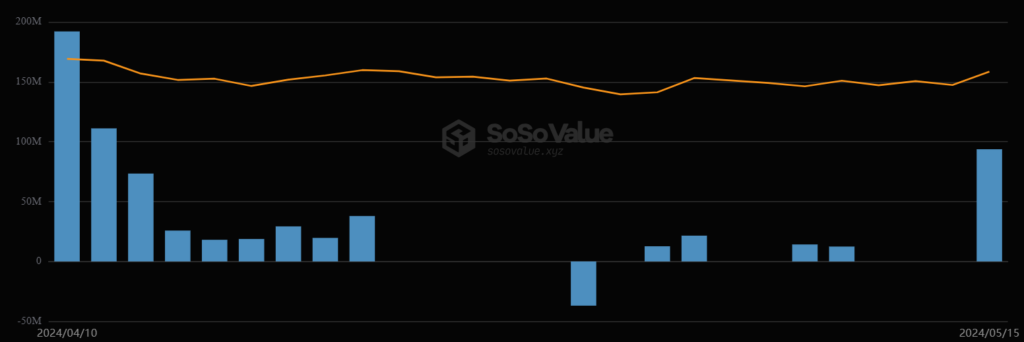
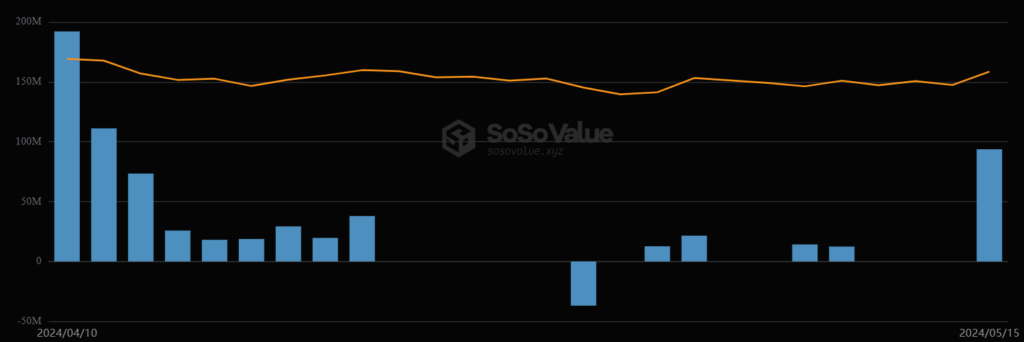
Among the best performers is the ETF managed by BlackRock called iShares Bitcoin Trust (IBIT). This fund obtained a capital inflow in the order of 94 million dollarsaccording to data from Farside Investors.
The recovery of this fund came after being at 0 for three days, with no net capital inflows or outflows, as seen in the following SosoValue graph.
The fund managed by the Fidelity company and operates under the FBTC stock code raised 67 million dollarswhile the ETF managed by Ark Invest (ARKB) had inflows of $62 million.
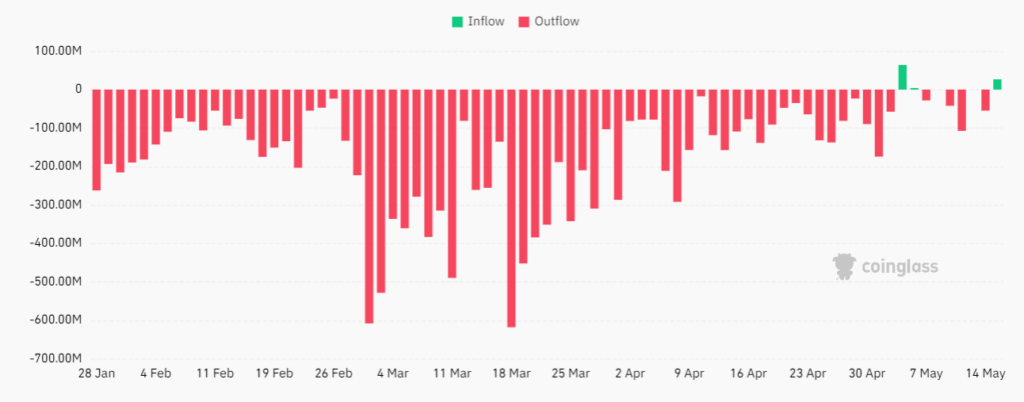
In the case of the fund issued by the company Grayscale, whose name is Grayscale Bitcoin Trust (GBTC), it recorded a daily net inflow of $4.6 million. This is the ETF that has made the most losses since it was launched in January of this year.
However, Capital outflow has been gradually reduced since mid-March as can be seen in the following graph. She received her first influx of money only on May 5.
For its part, the bitcoin ETF issued by the company Valkyrie (BRRR) recorded inflows of 18 million dollarswhile Bitwise (BITB), Franklin Templeton (EZBC) and Invesco Galaxy Digital (BTCO) funds saw inflows of between $6.2 million and $1.2 million.
The ETFs already accumulate more than 12,000 million dollars since its launch four months ago, as reported by CriptoNoticias. In addition, it has recently been known that there are large banks and corporate investors putting money into these investment funds. Among the largest investors in bitcoin ETFs are Millennium Management with $1.8 billion and Susquehanna with $1.1 billion. Banks as large as Morgan Stanley also reported their exposure to a bitcoin ETF with an investment of $251 million.
What does this mean for the price of bitcoin?
If this trend continues, it will be bullish for the price of bitcoin due to the operation of spot ETFs, which are backed by the underlying asset. Unlike futures ETFs, which are based on future contracts and do not require the direct purchase of bitcoin, Spot ETF management companies must purchase and hold bitcoin in their treasuries to back their shares.
This process of acquiring bitcoin to support spot ETFs creates direct and tangible demand in the market. As more investors put money into these funds, the entities that manage the ETFs must acquire more bitcoin to maintain adequate support. This, in turn, reduces the amount of bitcoin available on the open market, which can lead to an increase in price due to limited supply.
Additionally, the participation of large banks and corporate investors in these ETFs indicates growing institutional interest in bitcoin. The influx of institutional capital not only brings large sums of money to the market, but can also increase confidence in bitcoin as a legitimate and valuable asset. This additional legitimacy can attract even more investors, both institutional and retail, creating a positive cycle of investment and price increases.