The Constitutional Court endorses most of the housing law, but annuls the article that regulates protected apartments
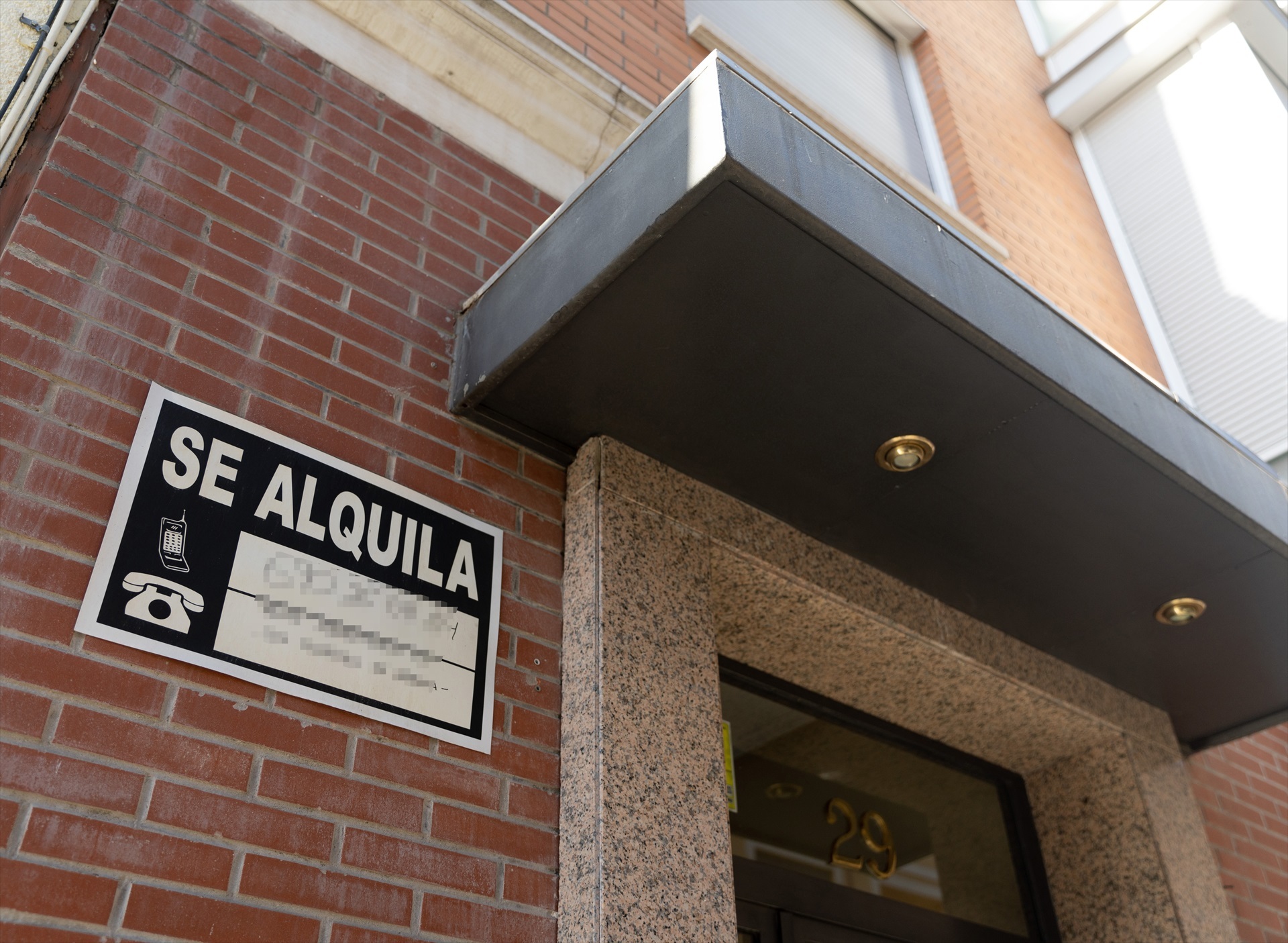
He constitutional Court This Tuesday it endorsed the bulk of the housing law by rejecting a good part of the unconstitutionality appeal presented by the Junta de Andalucía. However, the highest interpreter of the Magna Carta has annulled the article that regulates protected housing. This ruling comes just three days after one year of the approval of what was one of the star regulations promoted by the coalition government in the last legislature.
The court of guarantees has only declared unconstitutional one article of the norm, part of two others and the first transitional provision, thus partially upholding the appeal filed by the Andalusian Executive. The progressive majority of the Constitutional Plenary has carried out this decision -adopted by a majority of 6 to 4-, which will be applied as a doctrine to resolve the remaining appeals to the housing law that are still pending resolution. Judge María Luisa Segoviano has been the speaker of the sentence and her colleagues Concepción Espejel, Ricardo Enríquez, Enrique Arnaldo and César Tolosa, from the bloc considered conservative, have formulated a dissenting opinion.
The appeal from the Junta de Andalucía understood that the State “cannot legislate, not even in a supplementary manner, in matters of housing” and proposed the challenge of all the regulations included in the law around the concept of protected housing, incentivized affordable housing , large fork and public park. The Constitutional ruling, however, saves a good part of the housing law. It endorses, for example, the competence of the State to regulate the basic conditions that guarantee the equality of all Spaniards in the exercise of the right to enjoy decent and adequate housing, included in article 47 of the Magna Carta.

Instead, the court of guarantees declares the nullity of article 16 of the norm approved in May of last year. This provision establishes the principles that govern protected housing, something that the Andalusian Government considers an invasion of its powers. Own article annulled by the Constitutional It recognized that the conditions and requirements established by regional and local regulations would prevail over the principles established in state law. The court partially admits the Board’s request by declaring the provision on protected housing unconstitutional, which implies that its regulation is restricted to regional and municipal regulations.
State law established that protected housing could only be used for regular residential use, that the allocation procedure had to respond to objective criteria and that anyone who was already the owner of another property or who exceeded the income level set for that purpose could not enjoy them. , while granting them public protection and setting out the conditions under which they could be sold or rented, with prior regional authorization. The Constitutional Court considers that This state regulation has “an excessive level of detail” and that the State cannot dictate regulations with the “sole purpose” of creating supplementary principles to those established by the communities, an argument on which the nullity of article 16 is based and which is extended to the first transitional provision, relating also to protected housing.
The sentence announced this Tuesday considers The minimum information required from large holders is also excessive. -owners of ten or more homes or, if established by the autonomous community, five in the same area- in those places declared as a stressed area. Consequently, the court of guarantees annuls article 19.3 and indicates that it is up to the autonomous communities to establish the documentation required of these owners. The state law required, among other information, the identification data of the home (postal address, year of construction and renovation, constructed area, cadastral reference and energy rating), as well as the use regime.

Finally, the court It also declares unconstitutional part of article 27 of the housing law, which delimits what a public park is.. Specifically, it understands that the state standard was exceeded by determining the composition of public housing stock – made up of public facilities and social and protected housing built on public land or acquired by administrations – without the State having jurisdiction to do so. Furthermore, it also annuls the obligation that the sanctions imposed for non-compliance with the social function of home ownership must be used for the creation, expansion, rehabilitation and improvement of public housing stock, because this violates the principle of financial autonomy. by setting a specific purpose for the resources received through this means of income.
Apart from the appeal presented by the Junta de Andalucía, The Constitutional Court still has five appeals pending against the housing law already admitted and filed by the PP, the Parliament of Catalonia and the Governments of the Balearic Islands, the Basque Country and the Community of Madrid. The Generalitat of Catalonia and the Xunta de Galicia have also appealed the rule, although these appeals are still pending admission for processing.
A satisfactory failure
The Minister of Housing, Isabel Rodríguez, has celebrated the meaning of the ruling of the Constitutional Court. “It shows what the Government has maintained throughout this time: the competence of the State to intervene in housing policies,” he expressed to the media in Barcelona, where he underlined the duty of the Executive to guarantee the right to decent housing under equal conditions throughout the national territory. “The right of access to housing has been consolidated as a right in which all public administrations must participate,” she remarked.

Sources from the Ministry of Housing clarify that the fact of The fact that certain aspects of the law are “corrected” does not obscure the fact that it is a text that is “not only necessary, but essential”, as they understand the Constitutional Court recognizes. The same sources claim the State’s capacity for action in matters of housing, materialized in the law approved a year ago, and defend its “relevant” role in regulating access to housing.
For its part, the Department of Development, Territorial Articulation and Housing of the Government of Andalusia applauds that the Constitutional Court has recognized that the central government “has gone too far” by regulating protected housing, public parks and large landowners, issues over which they claim exclusive autonomous power. The Board says it is “satisfied” with the ruling, which, in its opinion, “protects” the Andalusian policy on protected housing.