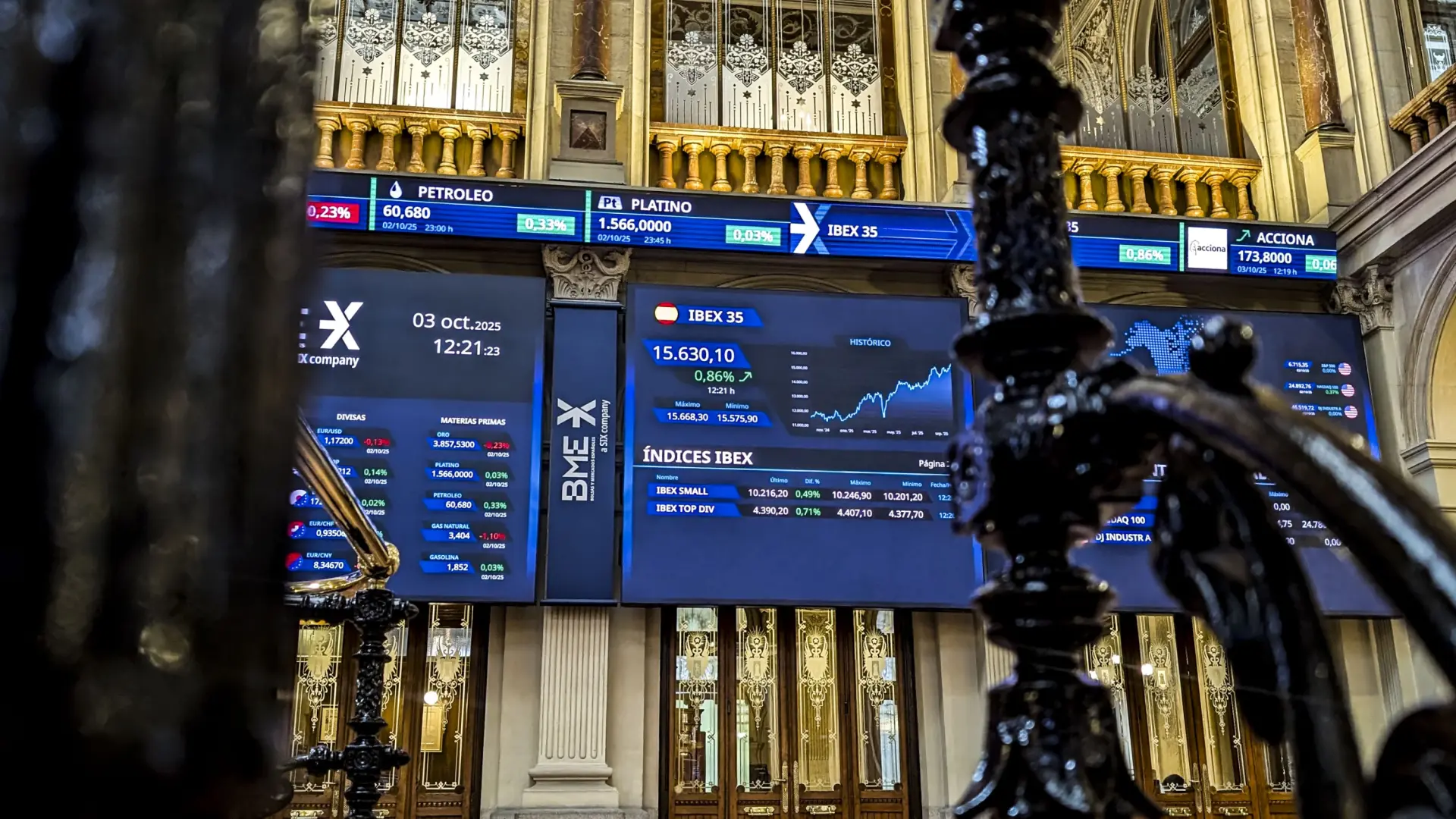
The Ibex 35 smashes its historical maximum almost two decades after the outbreak of the financial crisis
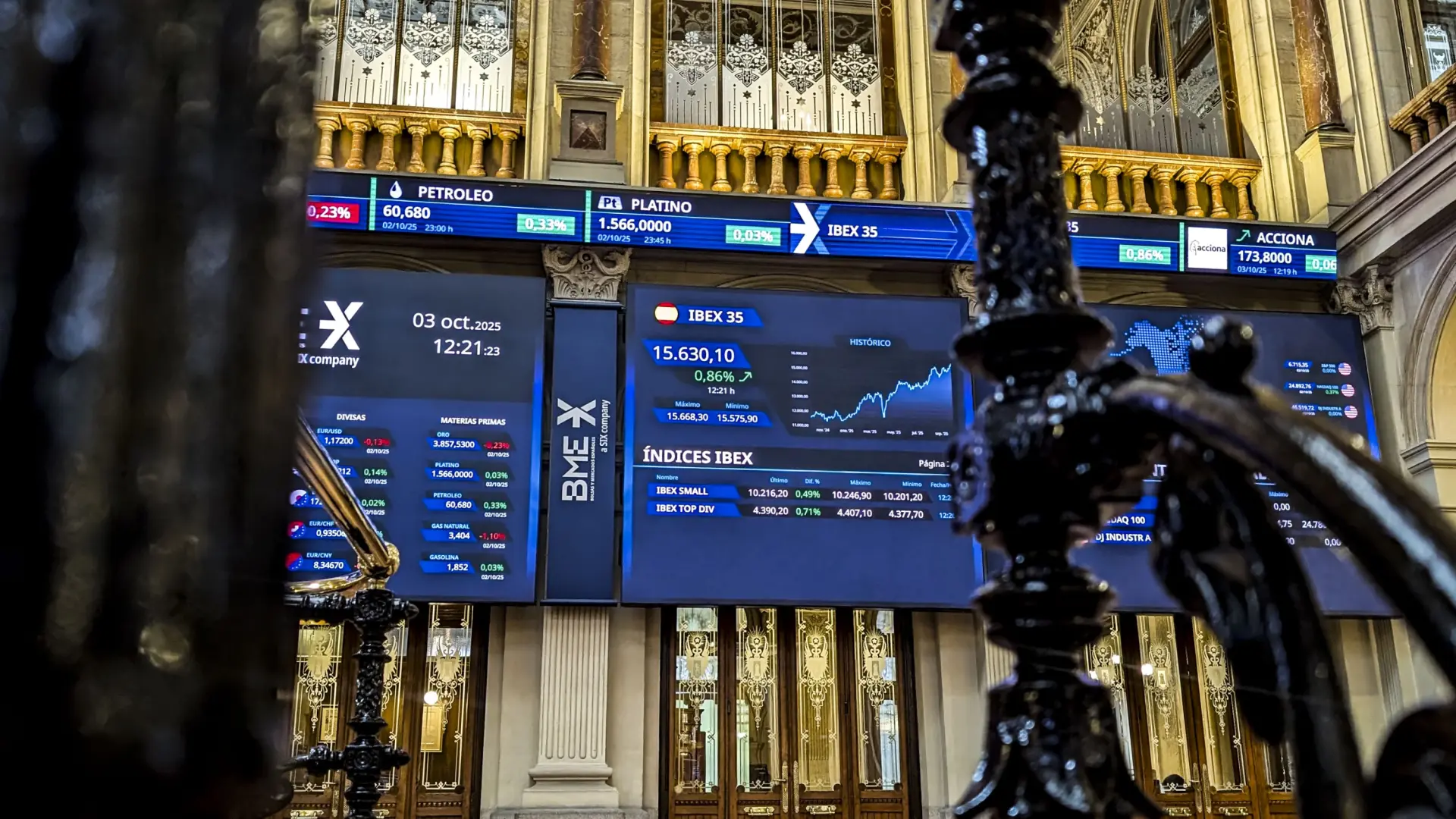
It has taken almost two decades for the Ibex 35, the stock index that groups the 35 most valuable companies on the Spanish stock market, to look face to face at its previous all-time high and pulverize it. The selective has surpassed the ceiling of 15,954 points that it reached on November 8, 2007, just before the international financial crisis blew up the world economy and caused a debacle in the financial markets. This Monday, driven mainly by banks, has reached over 15,970 points.
The most bullish value of the selective is Indra, which shoots up 4.8% (in the year it accumulates a revaluation of 169% until the close of Friday), followed by Mapfre, with an increase of 1.7%, and the two large banks, which advance more than 1%. Sabadell and Ferrovial rose around 1%. A handful of values are down, with Acciona or Rovi, among them.
International and national news give oxygen to the index for the moment. At the international level, the Secretary of the Treasury of the United States, Scott Bessent, has assured that negotiations with China have made it possible to close a “framework agreement” to avoid the imposition of additional 100% tariffs to the products that your country imports from the Asian giant. The White House has also signed bilateral agreements with Thailand, Cambodia and Malaysia that incorporate trade rates of 19% for products from these three, while Asian countries contemplate an almost total exemption for American products they purchase.
This week will be “key”, as the quarterly results of companies such as Santander, BBVA or Caixa will be made public, “with the influence that banks already know they have within the selective”, point out from XTB. Its analysts add that it should not be surprising if “volatility is seen in the markets”, since the results usually cause these movements.
However, the next two days there will be two key focuses of attention for the markets: on the one hand, the meeting between Trump and Xi Jinping to be held on Thursday and where that basis for a preliminary agreement reached between the US and Chinese negotiators must be endorsed by both presidents. From Renta4 they emphasize that the underlying issues continue to be softening the cross restrictions on the export of rare earths and technology, the agreement on TikTok, on soybeans, tariffs on ships or on fentanyl.
The manager emphasizes that it will also be important to see what happens with the secondary tariffs in the event that China continues buying Russian crude oil, just as happened with India. If an agreement is confirmed, the additional 100% tariff on Chinese products threatened by November 1 would be void, and November 10 (end of the 90-day truce) would be reached with a solution between the parties.
The ECB will maintain rates for the fourth consecutive meeting
The other key will be the meeting of the European Central Bank (ECB), which is also held this Thursday, and in which the entity is expected to choose to maintain interest rates for the fourth consecutive meeting. “We do not expect changes in monetary policy rates and only an adjusted change in communication”point out from Bank of America (BofA). Its analysts doubt that the ECB is ready to recognize the end of the easing cycle.
“While some members of the governing council may feel that they are done, uncertainty is high and the risks are still somewhat asymmetrical,” they explain from the US entity. In any case, the message that it is necessary continue monitoring the economic situation and make decisions “meeting by meeting” depending on the data that becomes known, adds Cristina Gavín Moreno, head of Fixed Income at Ibercaja Gestión.