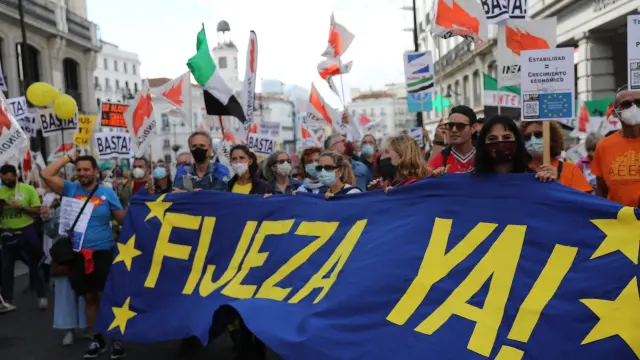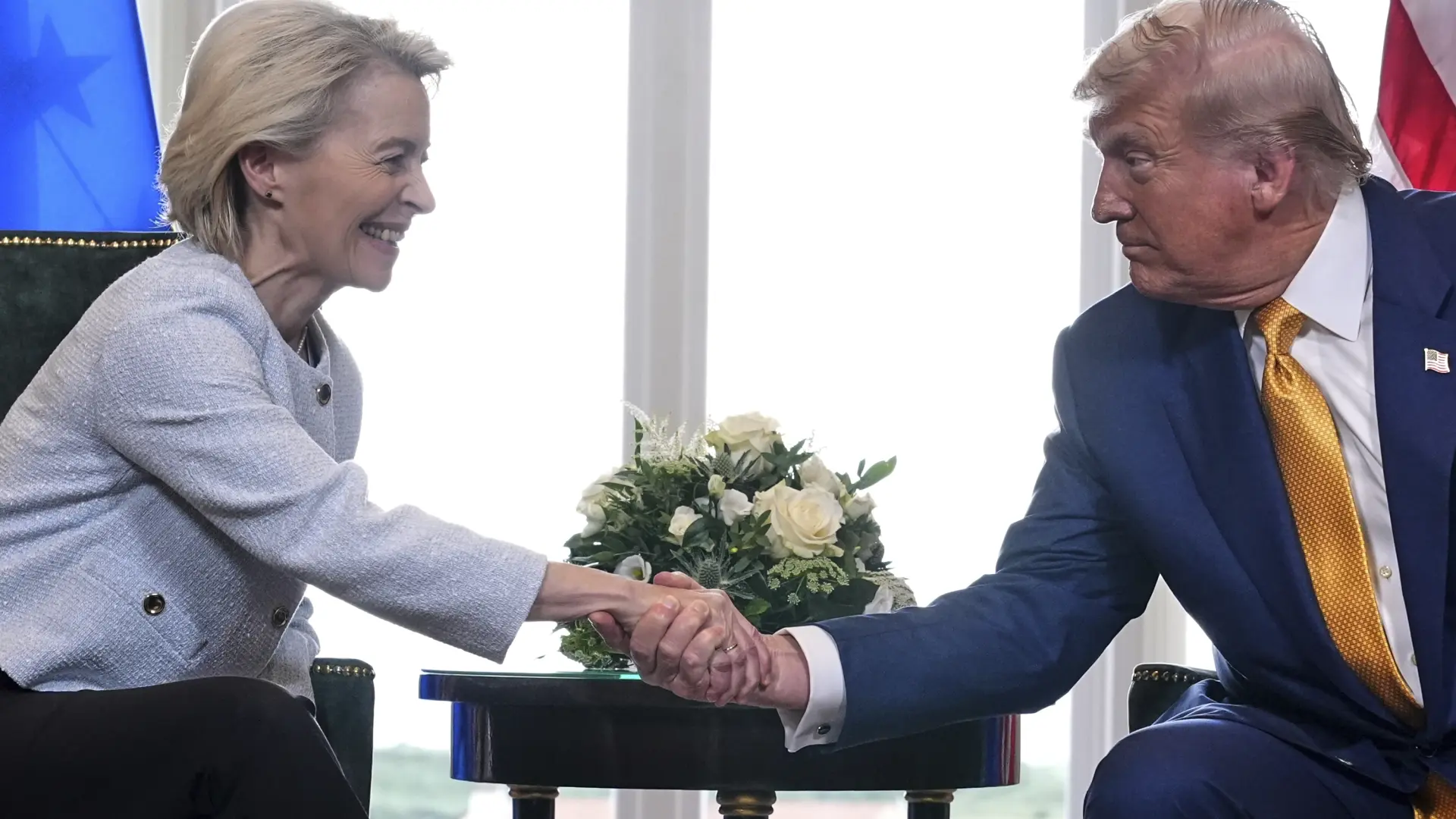
The Eurozone accelerates its growth to 0.2% until September after the agreement on tariffs with the US
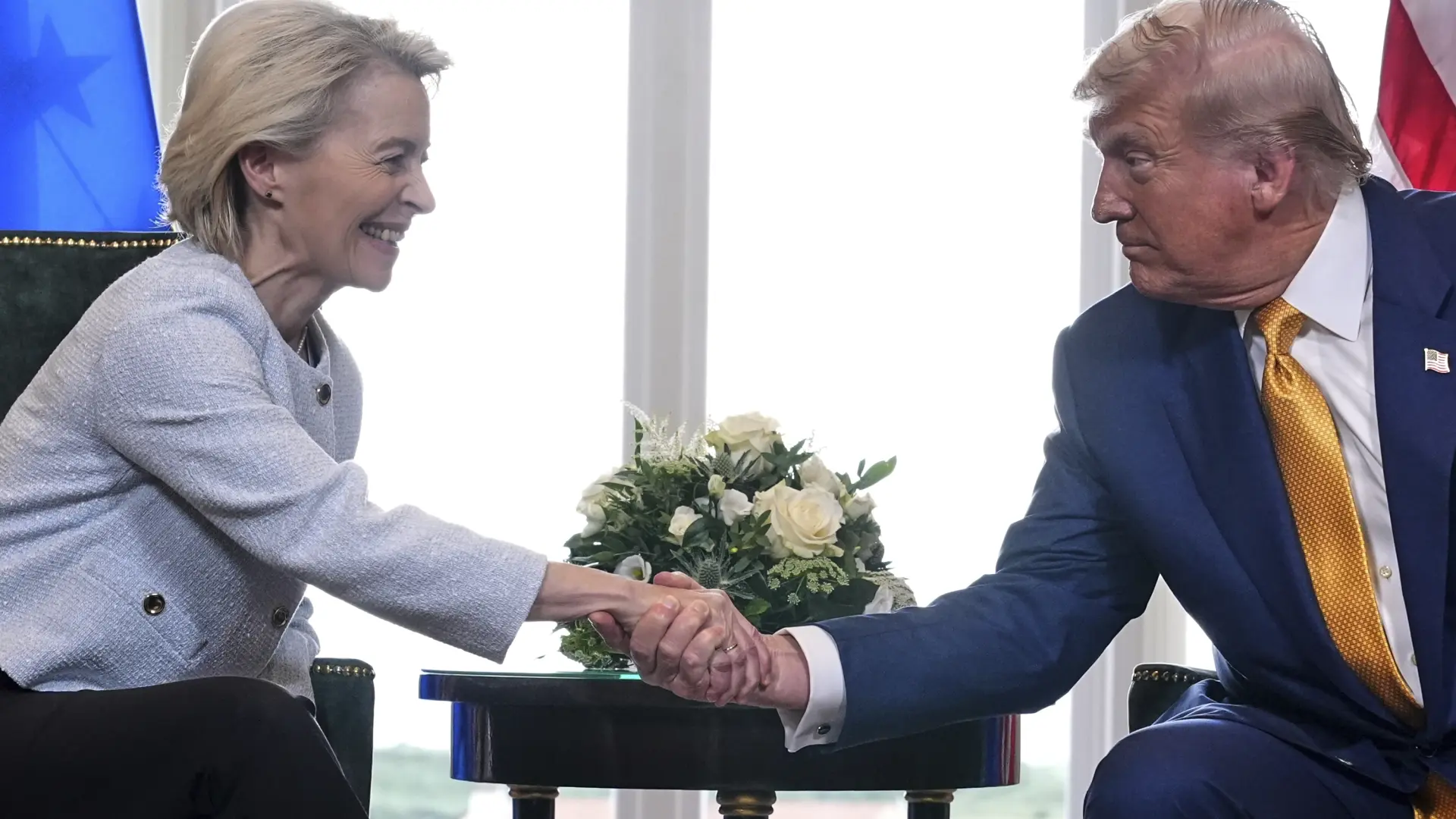
One tenth more growth in a very complicated and unstable context at a geopolitical level. The Eurozone economy squeezed the agreement on tariffs with the United States, sealed at the end of July, to advance 0.2% compared to the previous quarter and remove the specter of a possible recession, which clouded its prospects until not long ago. The first advance of the data published this Thursday by Eurostat, the European Statistics Office, indicates that the region’s GDP grew by 1.3% compared to the third quarter of a year ago.
Sweden (+1.1%), Portugal (+0.8%) and Czechia (+0.7%) were the most dynamic economies between July and Septemberwhile those that showed the greatest weakness were Lithuania (which fell 0.2%), Ireland and Finland (both with a quarterly decline of 0.1%). The data come to support the improvement in economic forecasts that the European Central Bank (ECB) published in September.
The entity, which is holding a meeting of its governing council this Wednesday in the Italian city of Florence, estimated that the group of countries that share the euro would advance this year at 1.2%, three tenths more than I had previously calculatedand reduced the growth of activity next year by one tenth to 1%. Looking ahead to 2027, it maintained growth at 1.3%.
“The weak drag of 2025, together with uninspiring business and consumer confidence, support our cautious growth prospects, although with risks biased to the downside,” point out AXA IM analysts, from which they predict that Spain will continue to register “stellar results” and will move “even further” away from Germany, Italy and France.