The heat of Bitcoin miners protects families in a European city from the cold
Key facts:
-
It is a 2 megawatt initiative to heat a community of 11,000 inhabitants.
-
In Latin America, there are several mining projects that are based on sustainable energy.
A new Bitcoin (BTC) mining project is converting waste heat, generated by a 2-megawatt data center, to heat an entire town of 11,000 inhabitants.
Marathona leading company in the sector, announced on Thursday a pilot test to generate blocks sustainably in a community in the icy region of Satakunta, in Finlandnorthern Europe.
«This pilot project in Finland It’s a critical step forward. in our strategy to expand globally and innovate sustainably,” said Fred Thielpresident and CEO of Marathon.
On the market, there are already products to take advantage of the heat generated by miners domestically. In this case, it is Marathon’s first district-wide initiative and it makes its debut in Europewith a proposal for the use of renewable energy.
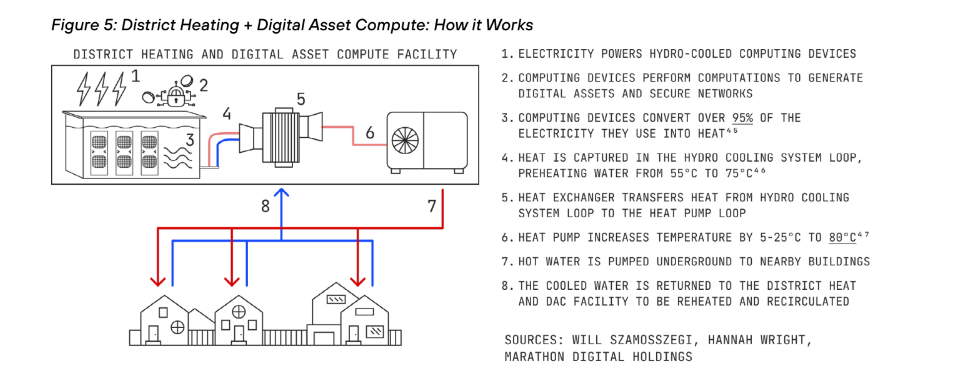
Specifically, the district heating It consists of heating water centrally and distributing it through underground pipes to provide energy to local buildings.
“What we are doing in Finland is using the heat from our data center, and instead of them paying for electricity to generate heat, they pay us the same rate,” said Thiel, in an interview with The Bitcoin Layer.
And he concluded: “95% of the energy that enters the Bitcoin miner comes out as heat. Because we use immersion technology, we can capture that heat and then pump it out, to provide hot water to homes.”
Located in the Arctic Circle, Finland has a cold, temperate climate, with extreme winter temperatures often below minus 40°C. It is a country that relies heavily on biomass for the critical service of heating.
By using the heat of the data center, the project aims to reduce carbon emissions and some of its operating costs. And it is also an economic opportunity, which mining companies and communities can take advantage of.
According to a Marathon report, titled “Warming up with hashes“, the data centers They take advantage of the cold European climate to reduce energy costs. However, in the European Union it represents 3% of electricity consumption, compared to 1.0-1.5% globally.
According to an analysis of Future Market Insights Incthe district heating market is projected to grow from $198 billion to $340 billion by 2033. By recycling heat, Marathon seeks to improve the sustainability of the activity and find new revenue streams.
“These smaller energy harvesting solutions become the future of where Bitcoin mining goes. Eventually, power grids are going to need every drop of energy to put into batteries, electric vehicles, and AI data centers. “Bitcoin miners will be expelled from the electrical grid and will have to generate their own electricity,” stressed the CEO of Marathon.

The sustainable uses of Bitcoin
As reported by CriptoNoticias, Bitcoin mining is one of the industries that currently uses energy from renewable sources the most, since it operates 52.6% with clean energy, according to the researcher and analyst Daniel Batten.
In Latin America, Bitcoin mining companies tend to establish themselves in places where they offer clear comparative advantages. One of these places is the southern south, like the Patagonia Argentinadue to its cold climate and the fiscal and tax benefits in the region.
In these cold regions, there are projects on a smaller scale than Finland for the reuse of surplus and residual resources generated by human activity. The oil company Tecpetrol uses waste gas from deposits in the Vaca Muerta region, in the Argentine province of Neuquén, to generate electricity and feed miners.

Marathon has a similar project in the state of Utah“where we demonstrate that it is both economically viable and environmentally beneficial to use landfill gas for computing digital assets,” he indicated. Adam SwickMarathon’s chief growth officer.
The other extreme case is the hot Paraguay. There, mining companies can supply themselves with cheap and surplus energy produced by the country’s main renewable energy source: hydroelectric dams.
In any case, Bitcoin mining offers a horizon of sustainability, if it is used intelligently. The multinational consulting firm KPMG corroborated in a 2023 report that the industry can reduce its carbon footprint and that of other productive activities through heat recycling, the reuse of methane gas burning or the incentive for production from renewable sources.