
the last bastion of savings

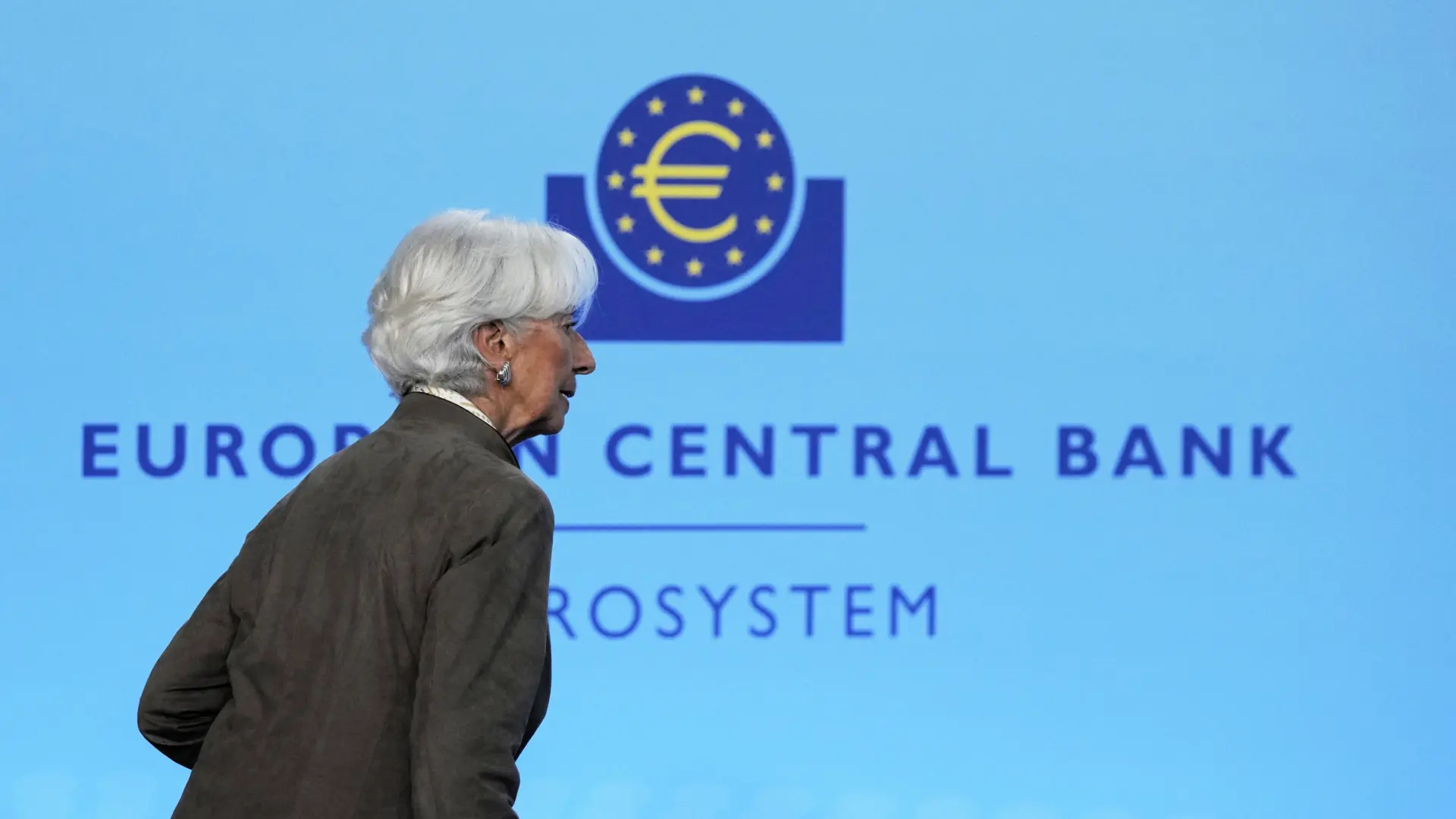
Savings are moving again. After months of rate cuts, the European Central Bank (ECB) has hit the brakes and declared itself comfortable with the current price of money. The feeling that the downward cycle is approaching its end is widespread among analysts and economists. In recent weeks, several ECB advisers have argued that The institution is comfortable with its current policy. Christine Lagarde, however, avoided ending the process by stating in an interview with CNBC that cannot declare the end of the cuts. His nuance was enough to calm market expectations and moderate the Euribor, which had risen since mid-September.
The debate in Frankfurt is taking place in an environment of price stability, with an eye on the meeting on October 30. Inflation rose slightly to 2.2% in September, compared to the 2% registered in August, and remains close to the official objective.
According to a survey of Reutersa growing majority of economists believe that the ECB has concluded its rate cuts as the European economy moves forward with moderate growth. The minutes of the meeting of September 10 and 11 already indicated that monetary policy is “solid enough” to absorb any inflationary shock.
In this scenario of monetary balance, bank deposits once again move between containment and competition. Although the general trend points to lower returns, products still survive that resist the new financial climate and offer returns that are close to or even exceed 3%.
The best returns
Among the entities that maintain this pulse, Banco Mediolanum and Deutsche Bank stand out. Both maintain products with returns of up to 3% APR, although with demanding requirements such as contributing new money or linking part of the capital to managed products.
In the case of Mediolanum, its 12-month MIX PLUS Deposit offers a 3.00% APR at invest triple the amount in bank fundswhile Deutsche Bank maintains its Confianza DB Deposit at 3% APR for amounts starting at 50,000 euros in new money, valid until a volume of 100 million euros is exhausted. These offers have become exceptions within a European market whose average profitability is around 2% APR, according to the latest estimates by analysts and financial comparators.
The relief has arrived from smaller entities or foreign origin who have made the deposit their differentiation tool. Banco Finantia, based in Portugal, currently markets a 12-month deposit with an approximate return of 2.05% APR, and another 24-month deposit that raises the return up to 2.10% APR for new clients with high amounts.
EBN Banco promotes its offer with 6-month deposits at 2.10% APR and up to 2.80% APR at 12 months under linkage conditions. Banca March maintains its 12-month Avantio Deposit at around 2.10% APR, aimed at medium-high net worth, while Banco Pichincha offers a 2.02% APR with more accessible amounts and coverage of the Spanish FGD.
Cetelem, for its part, is consolidated among the most competitive options with a 24-month deposit that reaches 2.80% APR, allowing you to invest from a single euro and guaranteeing the same protection.
The comparison with public debt is inevitable. In the last auction in October, the 12-month Treasury Bill was placed at 2.01% IRR, practically identical to the less aggressive deposits in the market. This data makes some fixed terms more profitable alternatives than short-term sovereign debt, something that has not happened since the beginning of 2023.
The last battle for savings
The persistence of these offers is not coincidental. Banks are competing to strengthen their liability base at a time of lower credit growth. After the rise in margins during the increase cycle, entities need to consolidate stable liquidity. The high yield deposits function as an effective trading instrument and, at the same time, as an adjustment valve in balance management. In the case of digital or foreign entities, the lower cost structure and the absence of a physical network allow them to maintain higher remunerations without compromising margins.
The appetite for these products confirms that the savings culture has resurfaced. With inflation stabilized and nominal rates at 2%, a 3% deposit still offers a positive real return close to 1%. In practice, it continues to exceed remunerated accounts, which rarely reach 2%, and monetary funds, whose average is around 2.5%.
Analysts predict that these opportunities will have their days numbered. If the ECB maintains its current tone and the European economy maintains its momentum, entities will not need to pay as much for savings. Normalization could stabilize returns between 1.5% and 2% APR in the coming quarters, more aligned with the evolution of public debt.