This is how the great Brussels protest is forged
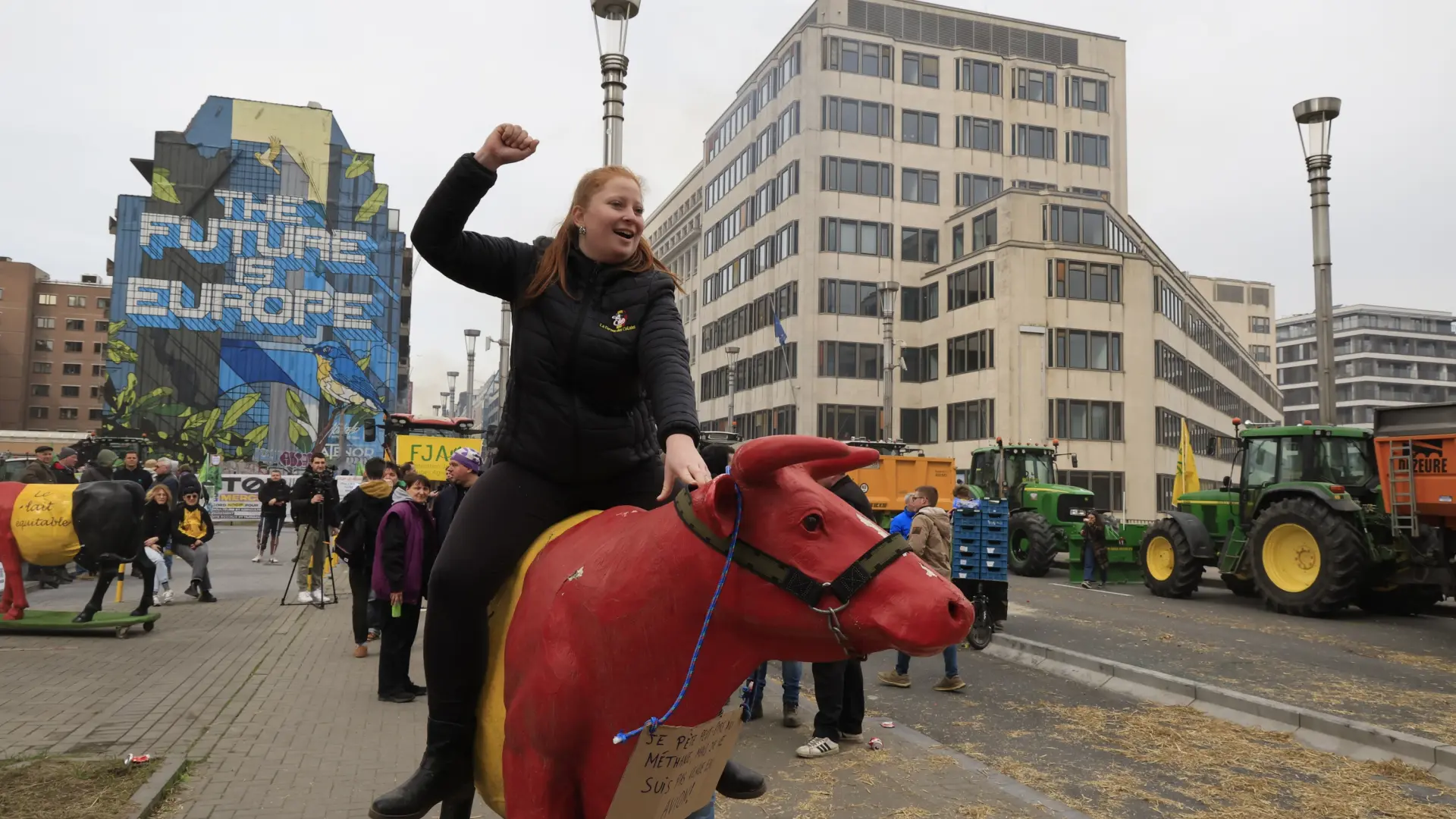
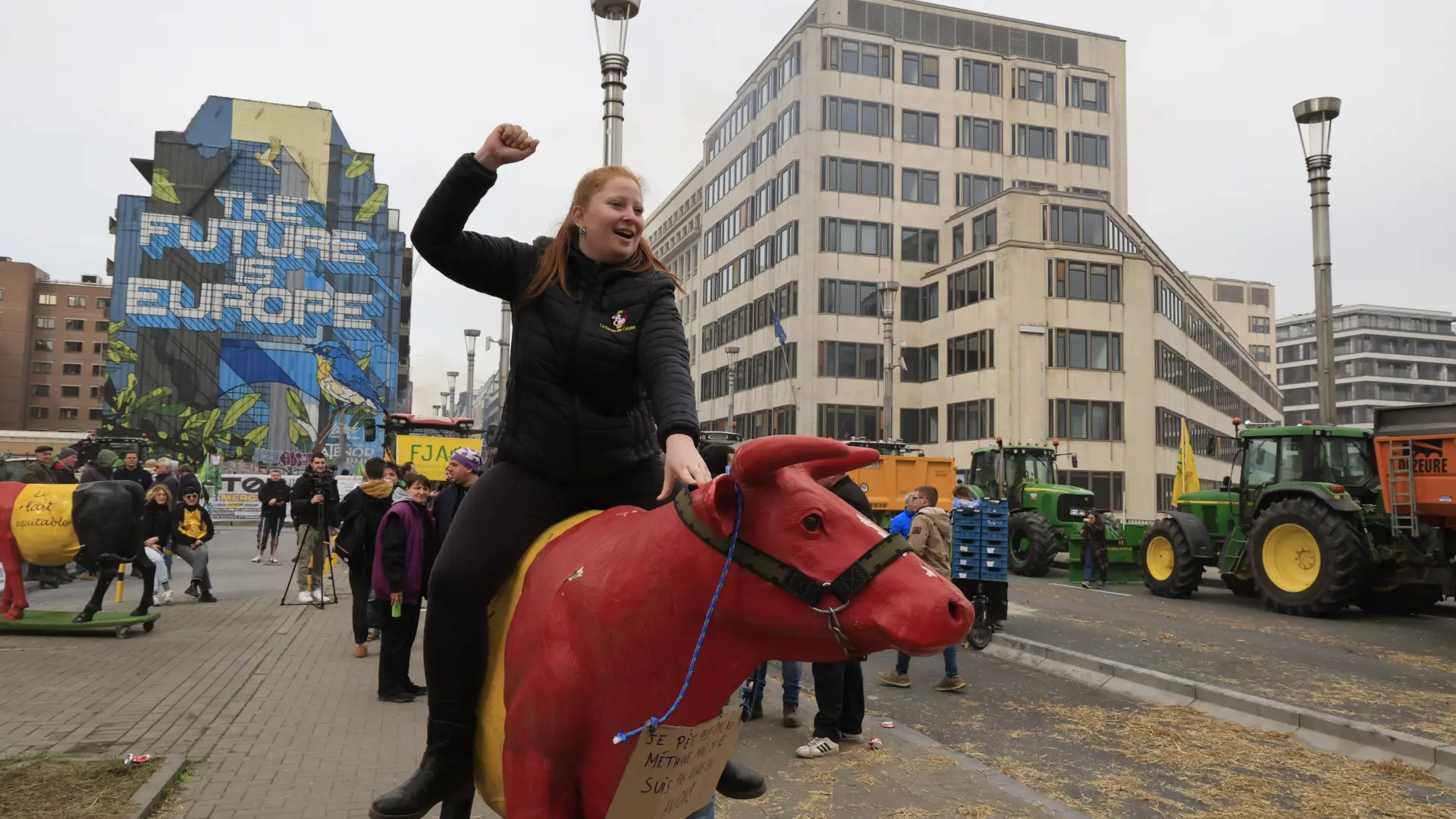
The animated Luxembourg Square (Place du Luxembourg), where the European Parliament (EP) building complex is located, will be the final scene of an unprecedented protest this Thursday: Farmers and ranchers from 40 agricultural organizations from the 27 countries that make up the European Union (EU) will reject tomorrow the European Commission’s proposal to cut around the 22% of Common Agricultural Policy (CAP) funds. A proposition that can put an end to the CAP, as we know it until now. How? Because the Commission document ‘renationalizes’ a large part of this historic European policy: The money would come from a single fund per country, a kind of catch-all that member countries will be able to complement. The mobilization promoted by the main European agricultural organization, the COGECA CUPwill travel through several relevant points of the community capital such as Rue de La Loi and coincides with the meeting of European heads of government and state on December 18 and 19.
The main European agricultural organization, which includes among its members the Spanish Asaja, COAG and UPA, estimates that they will attend around 10,000 farmers from the Twenty-seven countries that make up the European Union. All of them belonging to at least forty organizations. “A historic event”, as the main officials of the three aforementioned Spanish associations recalled yesterday. The president of Asaja and vice president of COPA COGECA, Pedro Barato, highlighted that “between 500 and 550 Spanish farmers will be present at the protest on Thursday” and spoke of “a very big effort so that the Spanish field was sufficiently represented”.
“Between 500 and 550 Spanish farmers” will be present at tomorrow’s protest in Brussels, through Asaja, COAG and UPA, coinciding with the meeting of the heads of European government and state this Thursday and Friday
Trade policy, another headache
The three agricultural organizations have also attacked the trade policy developed by the European Commission, especially everything related to the trade agreement with Mercosur (Brazil, Argentina, Paraguay and Uruguay) which could be ratified at the end of this week although the shadow of ‘a blocking minority’ made up of France, Poland and the unknown of Italy persists. Although, for sectors such as wine and oil can be an opportunity open the doors of markets like Brazil, the fear in productions such as beef, honey or rice is at a ‘unfair competition’ and insufficient safeguard clauses, despite having been reinforced yesterday by the European Parliament (EP).
“The mobilizations will move to the states”
The director of the LLYC Food Office and former Secretary General of Agriculture and Food (2004-2005), Fernando Moraledadescribes it as “a unanimous response” from the agricultural sector to Brussels’ intentions. This consultant, who was also general secretary of the Union of Small Agriculture and Livestock Farmers (UPA) between 1987 and 2005, does not doubt the success of tomorrow’s call. Furthermore, he warns, that ““Unanimity is not easy to achieve.” and it is not easy for a protest of these characteristics to be repeated so frequently.
In his opinion, “the mobilizations will move to the member states” and notes that the European Commission does not have much room for manoeuvre. Until now, Moraleda maintains, states have avoided making any decision about increasing contributions to the community budget per GDP or fiscal harmonization. “It is impossible to have a common defense policy plus the CAP like this,” says this expert who believes that if there is no decision on the community budget, cuts would have to be made from somewhere else. “The community budget are communicating vessels,” confirms this expert.
The EU’s trade policy is the other great ‘black beast’ for a large part of the European agricultural sector, especially Mercosur, which they warn can open the door to ‘desirable competition’
Tick, tock… Goodbye to the Common Agricultural Policy (CAP)?
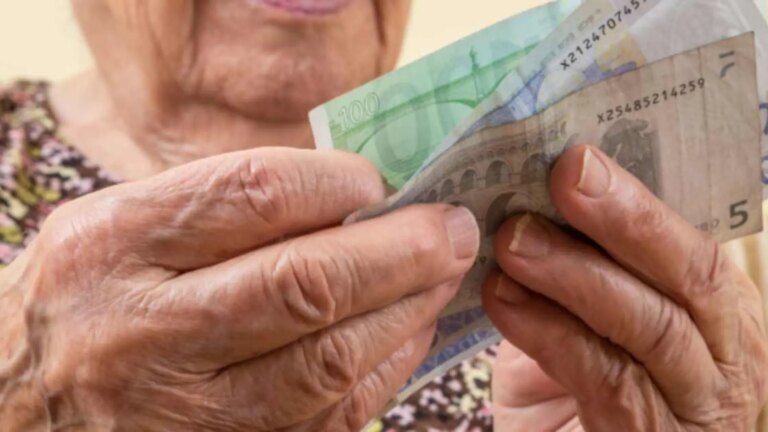
But what consequences could the ‘snip’ proposed by the Commission have? In Spain they receive aid from the CAP 582,085 farmers and livestock farmers for the current 2025 campaign, which represent a declared area of 22.1 million declared hectares. 0.5% less than in 2024, while the number of benefited farms continues to decrease (-2.7%) year on year. There are fewer but the average surface area increases. What experts consider a sample of the professionalization of the sector. The total amount of direct aid (the core of the CAP, there is also support for rural development or for certain crops), paid as of October 16 of this year and whose entirety will be paid at the latest on June 30, 2026, amounts to an amount of 4,889 million of euros.
From COAG they have made numbers: Spain would stop receivingr 877.5 million euros annually in terms of direct aid. This would mean, according to their calculations, that farmers and ranchers would be forced to pass it on to prices at origin of around 2.32%. If we extrapolate it to the entire agri-food chain, add to the processing industry or distribution, this agricultural organization outlines two scenarios for consumers: If industry and distribution absorbed 30% of the impact We Spaniards would see an increase in retail food prices of 6.5%. While the other scenario, when everything the increase in costs is passed on to the consumerr, the increase would be 9.3%. This would mean between 350 and 501 euros more spending per year on the shopping basket per household.
“It is not only a problem of farmers’ income, but also of the position of each country in international agri-food markets,” warns Fernando Moraleda (LLYC)
What does this mean for the shopping cart?
Moraleda (LLYC) recalls that the Common Agricultural Policy (CAP) has always been in all the discussions of the EU’s multiannual budget plans and, in his opinion, it is the only mandatory cohesion policy in each remaining member state. For the consultant we are faced with “a time bomb for the CAP: the beginning of the end” and believes that the consequences go beyond a more than probable increase in final food prices for European consumers. “It is not only a problem of farmers’ income, but also of the position of each country in international agri-food markets,” warns this analyst who believes that the income policy that is the CAP and competitiveness in the markets go hand in hand. That is, what is in question is “the status quo of these markets” and, in addition, the food sovereignty of the entire community block.
For the head of the LLYC Food Office, the most worrying thing is the “renationalization” that permeates the current Commission proposal “since it would mean a loss of the unity of markets.” That is to say, those member states with greater economic lung could finance their farmers and ranchers more generously. A real problem for competition in the single European market. “Aid for agricultural income can mean more than 30% of income depending on the crop in Spain”, Moraleda confirms. Furthermore, he adds, those countries “that had more capacity to sustain minimum agricultural production” would have greater food sovereignty.