What goes up in price and what goes down in 2025?

With 2025 already in its last breaths, Spaniards are beginning to look askance at a 2026 that will arrive, like every year, with heads and tails for their pockets. Housing, electricity bills, water bills, pensions, salaries, shopping baskets, telephone packages, tobacco, stamps… will become more expensive again next year. While the great positive note for consumers will be the prices of public transport, which will remain frozen in most of the territory after confirming the extension of aid approved by the Government.
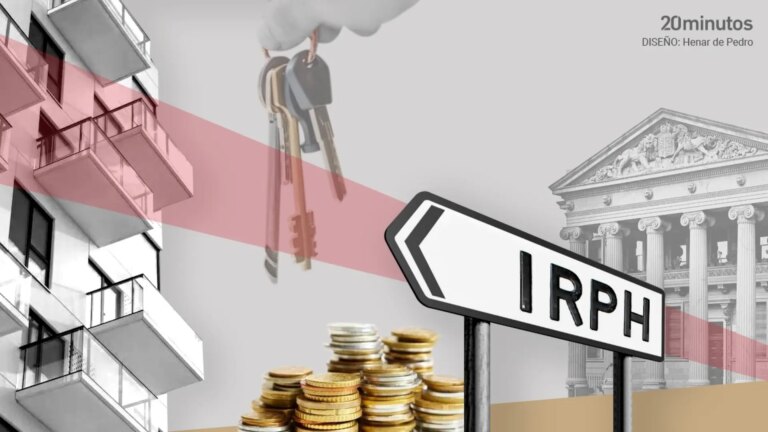
Housing will continue to be a problem
After a 2025 in which rental and purchase prices have grown furiously, 2026 will foreseeably arrive with new increases in the housing sectoralthough predictably less drastic than those seen this year. A panel of real estate analysts organized by Fotocasa anticipates increases in rental prices between 3 and 8% next year.
To this factor, we must add that in 2026 the leases signed just after the coronavirus will expireat prices substantially lower than current ones. Thus, landlords may choose to update the contract prices, causing a price increase that could be around 1,735 euros per year, according to estimates by the Ministry of Consumer Affairs. The department headed by Pablo Bustinduy, from Sumar, estimates that 1.6 million contracts could be affected.
Buying an apartment will also continue to be difficult. After the double-digit price increases seen in 2025, the real estate market will remain hot in 2026. Entities such as BBVA or Bankinter predict increases in purchase and sale prices of around 7% next year.
Those who are already mortgaged will not be spared from paying more, although in their case the increases will be more moderate. The Euribor has risen for four consecutive months and we have already begun to see upward revisions in mortgage rates that are updated every six months. If the forecasts are met – which indicate that it will stabilize, in line with the ECB’s official rates – the increases in the monthly payment will reach the rest of the loans, especially from the second half of 2026.
Day-to-day expenses also increase
Current household expenses will also continue to rise. The electricity bill will begin the year with a considerable increase in the fixed part of the bill. Ecological Transition has proposed increasing bill charges by 10.5%while the National Markets and Competition Commission (CNMC) has proposed increasing tolls by 4%.
In addition, it is likely that energy marketers will begin to pass on to the consumer the anti-blackout surcharge that Red Eléctrica requires of them in 2026, after they were unable to do so this year. Despite everything, youEcological ransition estimates that the electricity bill will fall between 5 and 10% for families next year because energy prices (the most relevant part of the bill) are expected to decrease compared to 2025.
In cities like Madrid or Barcelona, another bill that will increase in price will be water. More specifically, in Madrid it will increase by 3% and in Barcelona by 2.9%, increases that will not have a great impact on the consumer’s pocket (in the case of Madrid, we are talking about little more than an additional euro every two months).
In general, The cost of living will continue to rise for another year, although in principle consumer prices should rise less than in 2025. Funcas analysts estimate that inflation will rise in 2026 to around 2.4%, compared to the 2.7% that was recorded in 2025. If the forecasts are met, the price of food will increase by 2.5% and that of unprocessed food, by 5.1%.
As usual year after year, January is a month in which health insurance premiums are updated. After a 10% increase in prices in 2025, everything indicates that in 2026 private health insurance will become more expensive again at a significant rate.
Public transport frozen
Once the inflationary crisis caused by the war in Ukraine has been overcome, practically all the tax cuts that were approved at the time to cushion the impact have now been reversed. However, price drops in public transport have still been maintained in 2025 and they will continue next year as well.
The Government approved in the last Council of Ministers in 2025 to extend transport aid so that the State, the autonomous communities, city councils and metropolitan consortia can reduce prices. State-owned public transportation (Cercanías, medium-distance trains and certain regular buses) will maintain the reduction.
However, in regional public transport the total extension of the reduction depends on whether the corresponding administration also maintains its part. The regional governments of Madrid, the Valencian Community, Catalonia and Andalusia have already announced that they will continue to pay for their part of the reduction.
In the field of transport, it must also be taken into account that The airport fee charged by AENA will increase by 6.44% in 2026. A cost that airlines are likely to pass on to users in some way.
Pensions rise 2.7%
In the remuneration section, Contributory public pensions and those of the passive class regime will be revalued by 2.7% from January 1, 2026. In addition, minimum pensions will rise even more, by at least 7% (11.4% when there are family responsibilities). Similarly, non-contributory pensions will increase by 11.4%, the same rate at which the minimum vital income (IMV) will increase, which is linked to this income. Maximum pensions will grow by 2,815%.
Regarding salaries, tIt is still unknown how much the minimum wage will increase.but in any case everything indicates that it will increase by at least 3.1%. Regarding the salary of civil servants, the Government has approved a 1.5% increase that will begin to be collected on January 1, 2026, which could reach 2% depending on how inflation evolves.
Quotes go up
In the field of Social Security, the pension reform approved in 2023 will continue to be deployed, which will result in increases in social contributions. Thus, the intergenerational equity mechanism (MEI)—an extra contribution to fill the pension ‘piggy bank’, which does not generate the right to a further pension and is paid by all workers—will rise from 0.8 to 0.9% of the contribution base.
The solidarity quota also increases —an extra contribution paid by salaries above the maximum base (5,102 euros per month)—, which grows between 0.23 and 0.29 percentage points. The maximum base itself – the salary range for which contributions are mandatory – increases by 3.9%, while the minimum base is frozen while waiting for the minimum wage to be set.
Furthermore, in the fiscal field, facing 2026 Deductions for purchasing electric vehicles are extendedoe installation of charging points. It is also possible that the garbage rate will increase in some municipalities, because several are going to readjust the calculation to decide how this service is taxed.