What is Bitcoiners should look at Trump’s “great and beautiful law”?
-
Critics call it “debt bomb” because it cuts social spending and adds billions to the deficit.
-
A tax to the remittances of force to choose between paying 5% extra or revealing private data.
In the heart of the so -called Great and Beautiful Bill (Big Beautiful Bill) lies a panorama that bitcoiners cannot ignore. It promises economic prosperity through policies that, according to politicians, economists and the Bitcoin community, could weaken the dollar through greater debt and, at the same time, establish a surveillance system that attacks the privacy of digital assets users.
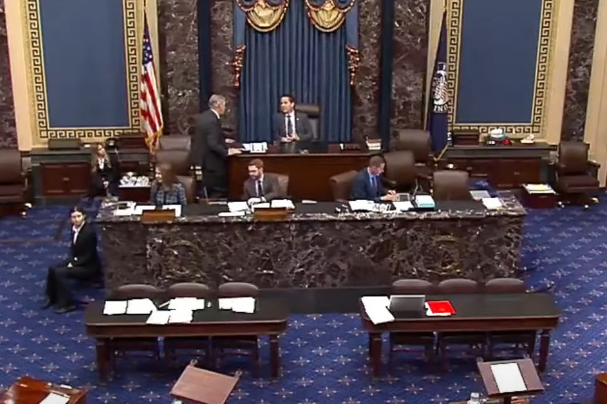
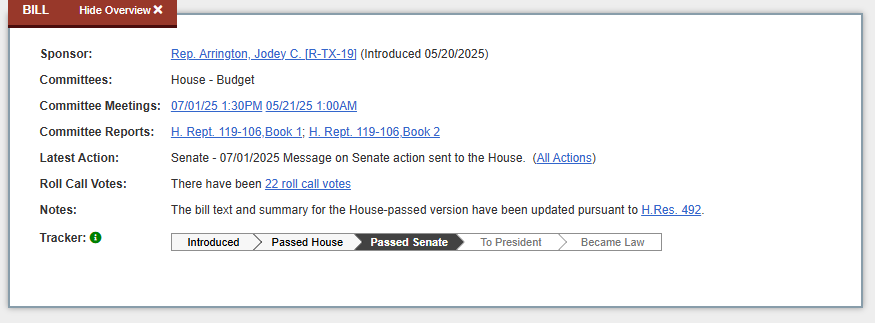
After an adjusted approval in the Senate on July 1 (51-50, with the decisive vote of vice president JD Vance), the president Donald Trump could sign the great and beautiful bill before he ends this weekif the House of Representatives authorizes the amended version without more modifications.
The bill, which covers more than 1,000 pages, promises significant economic transformations, although it also generates concerns, especially between privacy defenders and the Bitcoiner community.
This regulation aims to boost economic growth through tax incentives. However, it simultaneously reduces expenditure on essential social programs, such as free medical coverage and nutritional plans. At the same time, National debt increases considerablywhich raises a delicate balance between immediate economic stimuli and long -term fiscal challenges.
For Bitcoin users, this law can mean a turning point for the relevance of the pioneer digital currency in a context of fiscal uncertainty and invasive regulations.
Due to all that it implies is key to explore and analyze why this project impacts Bitcoin and transcends US borders.
What includes this mega economic reform?
Section 112105 of the project introduces a 5% tax on money transfers abroad (remittances), according to the definitions of the Office for Consumer Financial Protection (CFPB). Therefore, centralized bitcoin and cryptocurrency exchanges, such as Binance or Coinbase, could act as collectors For the Treasury Department.
This Remittance Tax raises serious concerns about privacy. This is because, although users can avoid the tax by identifying with suppliers that comply with verification agreements, that implies revealing personal information.
Peter Van Valkenburgh, director of Research at Coin Center, describes this measure as a “massive surveillance and control regime” that penalizes those who protect their privacy.
Transactions with Bitcoin wallets without custody are exempt, but Centralized exchanges could face pressures to collect data, Even those who are not their clients, evoking the precedent of the “midnight regulations of 2020”. Coin Center advocates safeguards, such as excluding entities without custody (miners, developers) and using privacy preservation technologies.
The bill also includes
- Tax cuts to stimulate the economy: The law consolidates the tax cuts of 2017, establishing permanent tax rates of 10%, 12%, 22%, 24%, 32%, 35%and 37%for individuals and companies, with the aim of stimulating the economy.
- Drastic Social Gastic Cuttings: The project finances part of its tax cuts with significant reductions in social programs, generating criticism for its impact on vulnerable populations. For example, in food assistance, it eliminates 68 billion and imposes more strict labor requirements, restricting access to food for the most needy.
- Greater investment in security and defense: The law allocates a greater investment to security and defense, assigning more than 46 billion dollars for the construction of a border wall and 150 billion additional dollars to reinforce the military budget.
These measures reflect an approach in strengthening traditional sectors, but also feed the deficit.
Fiscal impact: growth or unsustainable debt?
The reform promises a positive positive economic impact, with an estimated GDP growth of 5.2% in four years and the creation of 7 million jobs, according to optimistic projections.
However, the cost is high due to the following:
Critics such as Peter Schiff and Thomas Massie warn that this “debt pump” could precipitate a dollar crisis. Massie, one of the few Republicans who voted against, compared the project to “put coal in the boiler and mark the course towards the iceberg”, warning that the national debt could reach 30 trillion dollars in a decade, with a cost of 16,000 dollars per family in interest.
Why should Bitcoiners be attentive?
The great and beautiful bill has deep implications for the Bitcoiner community and digital assets, both for their risks and for their opportunities.
The increase in debt and distrust in the dollar strengthen Bitcoin as an active refuge against inflation and uncontrolled monetary emission. In a “infinite debt” scenario, the pioneer digital currency is positioned as a decentralized asset capable of preserving value.
Fiscal cuts could increase liquidity, encouraging investment in assets such as Bitcoin, which could raise its price. In 2017, tax cuts coincided with a Bitcoin rally, which may be repeated.
In short, the great and beautiful bill could be a new chapter in the US debt crisis, and BTC is there to offer an alternative. If Congress approves it before July 4, we would be facing a structural change that could give way to the following:
- Accelerate Bitcoin’s adoption as a refuge.
- Press the long -term dollar.
- Strengthen the hyperbitcoinization narrative.
- Incentive for Bitcoin mining.
On the other hand, the regulatory pressure on centralized exchanges could accelerate the use of Bitcoin wallets without custody, reinforcing the principles of autonomy and privacy that are fundamental for the philosophy of the currency created by Satoshi Nakamoto.
According to a Santiment report, the great and beautiful bill would encourage Bitcoin mining. According to their calculations, with the new 100%accelerated depreciation law, companies can deduce the total cost of 1 million dollars in the first year, generating massive and immediate fiscal savings.
This fiscal “superpower” allows you to significantly reduce taxes since the first year, releasing capital that can be quickly reinvested in more minersinfrastructure improvements or debt payment.
This incentive drives mining companies, especially in the US, to acquire more efficient equipment, increasing the hashrate from the network.
What follows?
With the commitment of Republican leaders, such as Senator Bill Hagerty, to send the project to Trump before July 4, his firm seems imminent. However, criticisms of figures such as Massie, Schiff and Coin Center underline the risks of this reform, both for the economy and for the privacy of Bitcoin users and cryptocurrencies.
It is clear that while the law offers tangible benefits to certain groups, its true legacy could be an acceleration of fiscal unsustainability and a new front in the battle for financial privacy. For BTC users, this law is not just political noise; It is a macroeconomic event that, simultaneously, reinforces its long -term value thesis while presenting an immediate regulatory threat.
Washington’s policy is laying the foundations for the next great debate on the value of money, and Bitcoin is, more than ever, in the center of the conversation.