when Trump tried to twist the arm of global trade and the economy responded better than expected

The word of the year, according to the Urgent Spanish Foundation (FundéuRAE), has turned world trade upside down and has upended the system that for decades has governed economic relations between the great powers. The massive tariffs announced throughout the year by the president of the United States, Donald Trump, generated a tsunami of uncertainty which has impacted the decision-making of central banks, governments, companies and consumers over recent months; while it has significantly raised geopolitical tension with its great rival, China.
The impact has been evident and, however, the indicators published to date suggest that, in general terms, The economies have withstood the blow better than could have been predicted at the beginning of the year. It has been like this for the Eurozone, but also for Spain. Although, the first started from the disadvantage that its dependence on commercial exchanges with the United States is greater. Exports from the euro area to the world’s leading economy represented just over 10% of its GDP in 2024 compared to 4.4% in the case of Spain.
Despite the fact that the euro zone has been facing new tariffs of 15% on the sale of a good part of its products to the US -and that these impact key sectors such as oil, wine or Spanish ham-, “has experienced a soft landing,” point out Vanguard, the largest investment fund firm in the world. Annual inflation will close in 2025 close to the 2% medium-term objective set by the European Central Bank (ECB), the economy is growing close to its potential and the unemployment rate is at its lowest level since the creation of the euro in 1999.
In the specific case of Spain, for which the main organizations have raised the growth forecast to around 3% for the end of this year, Yes, some tensions are perceived on the price side. The general inflation rate barely moderated by one tenth in November to 3%, which reduces the country’s competitiveness with respect to the Eurozone, where its main trading partners are located, and the underlying inflation rate – which tends to reflect more structural tensions in prices – stood at its highest level for the year at 2.4%.
The White House strategy
Since coming to power, the Trump Administration made tariffs a “centerpiece” of its economic policyexplains Isabela Lara White, economist at CaixaBank Research. The White House maintains that they are the way to protect national industries and repatriate manufacturing to American soil (including strengthening economic independence in strategic sectors), to correct the trade deficit and to increase revenue and thereby finance part of the growing fiscal deficit that has been accumulating.
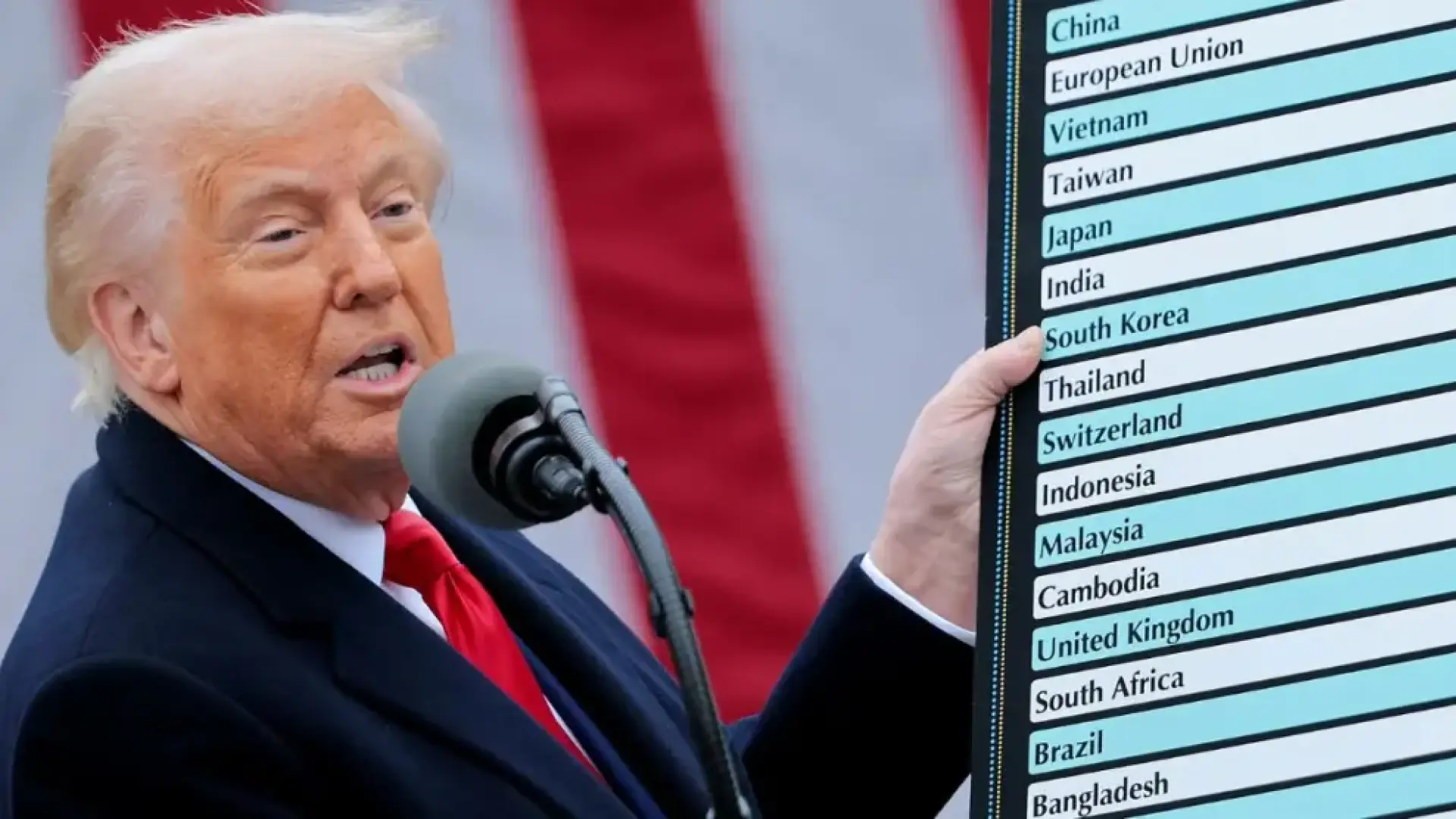
That roadmap led the Republican leader to announce massive tariffs on April 2 – which he even dubbed ‘Liberation Day’. They affected 180 countries, many of them natural allies of Washington. Donald Trump then set a general tax of 10% and higher additional rates, which he described as “reciprocal”to those countries that recorded the largest trade surplus with the US. The announcement caused several days of turbulence in the financial markets that forced Trump to reconsider his position and open a period of negotiation with his main trading partners.
The rate freeze was not free. Trump agreed to place the final tariffs around 10% in exchange for concessions, such as acquisition of gas and oil or investments in US soil which demanded that the European Union, at the same time, reduce its own rates on most North American industrial products to zero, under the agreement sealed in the summer between the parties.
Nor has its impact on the United States economy been free. Just a few days ago, the president of the Federal Reserve, Jerome Powell, attributed the persistence of inflation around 3% and the deterioration that this causes in the purchasing power of Americans to tariffs. The voter has already begun to penalize Trump in local and state elections held since November.
His ‘war’ with China continues another course
As has been happening since Donald Trump’s previous term (2017-2021), the trade war with China has followed a different path. When the White House set a 34% rate on Chinese exports on April 2, Beijing responded immediately and the tariff escalation between the two largest economies on the planet lasted for several days. US tariffs on Chinese products reached 145% and China’s tariffs on US imports reached 125%.
It took several rounds of negotiations at the highest level (including a meeting between Trump and his Chinese counterpart, Xi Jinping) for the two administrations to reach a truce. Under this, the average rate that Washington applies to Chinese goods is between 29 and 48% and that which the Asian giant applies to its rival between 30 and 35%.
“The world economy has demonstrated its resilience after the stabilization of tariffs, fiscal stimuli that support growth and the beginning of the flexibility of monetary policy by many central banks,” point out the manager Capital Group. However, the horizon is still not completely clear and, facing the coming months, economists recommend paying special attention to any delayed adverse impact derived from US tariffs due to their possible impact worldwide.