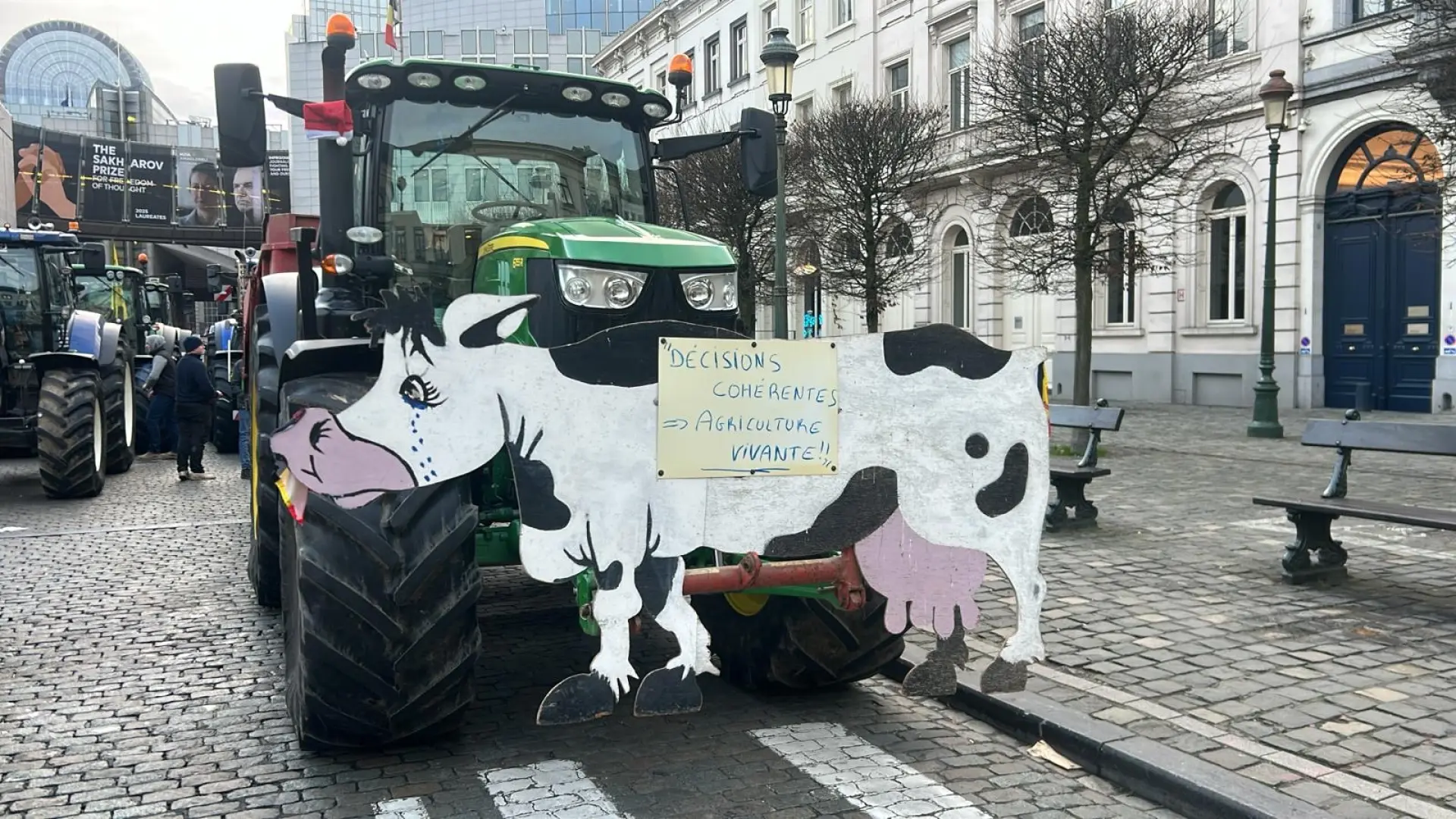
Brussels proposes advancing CAP funds a few days before the vote on Mercosur and calls a surprise meeting

The European Commission proposed this Tuesday a set of “tools” to increase the resources of the Common Agricultural Policy (PAC) in the future multiannual budget, an offer that comes after the massive agricultural protest last December in Brussels and a few days before the vote on the agreement with Mercosur, scheduled for next Friday. The community Executive has also called an informal surprise meeting with the Agriculture Ministers of the European Union for this Wednesday, with the purpose of talking about the future of agriculture and “addressing the concerns” of the sector.
The president of the European Commission, Ursula von der Leyen, has explained theThe details of the proposal to improve the CAP in a letter addressed to the president of Cyprus, Nikos Christodoulides, whose country presides over the EU Council this semester, and to the president of the European Parliament, Roberta Metsola. The document ensures that the CAP will continue to be in the 2028-2034 budget period the “main EU policy tool” to provide farmers with a fair income, guarantee food security and improve the attractiveness and standard of living in rural areas.
The Community Executive recalls that, in the next budget, 293.7 billion euros have been proposed for agricultural policy, which will be allocated above all to supporting farmers’ income. As an improvement, it now proposes that when Member States present their initial National and Regional Partnership Plans, they have access to up to two thirds of the amount normally available for the mid-term review, which will mean being able immediately mobilize some 45 billion euros to support farmers. This will allow, the letter says, to guarantee the availability of additional resources starting in 2028.
Added to this will be “the doubled amount of 6.3 billion available to address market disruptions and stabilize agricultural markets,” called the Unity Safety Network. Besides, farmers will be able to receive crisis payments charged to the flexible amount of 10% of the National and Regional Association Plans in the event of natural disasters, adverse climatic phenomena or animal diseases.
The letter from the President of the Commission also indicates that at least 10% of the resources of each National and Regional Partnership Plan must be allocated to supporting investments in rural areas to ensure that these territories benefit from a comprehensive policy approach that responds to their challenges.
Member States will allocate their share of the rural objective to measures to be implemented in the agricultural sector in the initial phase of programming, similar to what happens in the current budget cycle, unless they opt for measures dedicated to rural areas. Besides, The rural objective will amount to 48.7 billion for rural areasa figure that could increase to 63.7 billion thanks to the possibility offered by loans promoted by European institutions such as the EIB, which act as catalysts for growth.
The combination of these policy and budgetary tools will provide farmers and rural communities, according to Von der Leyen, “an unprecedented level of supportin some respects even higher” than the current budget cycle, which will increase the competitiveness of the European agricultural sector and enable it to face global challenges.
The agrarian macroprotest on December 18 In the European capital, which brought together farmers from Spain and other member states, he spoke out against cuts in the future CAP and trade agreements such as Mercosur, considering that they do not include sufficient safeguards in favor of the European countryside. Precisely that same day, the EU ruled out at a European summit that this agreement could be signed in Brazil on the weekend of the 20th and 21st of that month, the date initially planned, due to the blockade of France and Italy, and opted for next January 12 to celebrate the signing in Paraguay, at the expense of convincing Paris and Rome, under pressure from their respective agricultural sectors.